The Afghan Endgame Mirage

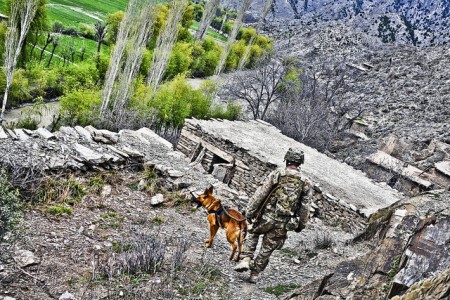
Patrol in Jani Khel district, Afghanistan. Image by isafmedia / Flickr.

STOCKHOLM – On a recent visit to Afghanistan and Pakistan, I could not fail to notice the increasingly frequent international calls for an “endgame” in Afghanistan. But an endgame for that country is a dangerous illusion: the game will not end, and neither will history. The only thing that could come to an end is the world’s attention and engagement in Afghanistan, which could well lead to catastrophic consequences.

Much international focus is now on the year 2014, the target date for completion of the gradual transfer of responsibility for security from international forces to the Afghan government. This process is not without challenges, but there is no reason to believe that it could not be finalized more or less according to plan and the current timetable.

My belief is that there is another, far more critical challenge facing Afghanistan in 2014: the election of a new president. In a system where so much power – open and hidden, constitutional and traditional – is centered around the president, the election could well turn into an all-out battle for the country’s future.
To the Victors Go the Foils

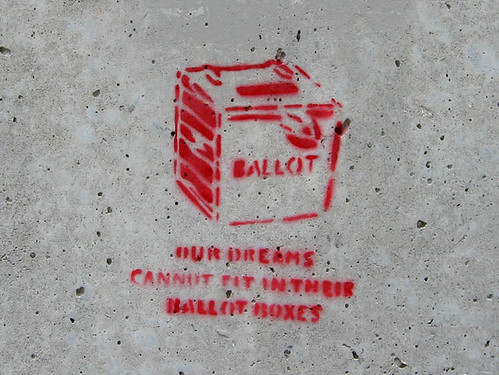
Graffiti showing a ballot box
Many countries are holding elections in 2012, but governments are struggling to keep up with their peoples' expectations (Photo: david drexler/flickr)

NEW YORK – A surprising number of elections and political transitions is scheduled to occur over the coming months. An incomplete list includes Russia, China, France, the United States, Egypt, Mexico, and South Korea.

At first glance, these countries have little in common. Some are well-established democracies; some are authoritarian systems; and others are somewhere in between. Yet, for all of their differences, these governments – and the individuals who will lead them – face many of the same challenges. Three stand out.

The first is that no country is entirely its own master. In today’s world, no country enjoys total autonomy or independence. To one degree or another, all depend on access to foreign markets to sell their manufactured goods, agricultural products, resources, or services – or to supply them. None can eliminate economic competition with others over access to third-country markets. Many countries require capital inflows to finance investment or official debt. Global supply and demand largely set oil and gas prices. Economic interdependence and the vulnerability associated with it is an inescapable fact of contemporary life.

Mind the Neighbors

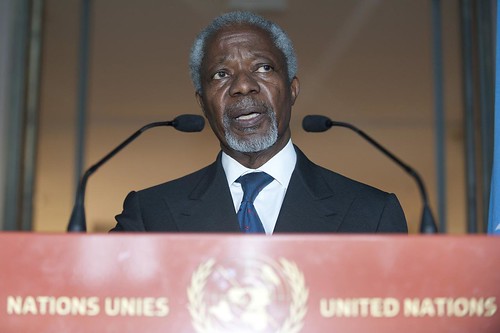
Joint UN/AL Special Envoy on Syria briefs press
Kofi Annan, joint UN/AL Special Envoy on Syria briefs press

PRINCETON – The conventional wisdom last week on whether Syria would comply with former United Nations Secretary-General Kofi Annan’s ceasefire plan was that it was up to Russia. We were reverting to Cold War politics, in which the West was unwilling to use force and Russia was willing to keep arming and supporting its client. Thus, Russia held the trump card: the choice of how much pressure it was willing to put on Syrian President Bashar al-Assad to comply with the plan.

If this view were correct, Iran would surely be holding an equally powerful hand. Annan, after all, traveled to Tehran as well. Traditional balance-of-power geopolitics, it seems, is alive and well.

But this is, at best, a partial view that obscures as much as it reveals. In particular, it misses the crucial and growing importance of regional politics and institutions.

Emerging Markets’ Higher-Education Challenge

A word wall in the Western Academy of Beijing. Image by torres21 / Flickr.

LONDON – As many high-income economies continue to flounder, many regard Brazil, China, India, Russia, and smaller emerging-market countries as the best hope for short-term global recovery. Cautious optimism seems justified if emerging markets can weather the impact of shrinking demand for their exports, and sustain their recent records of prudent macro-economic management. But, unless constraints to longer-term growth are addressed soon, the emerging markets’ rise to prosperity and global influence will be short-lived.

The main constraints include environmental degradation, economic deprivation, social inequality, ineffective public-sector management, and weak corporate governance. None of these challenges can be overcome without a massive increase in the number of competent and motivated leaders and professionals. But that requires reforming and expanding access to post-secondary education.

Iran’s Last Chance?

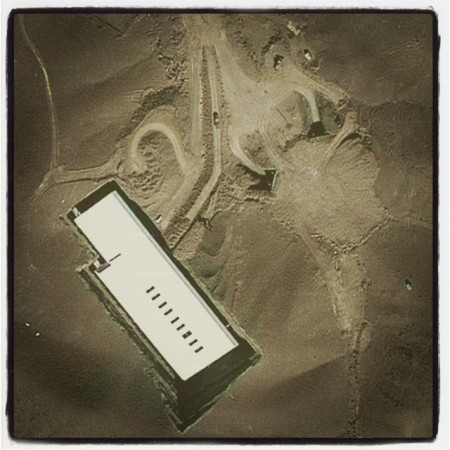
Satellite imagery of suspected Fordo underground uranium enrichment facility under construction north of Qom, Iran. Image by wapster / Flickr.

MADRID – The latest round of negotiations on Iran’s nuclear program between Iran and the so-called “5+1” group (the United Nations Security Council’s five permanent members – the United States, the United Kingdom, Russia, France, and China – plus Germany) has now begun. Following more than a year of deadlock, after negotiations in January 2011 led nowhere, this dialogue is for many the last chance to find a peaceful solution to a nearly decade-long conflict (in which I participated closely from 2006 to 2009 as the West’s main negotiator with Iran).

The objective of the talks, chaired by the European Union’s foreign-policy chief, Catherine Ashton, and Iran’s chief negotiator, Saeed Jalili, is still to persuade Iran to halt uranium enrichment and to comply with Security Council resolutions and its obligations under the Nuclear Non-Proliferation Treaty. But several factors heighten the current negotiations’ strategic importance.