La paix en Colombie, enfin?

Parade in Colombia
Parade in Colombia. Photo: Lucho Molina/flickr.

BOGOTA – L’accord de pourparlers visant à mettre fin aux conflits armés en Colombie qui vient d’être annoncé par le président Juan Manuel Santos est un événement historique pour son pays et l’ensemble de l’Amérique Latine. C’est aussi un hommage aux ressources diplomatiques et à l’art de la négociation.

L’accord passé avec les Forces armées révolutionnaires de Colombie, autrement dit, les FARC, survient après de longues années de tentatives échouées de la part des différents gouvernements colombiens de tous bords pour parvenir à un arrangement avec le dernier et l’un des plus odieux mouvements de guérilla à avoir opéré en Amérique Latine. Jamais auparavant les FARC – un appareil monumental de terreur, de meurtres de masse, et de trafics de drogue – n’avaient accepté de discuter de désarmement, de la réintégration politique et sociale de ses combattants, des droits des victimes, de mettre un terme à la production de drogues, et d’une participation aux commissions « vérité et responsabilité » pour examiner les crimes commis durant un demi-siècle de conflits. Mais elles ont accepté cette fois-ci.

Ce changement de dynamique résulte de la décimation des FARC suite à de longues années de luttes, de la résilience de la société colombienne, et peut-être le plus important, d’une brillante politique régionale de la part de Santos. En affaiblissant l’axe dit Bolivarien (Venezuela, Equateur, et Bolivie), les guérilleros des FARC ont perdu leur soutien régional.

Tout comme les processus de paix au Moyen-Orient et en Amérique centrale au terme de la guerre froide, les évolutions régionales ont généré des conditions favorables pour entamer un processus colombien. Mais au Moyen-Orient et en Amérique centrale, ce sont les acteurs extérieurs – Etats-Unis et Union Soviétique – qui ont provoqué ce changement ; dans le cas du processus colombien, le changement est venu de l’intérieur.

Avant d’engager les FARC dans des pourparlers secrets à Cuba, la politique diplomatique régionale de Santos a permis d’abandonner la violence pour favoriser le dur travail de coopération. Il est parvenu à faire du Venezuela et de l’Equateur, anciens refuges sûrs pour les FARC, des voisins amicaux, prêts à mettre fin à cette tradition archaïque des guerres révolutionnaires. En fait, dans ce que l’on peut qualifier de plus remarquable retournement diplomatique, le président vénézuélien Hugo Chávez est devenu un facilitateur clé dans la résolution du conflit colombien.

Les pourparlers avec les FARC ont évolué au gré de la détente régionale et ont été suivis d’une ambitieuse initiative visant à s’attaquer aux racines des causes du conflit colombien. Mais surtout, Santos a signé la Loi sur les victimes et la restitution des terres, en juin 2011 en présence du Secrétaire général de l’ONU, Ban Ki-moon. Cette loi prévoit des réparations pour les victimes de violations des droits de l’homme tout au long de ce conflit qui aura duré 60 ans, ainsi que la restitution des millions d’hectares de terres volées aux paysans. Cette loi place donc la Colombie sur la voie de la paix en affaiblissant le pouvoir des appels des FARC à la réforme agraire en justification de leurs indicibles atrocités.

La loi est indéniablement complexe, et certainement pas sans défauts. Mais, si elle est mise en œuvre comme prévu, elle pourrait entrainer une profonde révolution sociale. Elle représente aussi une nouvelle approche de la paix, dans la mesure où de telles lois sont généralement introduites après la résolution des conflits. Dans le cas présent, la restitution des terres aux paysans dépossédés et l’offre de réparation financière aux victimes et à ceux qui ont été déplacés par les conflits, constituent de fait une voie vers la paix. Alfonso Cano, ancien chef des FARC, a d’ailleurs qualifié cette loi « d’essentielle pour un avenir de réconciliation » et une « contribution pour une réelle solution au conflit. »

Les sceptiques et les opposants aux négociations ont aussi leur argument, cependant. Les FARC sont connues pour avoir manipulé les précédentes tentatives de négociations de paix pour gagner en légitimité nationale et internationale, sans réelle volonté affichée de parvenir à un accord. Santos aurait donc pu être tenté de choisir la manière Sri-Lankaise – un massacre militaire impitoyable pour défaire les insurgés, au prix de violations majeures des droits humains et de la destruction des communautés civiles.

Santos a préféré opter pour la résolution la moins expéditive. Car en Colombie, comme ailleurs, la guerre unit fréquemment les nations, alors que la paix les divise.

Les répercutions d’une fin réelle des conflits armés en Colombie seraient ressenties bien au-delà des frontières du pays. Si le Venezuela de Chávez est devenu un état-narco dans lequel les acolytes du régime sont des barons de la drogue, cela établit bien leurs relations privilégiées avec les FARC. Les répercutions seraient aussi ressenties au Mexique, où les cartels de la drogue déchirent le pays, et aux Etats-Unis, plus gros consommateurs au monde. L’Afrique de l’ouest aussi en serait affectée, puisqu’elle est devenue ces dernières années la principale plateforme de transit des drogues en provenance de l’Amérique Latine vers l’Europe.

Il reste encore de formidables difficultés à gérer, et un accord final n’est en aucun cas garanti. Mais Santos a néanmoins une bonne chance d’enterrer, une fois pour toute, la mystique trompeuse du changement révolutionnaire dans la violence, laquelle a constitué un frein à la modernisation économique et politique de l’Amérique Latine depuis si longtemps.

Traduit de l’anglais par Frédérique Destribats

Copyright Project Syndicate


Shlomo Ben-Ami, ancien ministre israélien des Affaires Etrangères, est vice-président du Centre International de Tolède pour la Paix, et l’auteur de Scars of War, Wounds of Peace: The Israeli-Arab Tragedy (Cicatrices de guerre, blessures de paix: la tragédie Israélo-Arabe, ndt).

For further information on the topic, please view the following publications from our partners:

Dismantling Colombia’s New Illegal Armed Groups

Sector privado y Desplazamiento Forzado Interno (DFI) en Colombia

Private Sector and Forced Internal Displacement (FID) in Colombia


For more information on issues and events that shape our world please visit the ISN’s Security Watch and Editorial Plan.
Colombia at Peace?

Parade in Colombia
Parade in Colombia. Photo: Lucho Molina/flickr.

BOGOTÁ – The Framework Agreement for the End of the Armed Conflict in Colombia that has just been announced by President Juan Manuel Santos is a historic landmark for his country and all of Latin America. It is also a tribute to diplomatic resourcefulness and negotiating skill.

The agreement with the Revolutionary Armed Forces of Colombia, better known as the FARC, came after long years of failed attempts by Colombian governments of all political shades to reach an accommodation with the last, and among the most odious, guerrilla movement to have operated in Latin America. Never before has the FARC – a monumental apparatus of terror, mass murder, and drug trafficking – agreed to discuss disarmament, its fighters’ social and political reintegration, victims’ rights, an end to drug production, and participation in “truth and responsibility” commissions to examine the crimes committed during a half-century of conflict. But now it has.

Kyrgyzstan Hosts Putin to Ink Defense, Energy, Debt Deals

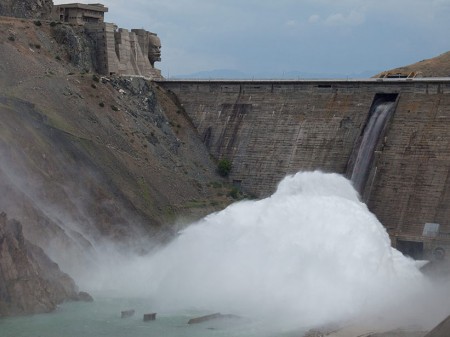
Tala River Hydroplant Kyrgyzystan. Image by Evgeni Zotov/flickr.

Russian President Vladimir Putin’s September 20 visit to Kyrgyzstan ended with half a dozen bilateral agreements and some anachronistic-sounding rhetoric about Moscow’s benevolent role in Central Asia. On the face of it, Russia won an extension of military basing rights for another generation, while Kyrgyzstan got millions of dollars in debt forgiveness and promises of investment in the construction of two major hydropower projects. But all the deals have yet to be finalized and some won’t kick in for years, with multiple strings attached.

The visit was Putin’s first to Kyrgyzstan since an April 2010 uprising toppled the former president, Kurmanbek Bakiyev, who had angered the Kremlin by effectively misappropriating a $300 million Russian loan and backtracking on some of his promises. Moscow has been slow to warm to the post-Bakiyev leadership, expressing frustration earlier this year, for example, with Bishkek’s constant
attempts to get aid while maintaining a so-called multi-vector foreign policy.

Publicly, Putin’s host, President Almazbek Atambayev, did everything he could to assure the Russian president that Kyrgyzstan is a firm friend. At a cheerful midday press conference, Atambayev suggested the two had stayed up together until 5 a.m. – Putin had arrived in Bishkek late September 19 – and expressed wishes for everlasting friendship. “Russia is our main strategic partner. With Russia, we share a common history and a common destiny. […] Our future will be in partnership with the great Russia,” Atambayev said in comments broadcast by local media.

Categories
Uncategorized

The Most Immediate Threats to Global Energy Security

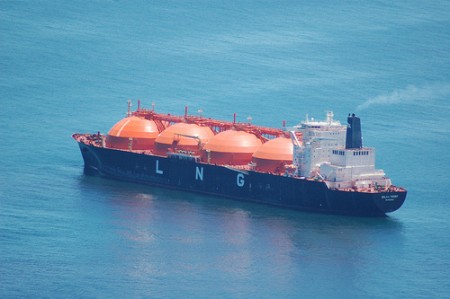
Liquid Natural Gas Tanker. Image by Lens Envy/flickr.

As global energy supplies come under increasing attack by non-state actors and private energy holdings become key targets of political maneuverings and criminal activities, Oilprice.com discusses the nature of the growing threat and how to reverse the risk with “smart power.”

To help us look at these issues we got together with Corporate intelligence specialists Jellyfish Operations and security expert Jennifer Giroux.

Michael Bagley is the president of Jellyfish, a global boutique intelligence firm that combines on-the-ground intelligence collection and analytics with an unprecedented country-to-country economic diplomacy program that helps governments, corporations, institutions and private individuals forge secure partnerships, discover new opportunities and mitigate operational risks.

Jennifer Giroux is a global security expert who specializes in emerging threats to energy infrastructure in conflict-affected regions.

In the Interview Michael & Jennifer talk about the following:

• Why the risk to global energy supplies is increasing
• Violent entrepreneurialism: Why piracy is on the rise
• The most immediate threats to global energy security
• Which countries are most likely to see attacks in the future
• Why Saudi Arabia could be the next country to have its energy infrastructure come under attack
• Why energy companies assets are becoming key targets.
• How energy companies can create opportunities in Conflict-Affected Regions
• Why companies need more than just intelligence to operate in hostile environments

Categories
Uncategorized

The Iraq Action Team: a model for monitoring and verification of WMD non-proliferation

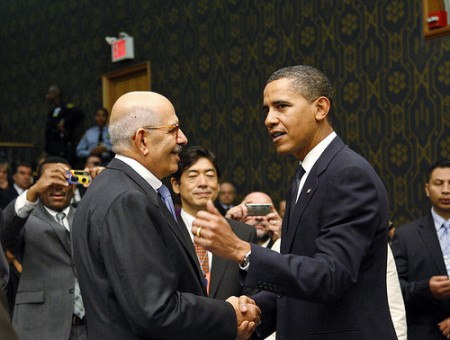
US President Barack Obama and IAEA Director General Mohamed ElBaradei. Image by United Nations Photo/flickr.

The United Nations Special Commission and the Iraq Action Team

The UN Security Council first took the initiative to create its own verification disarmament unit under the provisions of Resolution 687, adopted after the Kuwait war in 1991. At that time, the UN Special Commission on Iraq (UNSCOM) became the first subsidiary organ of the Security Council, and was tasked with supervising the removal and destruction of Iraqi weapons of mass destruction (WMD)—including its chemical, biological and missile capabilities—and relevant delivery systems, and with measures to prevent their reconstitution.

The Director General of the International Atomic Energy Agency (DGIAEA)—as opposed to the IAEA secretariat itself, with its institutional structures and decision-making bodies—had been given responsibility for the nuclear-related tasks. In order to fulfil his obligations, the Director General set up the Iraq Action Team, which was also independent of the IAEA’s formal structures, including the Department of Safeguards.

The Iraq Action Team had a two-fold mandate in Iraq: to remove and destroy nuclear-related material and equipment; and to manage an ongoing monitoring and verification programme. It reported the results of its technical analyses to the DGIAEA, who in turn reported the findings to the UN Security Council.