
Categories
Cyber

The Future of Values in Cyber Security Strategies

Image courtesy of Ecole polytechnique/Flickr. (CC BY-SA 2.0)

This article was originally published by the Elcano Royal Institute on 27 February 2020.

Theme

While national cyber security strategies have proliferated worldwide in the past decade, most have been overwhelmingly focused on resilience at the expense of political values. This paper addresses the challenges that have arisen from an overly technical focus on cyber security that has failed to consider the application of value sets in strategy creation.
How to Train Your AI Soldier Robots (and the Humans Who Command Them)

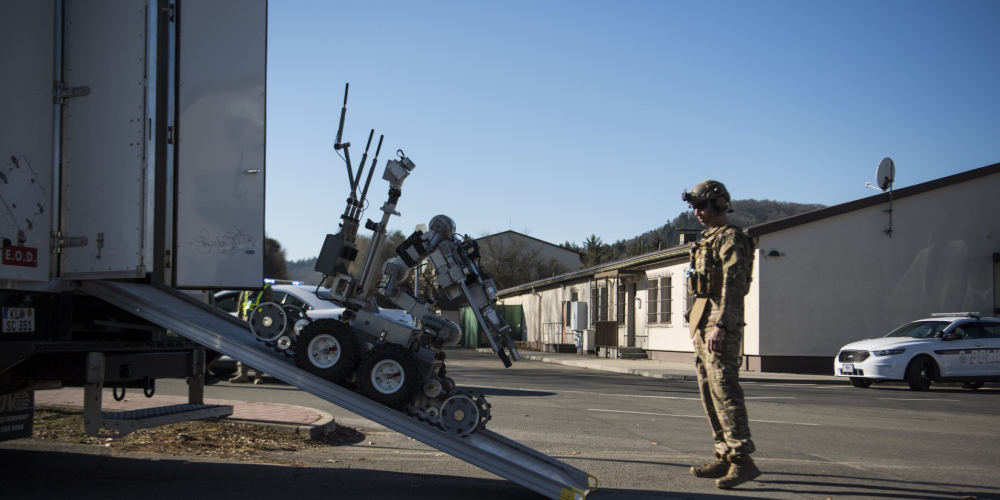
Image courtesy of Devin Rumbaugh/DVIDS.

This article was originally published by War on the Rocks on 21 February 2020.

Artificial intelligence (AI) is often portrayed as a single omnipotent force — the computer as God. Often the AI is evil, or at least misguided. According to Hollywood, humans can outwit the computer (“2001: A Space Odyssey”), reason with it (“Wargames”), blow it up (“Star Wars: The Phantom Menace”), or be defeated by it (“Dr. Strangelove”). Sometimes the AI is an automated version of a human, perhaps a human fighter’s faithful companion (the robot R2-D2 in “Star Wars”).

Categories
CSS Blog

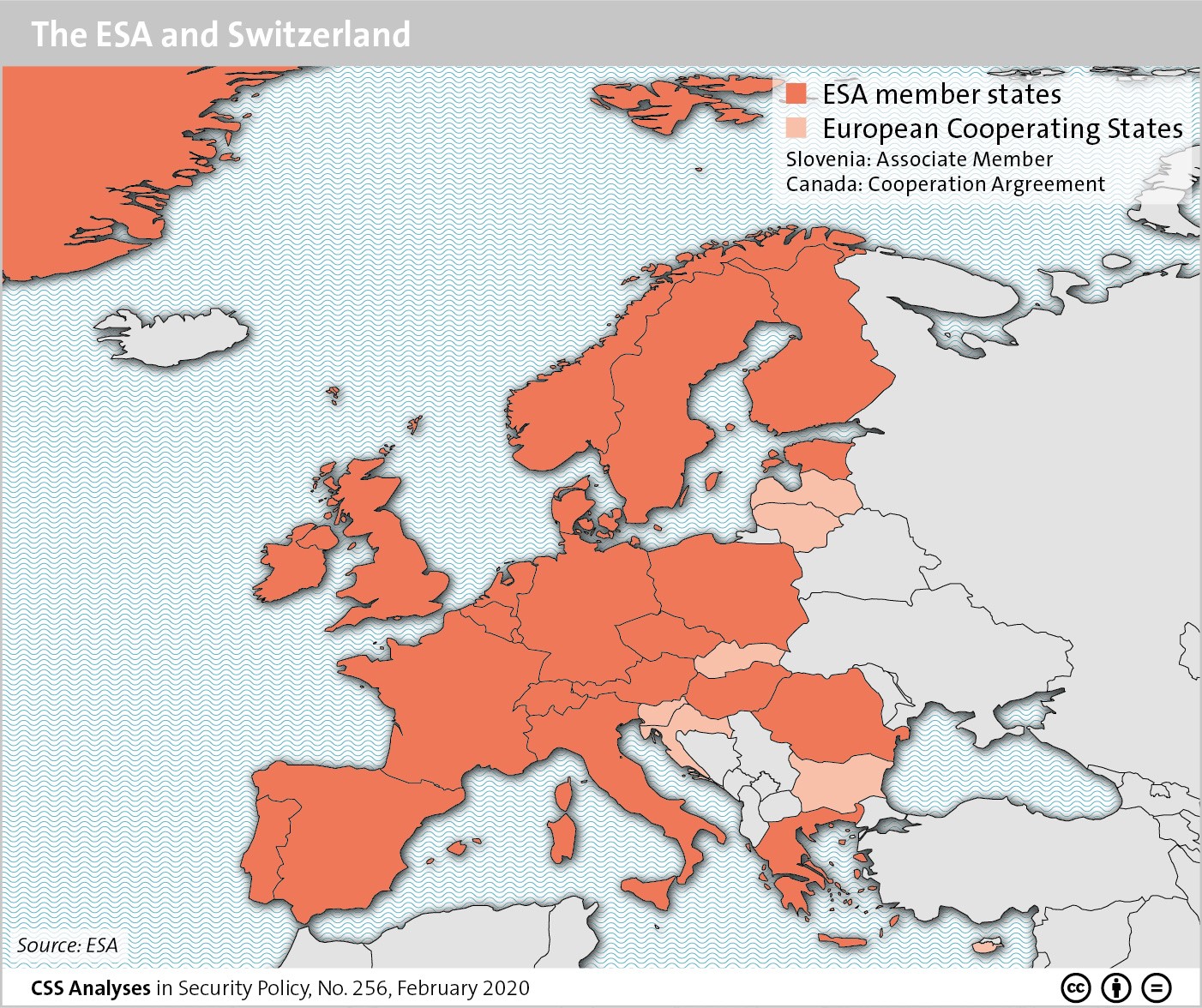
The ESA and Switzerland

This week’s featured graphic provides an overview of the European Space Agency (ESA) member states and more. For an insight into space security and technological development, see Michael Haas’ CSS Analysis in Security Policy here.

How the Coronavirus Impacts China and its Foreign Policy

Image courtesy of Macau Photo Agency/Unsplash.

This article was originally published by the United States Institute of Peace on 13 February 2020.

The U.S. and China have a mutual interest in containing the outbreak, but exchanges over the virus have not been without friction.


China hit a grim landmark earlier this week when the death toll from the coronavirus outbreak surpassed 1,000 with over 40,000 recorded cases of infection—and those numbers are rising every day. The outbreak, which originated in Wuhan, China, has rattled global markets and catalyzed concern over a widespread epidemic beyond China’s borders. The suffering has been immense, and people in China and those with family or friends there are frightened about what’s next. Meanwhile, there are shortages of masks and supplies and hospitals are overrun, with rising anxiety due to travel restrictions and quarantine policies.

Categories
Cyber CSS Blog

Cyber Deterrence Is Dead: Long Live Cyber Deterrence!

Image courtesy of Jacob Osborne/DVIDS.

This article was originally published by the Council on Foreign Relations on 18 February 2020.

Born in the 1990s, the thinking on cyber deterrence was nurtured by the U.S. Department of Defense in numerous war-gaming exercises. Hitting puberty in the aftermath of the distributed denial-of-service campaign against Estonia in 2007, cyber deterrence matured after Stuxnet and received peak attention from policymakers and academics from 2013 to 2016 during the golden age of ‘cyberwar’ scholarship. From 2016 onward, the interest in cyber deterrence started to fade to the extent that it is now intentionally neglected. The figure below captures this short life cycle by quantitatively visualizing the number of articles, book chapters, and research reports written on ‘cyber deterrence’ and ‘cyberdeterrence’ between January 1990 and January 2020.