From Cops to Counterinsurgents – the Militarization of America’s Police

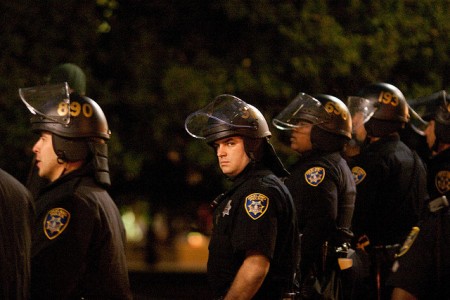
Image: Thomas Hawk/Flickr

This article was originally published by OpenDemocracy on 14 August 2014.

Jason Westcott was afraid.

One night last fall, he discovered via Facebook that a friend of a friend was planning with some co-conspirators to break in to his home. They were intent on stealing Wescott’s handgun and a couple of TV sets. According to the Facebook message, the suspect was planning on “burning” Westcott, who promptly called the Tampa Bay police and reported the plot.

According to the Tampa Bay Times, the investigating officers responding to Westcott’s call had a simple message for him: “If anyone breaks into this house, grab your gun and shoot to kill.”
The Islamic World and the West: Recovering Common History

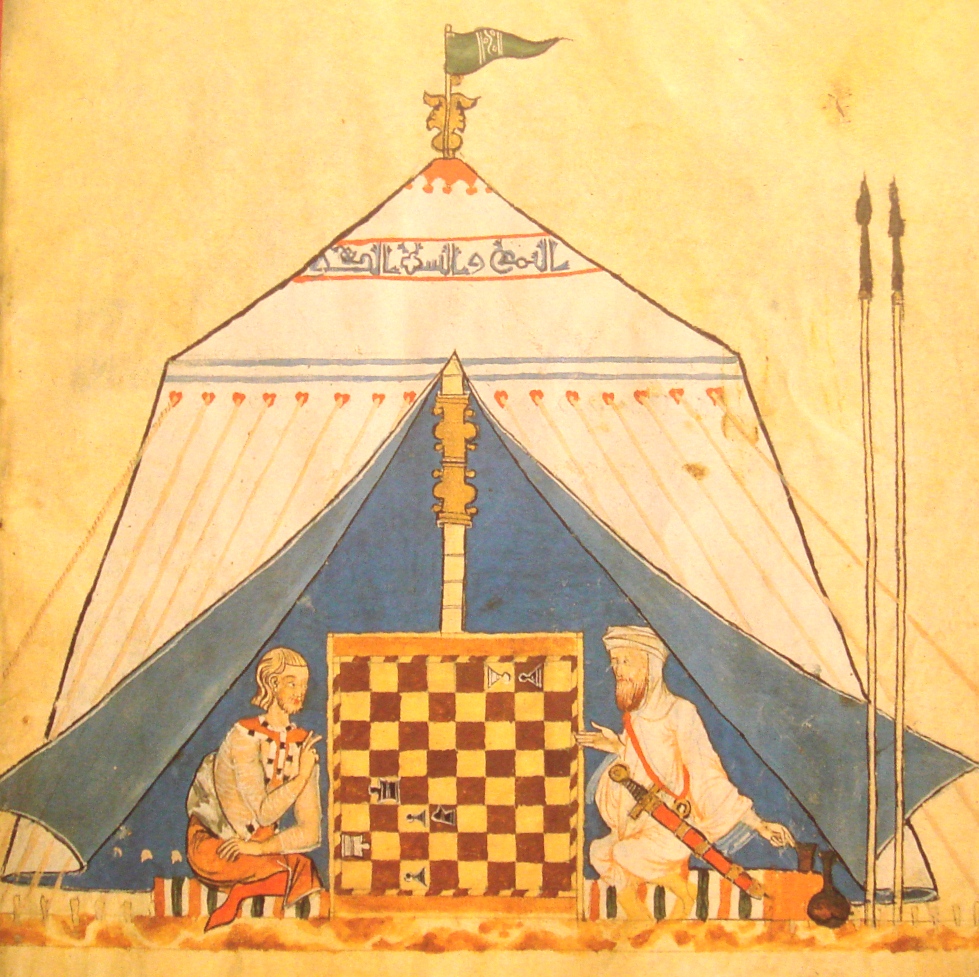
Christian and Muslim Playing Chess
Image: Wikimedia

This article was originally published by YaleGlobal Online on 15 July 2014.

Recent years have seen much talk of the dangers of Islam in the West and its perceived incompatibility with Western societies. According to statistics, estimated on the basis of country of origin and of first- and second-generation migrants, Muslims represent the largest “non-indigenous” immigrant group in Europe. The largest groups are in France, with approximately 5 million; Germany, between 3.8 and 4.3 million; and the UK, 1.6 million, followed by the Netherlands and Italy, 1.1 million each, as well as Bulgaria and Spain.

Categories
Humanitarian Issues

Peacekeeping Works Better Than You May Think

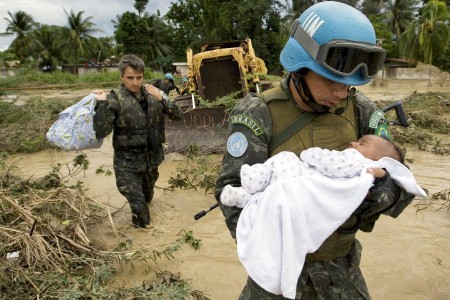
Image: United Nations Photo/Flickr

This article was originally published by the Centre for International Policy Studies (CIPS) on 2 August 2014.

Does peacekeeping work? Janice Stein (University of Toronto) and I had a lively exchange on this subject on the CBC radio program “The House” this weekend. Have a listen.

In the interview, I said that more than two dozen major peace operations have been deployed over the past 25 years in countries emerging from civil wars, and that although some have been terrible failures (e.g., Rwanda 1994), their overall record has been reasonably good at preventing a recurrence of fighting.

After Joining the WTO, What’s Next for Laos?

Image: Government of Thailand/Wikimedia

This article was originally published by the East Asia Forum on 9 August 2014.

Earlier this year Laos celebrated the first anniversary of its WTO membership. Laos’ accession to the WTO has been less talked about than that of its neighbours China and Vietnam, who joined the organisation in 2001 and 2007, respectively. This is partly due to Laos being a small, landlocked economy whose accession would not be expected to make a big impact on international trade.

But Laos’ clout is more than may first appear.

Categories
Regional Stability

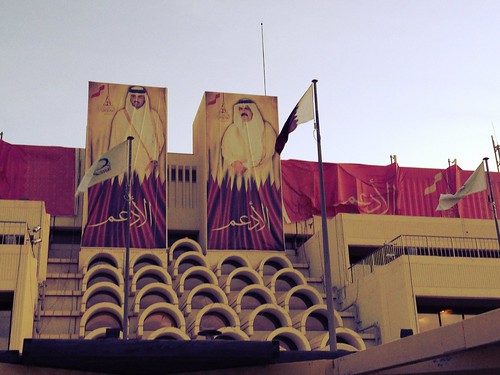
How Qatar’s Hand Casts Syrian Shadows

Images of the crown prince and the Emir of Qatar.
Isabell Schulz/Flickr

This article was originally published by openSecurity on 1 August 2014.

The asymmetrical proxy conflict currently being fought in Syria has many interested state parties and Qatar has taken a prominent, multi-track approach to influence the outcome. The Qataris have met with Assad, armed rebels, provided facilities for the US to train militants, paid defectors and–employing a novel methodology– used the trappings of civil society in the form of a ‘report’ on torture and the coverage provided by a ‘free press’. Qatar’s participation raises some interesting questions: What is the goal of this geopolitical manoeuvring? Are they using a civil society façade to achieve  state goals?