Categories
Terrorism

Ethics on Film: Discussion of “Timbuktu”

Jihadists of the group “Ansar Dine” near Timbuktu, Mali. Image: Magharebia/Wikimedia

This article was originally published by the Carnegie Council for Ethics in International Affairs on 25 February, 2015.

2014, 97 minutes. Nominated for Oscar for best Foreign Language Film.

For an American audience used to war movies with explosions, good guys and bad guys, and finite conclusions, the Oscar-nominated, Mauritanian film Timbuktu is a departure. The violence is never gratuitous, most of the jihadists seem like normal (albeit dangerously misguided) people, and, at the end, the fates of the eponymous city and several main characters are left hazy. The people who would most likely choose to see Timbuktu are already numbed by the constant stream of horrific news out of Syria, Nigeria, Pakistan, etc., so this low-key approach is the perfect strategy. We know about the executions, suicide bombings, and coalition airstrikes. But what we don’t realize is, perhaps, the main takeaway from the film: This type of militant extremism, more than anything else, is soul-crushingly boring for the occupied populations.

Is Russia Really a Threat to NATO?

A Russian officer guarding the Kaliningrad border. Image: Igor Zarembo/Flickr

Russia’s ongoing military modernization program continues to alarm NATO’s eastern flank. Over the next five years, Moscow aims to have revitalized between 70 – 100 percent of the country’s armed forces. To assist, the Russian military budget was increased by 33% this year, to approximately 3.3 trillion Rubles ($81 billion), or 4.2 percent of the country’s Gross Domestic Product (GDP), with an estimated $700 billion to be spent between now and 2020.

Yet, can Moscow really afford its current defense spending spree? And why has Russian President Vladimir Putin decided that the time to revitalize the country’s armed forces is now? Part of the answer to these questions lies in a concurrent development in Russian defense policy – the recent adoption of the country’s new military doctrine.

The U.S. Energy Pivot: A New Era for Energy Security in Asia?

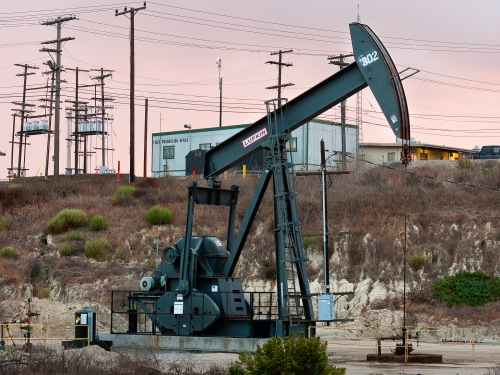
A fracking site near Los Angeles.Image:Erik Gustafson/Flickr

This article was originally published by New Security Beatthe blog of the Environmental Change and Security Program (ECSP) at the Wilson Center, on 26 March, 2015.

The past decade has brought ground-shaking changes to global energy markets. The unconventional fuel boom has unexpectedly reduced U.S. dependence on oil imports, while in the Asia-Pacific region, energy-constrained nations are increasingly reliant on foreign sources to meet their soaring demand. With the U.S. slated to export liquid natural gas (LNG) to Asia as early as 2017, a new energy era has come.

The shifting landscape is forcing countries such as Japan, South Korea, and China to rethink regional cooperation on energy issues such as strategic oil stocks, and technological and institutional coordination, said Mikkal E. Herberg, senior lecturer at the University of California, San Diego, and research director of the Energy Security Program at the National Bureau of Asian Research, at a Capitol Hill event on February 24.

Categories
Regional Stability

An Irresistible Force? Arab Citizens of Israel after the Elections

Ayman Odeh, chairman of the Arab-Israeli Hadash party. Image: Anan Maalouf/Wikimedia

This article was originally published by OpenSecurity/OpenDemocracy on 24 March, 2015.

Despite much pre-election euphoria among those hoping to bring down the prime minister, Binyamin Netanyahu, a democratic political upheaval towards a new progressive era in Israel remains a receding horizon. And yet one political novelty stands out:  the increasing visibility of its Palestinian citizens.

For decades, they had to cope with a life at the margins of both Palestine and Israel, were largely excluded from the ‘peace process’ and were ascribed an ‘identity crisis’ as a people hopelessly stuck in political limbo. For the first time in Israel’s history, this month they voted collectively as Arab-Palestinians for a Joint List, reaching 13 out of 122 seats. Under the widely-respected leadership of Ayman Odeh, this now comprises the third-largest faction in the parliament. With increasing visibility of their grievances amid rising international recognition, their cause stands on solid ground.

Juncker’s EU Army: a Tool of Politics More Than Defence

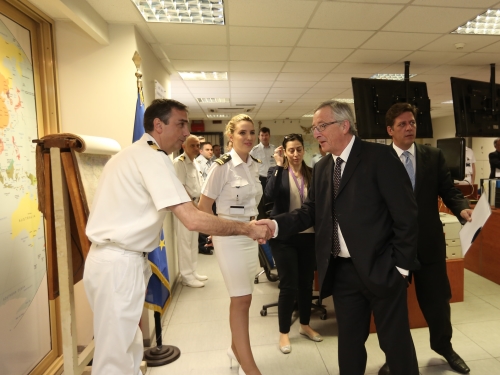
Juncker greeting members of the Greek Navy during his visit to Athens on 19 May, 2014. Image: Jean-Claude Juncker/Flickr

This article was originally published by the Barcelona Centre for International Affairs (CIDOB) on 23 March 2015.

Jean-Claude Juncker has revived the debate on a European army, an old, periodically torpedoed aspiration. In the 1950s, when the European integration process was in its embryonic phase, six nations led the European Defence Community. Its goal was to establish a supranational European army as an alternative to German rearmament, but it never saw the light of day due, ultimately, to the rejection of the country that put the initiative forward, France. In the 90s, when the Maastricht treaty set up the Common European Security Policy, its military component was also diminished by the reluctance of the more Atlanticist states to build a common European defence system.