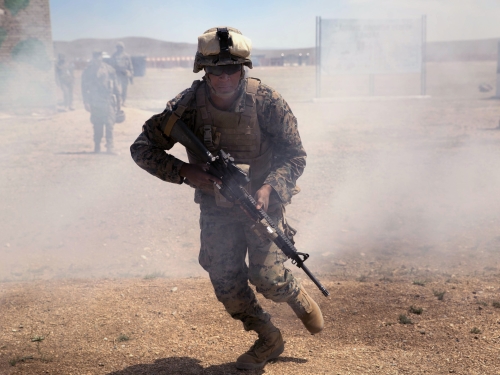
From June 20 to July 1, the Mongolian Armed Forces and United States Pacific Command jointly hold the latest edition of Khaan Quest (Facebook page), a multinational peace operation exercise hosted on Mongolian territory and primarily intended to enhance peacekeeping and peace support capabilities among participating states. Beyond allowing opportunities for strengthening relationships and exchanging best practices, Khaan Quest entails a command post exercise and a field exercise by ground forces. Of particular interest, the People’s Liberation Army (PLA) participated for the first time, demonstrating China’s growing interest in regional security.
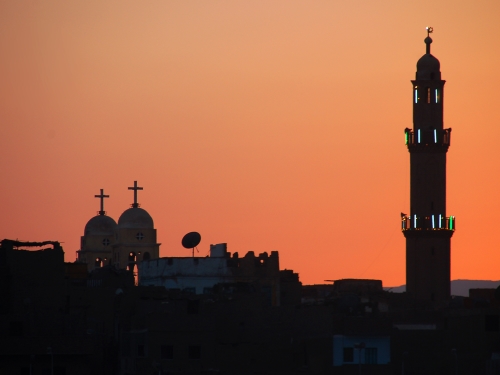
In the ongoing discourse on constructing the world order many new but also “new-old” approaches are being developed. One of the more discussed and controversial issues is the recognition of a religious dimension in international relations. While some authors refer to the “return”, “resurgence” or “renaissance” of religion (Thomas 2005; Petito, Hatzopoulos 2003; Fox 2001), others rather admit to discovering a “hidden reality” that has always been there but became more visible recently (Haynes 2006: 539).
Over the last two decades rich literature has been published on this topic and numerous initiatives have been undertaken to introduce a balanced perception of the roles played by religion within the global arena. Yet a fair assessment of the advantages and disadvantages of religion in IR is only a far-out hope and still “even the charismatic virtuosi of peace are less well known than the Yigal Amirs and Osama bin Ladens of the world.” (Appleby 2000: 122).
The notion of the “ambivalence of the sacred” (Appleby 2000) coined by Scott Appleby is widely acknowledged. Marc Gopin calls religion the “creator and destroyer of peace” (Gopin 2012: 271-279) and Jose Casanova refers to this phenomenon as the “Janus face” of religion (Casanova 1994: 4). Religion is undoubtedly a double-edged sword. But it seems that any discussion on the many different roles played by religion in the area of international relations is too often one-sided and the perspective in which the religious factor is recognized far too uneven.
The purpose of this article is to highlight that there is also this second face of religious activism and a faith-based oriented world view that enables religious peacemakers to resolve conflicts that others could not resolve. It is also to underscore that the very non-political notions such as reconciliation, forgiveness, healing of relations, and apology that developed in social science over the last decades are often rooted and connected with religious world views.
A defunct missile silo in Ukraine. Image: Andy Shustykevych/Flickr
The Ukrainian crisis has entered its second summer. While the ferocity of the clashes in East Ukraine has eased since the Minsk Agreement in February, deadly fighting continues on a daily basis. In the meantime, the conflict has fallen somewhat off the radar of Western media, while the suffering of the civilian population in eastern Ukraine continues. There are no signs on the horizon of any accommodation between the governments of Ukraine and Russia. Must Europe accept an ongoing, low-intensity military conflict on its fringes as the new normal?
The origins of the East-West stand-off over Ukraine are systemic in nature: neither side is prepared to give any ground. For the West, matters of principle are at stake: the inviolability of Ukraine’s sovereign borders as guaranteed by the Budapest Accords, and the right of nations to choose their alliances freely and without external interference. For the Kremlin, the conflict has become deeply intertwined with wider calculations about regime survival, making unilateral concessions unlikely.
Some 20 years ago, the US and Russia began a process of sustained engagement that culminated in the end of the Cold War. Then, as now, efforts at nuclear arms control could generate the initial diplomatic capital needed for a wider improvement in relations.
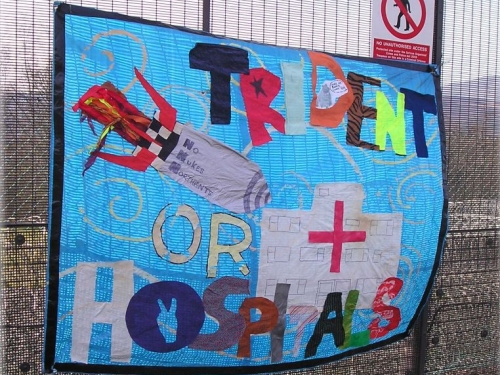
One thing was very striking at the recent Royal United Services Institute (RUSI) Land Warfare Conference, where current British Army personnel including top brass and Ministry of Defence officials were heavily present. The issue of replacing Trident, the UK’s sea-based nuclear deterrent, was not discussed at all.
This conference was taking place a few months ahead of Conservative plans to renew the deterrent like for like. This was guaranteed by the party’s victory at the general election in May, and has since been reaffirmed by Michael Fallon, the defence secretary.
Yet when it comes to Trident, the British military are “split on this issue as never before”. That was the conclusion of a report by the Nuclear Education Trust and Nuclear Information Service that was published at the end of June. So why the difference in views?
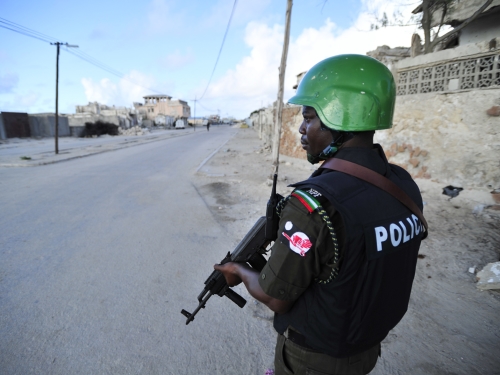
A Nigerian police officer, as part of AMISOM’s Foreign Police Unit, conducts a foot patrol near Lido Beach in Somalia’s capital Mogadishu. Image: TOBIN JONES/Flickr
While the role of police in peace support operations used to be limited to tasks of monitoring and observing, it has changed to encompass complex and substantive roles. These include helping to rebuild the capacity of police and broader law enforcement institutions that have suffered the consequences of violent conflict.
Usually in the aftermath of conflict, these institutions are critical in rebuilding public confidence in the rule of law, which has typically been either diminished by the conflict or, in some cases, totally destroyed. Following the Brahimi Report (2000), police roles were viewed in the wider context of the rule of law, protection of civilians and human rights. New areas of focus include emerging threats such as terrorism, organised transnational crime and corruption.