
Russia’s Dual Assault: How Brussels, Washington, and Beijing Helped Moscow to Undermine the Non-Proliferation Regime

Cartoon of man holding atomic bomb
Jared Rodriguez/Flickr

This article was originally published by the Harvard International Review on 20 August, 2015.

The “Ukraine crisis” concerns more than lofty European values, Ukrainian humanitarian issues, or abstract international law. Russia’s attack on Ukraine is also an assault on the world’s nuclear nonproliferation regime. It subverts the logic of the 1968 Treaty on the Non-Proliferation of Nuclear Weapons (NPT). Given its purpose of curtailing the spread of weapons of mass destruction, namely nuclear missiles and atomic bombs, the NPT is one of the most important international accords in human history.
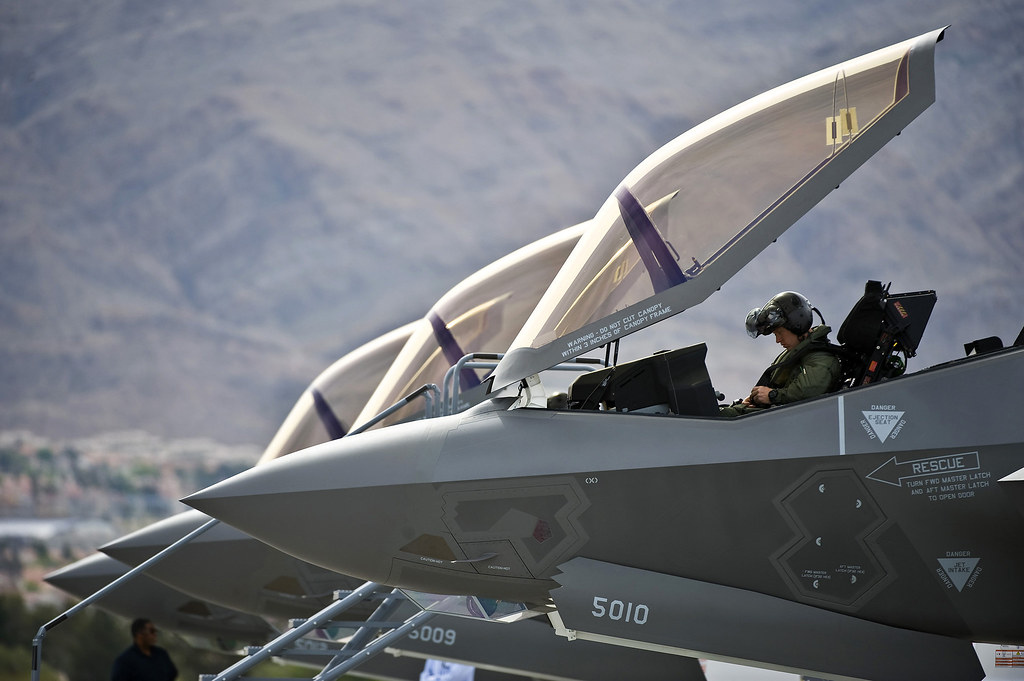
Airpower May Not Win Wars, But it Sure Doesn’t Lose Them

Pilot conducting preflight checks inside an F-35A Lightning II. Source: US Air Force/Flickr.

This article was originally published by War on the Rocks on 19 August, 2015.

“A modern, autonomous, and thoroughly trained Air Force in being at all times will not alone be sufficient, but without it there can be no national security.”

— General H. H. ‘Hap’ Arnold, USAAF

The beginning of the 21st century has been hard on the Department of Defense. Following closely behind two 20th-century successes in Iraq and the former Yugoslavia, the Department of Defense (DoD) was knocked back on its heels following the September 11 attacks. Departing from the successful post-Vietnam template that relied on airpower to seek limited objectives, the United States engaged in two costly, drawn out, and ultimately unsuccessful campaigns in Iraq and Afghanistan. The ground-centric approach failed to achieve stated goals, mired the U.S. military in complex local political contests, and so constrained two presidents that they both were forced to choose between losing now, and reinforcing failure (losing later).

Towards a More Robust ANZUS Alliance

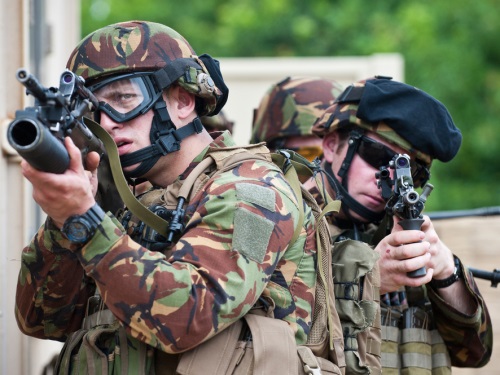
New Zealand Army soldiers from Alpha Company. Image:Official U.S. Navy Page/Flickr.

This article was originally published by the Australian Strategic Policy Institute on 24 August, 2015.

It’s important to consider steps to make the ANZUS alliance more robust to weather the challenges brought about by the rise of China. Our contributions to US-led operations in the Middle East and Afghanistan weren’t trivial for the Australian Defence Force (ADF) in operational terms, but they were far less consequential in strategic terms for two main reasons. First, Afghanistan and Iraq were ‘wars of choice’ as there was no existential danger posed to Australia, so we could continuously adjust our political and operational objectives in order to declare a relative ‘victory’ to our domestic audiences. Second, even if Australia had decided not to support its US ally in these campaigns it wouldn’t have caused irreparable damage to the Alliance. Washington wouldn’t have liked it, but US policy-makers would’ve seen the continued value of ANZUS for US interests in the Asia–Pacific.

Categories
Regional Stability Terrorism

After Zarb-e-Azb: Now What?

Pakistani Prime Minister Nawaz Sharif. Image: UK Department for International Development/Flickr

This article was originally published by the Stimson Center on 14 August, 2015.

Pakistan’s ongoing military operation in North Waziristan, a stronghold of Al Qai’da and Islamist militants, is nearing its end. However, as the Pakistan Army races towards declaring this mission complete, a number of issues of immediate consequence to Pakistan, the region, and the United States remain unaddressed. To succeed in the long run, the mission needs to be part of a larger counter-insurgency campaign that must address political and social considerations, as well as the regional and global exigencies.

Categories
Humanitarian Issues Regional Stability

Endurance of Shining Path Shows Peace in Latin America a Long Road

A group of Peruvian Navy Seals in training. Image: Rick Sforza, U.S. Air Force/Wikimedia

This article was originally published by IPI Global Observatory on 11 August 2015.

In late July, as millions of Peruvians prepared to celebrate their country’s Independence Day, government forces descended upon “Sector 5,” a guerrilla installment in the heart of the coca-producing region of Junín. What they found there was stunning: a “production camp” of 39 Asháninka Indians, most of them children, living in apparent captivity as prisoners of the Maoist militants Shining Path. Some of the adults had been living in the camp for 30 years. According to an internal communiqué from the Peruvian national police, the captives had been forced to work as agricultural laborers and the women were expected to breed and raise a new generation of militants.