
The Threat is Here, It’s Just Distributed Unevenly: A2/AD and the Aircraft Carrier

USS George Washington is underway in the Pacific Ocean
Courtesy of Official U.S. Navy Imagery/Flickr

This article was originally published by War on the Rocks on 28 July 2016

Editor’s Note: You can read a longer account of Steve Blank’s visit to the U.S.S. Carl Vinson at his website later this week.

Sitting backwards in a plane with no windows, strapped in a 4-point harness, head encased in a helmet, eyes covered by goggles, your brain can’t process the acceleration. As the C-2 A Greyhound is hurled off an aircraft carrier into the air via a catapult, your body is thrown forward in the air, until a few seconds later, hundreds of feet above the carrier now at 150 miles per hour you yell, “Holy sh*t!” And no one can hear you through the noise, helmet, and ear protectors.

I just spent two days a hundred miles off the coast of Mexico as a guest of the U.S.S. Carl Vinson with Pete Newell (my fellow instructor in the Hacking for Defense class) and 11 other Stanford faculty from CISAC and the Hoover Institution. It’s hard to spend time on a carrier and not be impressed with the Navy and the dedicated people who man the carrier and serve their country.

10 Things You Should Know About the Recent South China Sea Ruling

Storm clouds
Courtesy Peter Baer/Flickr

This article was originally published by the Centre for International Governance Innovation (CIGI) on 18 July 2016

The recent arbitration tribunal’s ruling on the Philippines’ case against China represents a milestone both in international law and in the politics of the South China Sea. In a sweeping, magisterial, and unequivocal decision, the tribunal has moved the goalposts, changed the channel, and put China on the defensive. From this point forward the main question will not be who owns what in the South China Sea, but who does or does not respect international law. China has rejected the decision in the strongest possible terms, with evident (and no doubt heartfelt) emotion. Whether China sticks to that script or ultimately decides that the costs of noncompliance outweigh the benefits is, of course, the $64,000 question. We will have to wait and see. Meanwhile, though, here are key some things about the decision that you may not have noticed:

When it comes to maritime rights, UNCLOS trumps all. The tribunal has made clear that other state-to-state agreements or principles of customary international law can confer maritime rights, but only if they are consistent with UNCLOS principles.Put another way: if you want to be seen to be playing by the rules, you have to be seen to be playing by UNCLOS rules.

Fethullah Gulen: Moderniser or Wolf in Sheep’s Clothing?

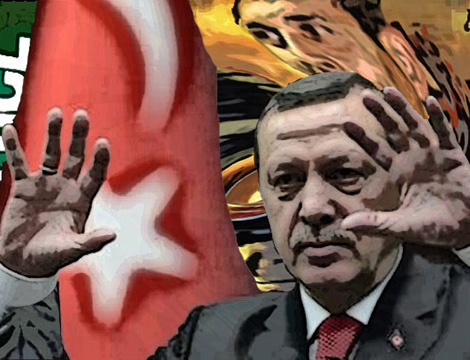
Image of President Erdogan holding up his hands
Courtesy AK Rockefeller/Flickr

This article was originally published by S. Rajaratnam School of International Studies (RSIS) on 19 July 2016

Synopsis

Fethullah Gulen, leader of one of the world’s largest Islamic movements, is accused of attempting to topple Turkish President Erdogan in a failed military coup. Is Gulen a modernist religious leader or a conspirator?

Commentary

BELIEVERS SAY he preaches a new, modernist form of Islam. Critics charge he is a wolf in sheep’s clothing preparing to convert secular Turkey into an Islamic republic. They accuse Fethullah Gulen of being a conspirator who has created a state within the state and attempted this weekend to topple the democratically elected Turkish President Recep Tayyip Erdogan in a failed military coup.

That was not how past Turkish governments or for that matter Erdogan in his eight years as prime minister saw Gulen, the leader of one of the world’s largest and wealthiest Islamic movements.

How Turkey Could Become the Next Pakistan

Arab Street Art
Courtesy Fatemeh/Flickr

This article was originally published by the Institute for the Study of War (ISW) on 19 July 2016.

The U.S. must recognize the risk a NATO ally may become a safe haven for al Qaeda as Erdogan consolidates power.

The failed coup attempt by elements of the Turkish Armed Forces on July 15 will enable President Recep Tayyip Erdogan to establish himself as an authoritarian ruler in Turkey. His priorities in the next few months will be to solidify the loyalty of the Turkish military establishment and complete the constitutional reform necessary to replace Turkey’s parliamentary democracy with an executive presidency, his longstanding goal. A post-coup Erdogan is much less likely to submit to American pressure without major returns. Erdogan immediately demanded the extradition of political rival Fethullah Gulen from the U.S., accusing Gulen of plotting the coup and condemning the U.S. for harboring him. Erdogan will likely deprioritize the fight against ISIS, undermining the counter-ISIS mission in Syria, as he focuses on consolidating power. He may even revoke past concessions to the U.S., including permission to use Turkey’s Incirlik airbase for counter-ISIS operations.

Erdogan has more dangerous options now that his rule is secure, however. A partnership with al Qaeda could grant him a powerful proxy force to achieve national security objectives without relying on the Turkish Military. American policymakers must recognize the dangerous possibility Erdogan will knowingly transform Turkey into the next Pakistan in pursuit of his own interests.

Categories
Humanitarian Issues

Interview – Stacey Philbrick Yadav

6163206883_fc6d92583a_b
Courtesy Surian Soosay/Flickr

This interview transcript was originally published by the E-International Relations (E-IR) on 17 July 2016.

Stacey Philbrick Yadav is an Associate Professor of Political Science at Hobart and William Smith Colleges where she contributes to interdisciplinary programs in International Relations, Middle Eastern Studies, Developmental Studies, and Social Justice Studies. Her specialization is in the comparative politics of the Middle East. She currently serves on the board of the American Institute of Yemeni Studies, where she is involved in initiatives to link academic research to public policies. She has written widely on Yemeni and Lebanese politics over the past several years and published her book Islamists and the State: Legitimacy and Institutions in Yemen and Lebanon in 2013.

Where do you see the most significant research occurring in the political science of the Middle East?

I’m excited to see increasing attention to the intersection of the formal and the informal in analysis of Middle East politics. For a long time, it was rather “either/or,” but more recently there has been some great mapping of the ways in which informal political practices and discourses shape and are shaped by formal institutions and international agreements. The role of unprecedented mass mobilization during and after the 2011 uprisings was taken by some as evidence of the “irrelevance” of formal institutions, but on the contrary, careful scholarship on specific uprisings has shown the iterative relationship between the informal and the formal in creative and theoretically significant ways. Even before the uprisings, some scholars were doing this in critical political economy, but I see early lessons developed in that literature carried into analysis of social movements and other research traditions and it’s exciting.