
From Curse to Blessing: How Africa’s Natural Resources Can Build Peace

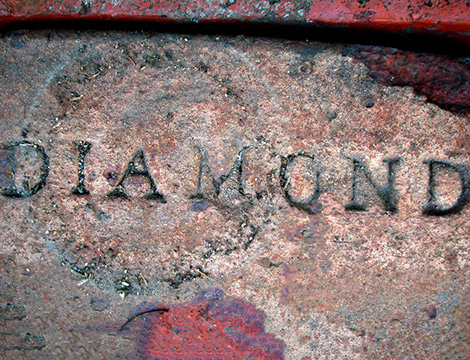
Diamond
Courtesy Tim Samoff/Flickr

This article was originally published by the IPI Global Observatory on 18 July 2016.

While natural resource development can generate economic success, it can also increase the likelihood of conflict, particularly in Africa. Ongoing violence in Nigeria’s oil-rich Niger Delta is a good example of the so-called “resource curse” in action. In response, African governments continue to grapple with how best to use their resource endowments to foster both economic opportunity and peace. At a time of much soul-searching for the United Nations, there is a unique opportunity to put responsible and effective resource development at the heart of African peacebuilding. But how might local communities take greater ownership of these processes?

The UN Peacebuilding Commission is now examining where and how it can contribute to better management of natural resource development, as part of its newly enhanced mandate to seek prevention of global conflict. “We’ve been supporting the type of discussion that needs to happen between citizens and governments and between governments and companies,” Oscar Fernández-Taranco, UN Assistant Secretary-General for Peacebuilding Support, told me.


Taking First-Use of Nukes off the Table: Good for the United States and the World

1014px-Peacekeeper-missile-testing
Courtesy David James Paquin/wikimedia

This article was originally published by the War on the Rocks on 14 July 2016.

The United States first used nuclear weapons more than 70 years ago on Hiroshima and Nagasaki. Fearing the threat from massive Soviet conventional forces and possible large-scale use of chemical and biological weapons, U.S. military and political leaders decided to keep the option to use nuclear weapons first in a conflict. Today, the United States in the world’s dominant global military power and the Soviet Union is long gone. The Cold War-era policy of not ruling out nuclear first-use poses a grave risk to the security of the United States and is not suitable for today’s global security and political environment.

The greatest threat to the United States and to any nation is from the enormous and indiscriminate destructive effects of nuclear weapons. It is in the interest of the United States that, as long as these weapons exist, all nuclear-armed states agree that the sole purpose of nuclear weapons is to respond to a nuclear attack by other nuclear-armed states and only when the survival of the state or one of its allies is at stake. It is time for the United States to adopt this policy.

In April 2009, President Barack Obama made clear that he sought “to put an end to Cold War thinking” and pledged to “reduce the role of nuclear weapons in our national security strategy and urge others to do the same.”

China: A Partner for the Development of Latin America?

542445315_00df230180_b
Courtesy Diego Wyllie/flickr

This Expert Commentary was published by the Elcano Royal Institute on 11 July 2016. It also appeared in the discussion paper “EU-China Relations: New Directions, New Priorities” by Friends of Europe.

China’s re-emergence over the last few decades coincides chronologically with the process of diversification in Latin America’s pattern of international insertion. We have witnessed Beijing grow from a marginal factor in Latin America, to become a key player in shaping the evolution of countries in the region and their process of regional integration. Deepening relations with non-traditional partners has opened a more pluralistic scenario for Latin American countries, extending the range of their international cooperation options in all spheres.

The economic dimension of Chinese-Latin American relations has blossomed in the areas of trade and finance. Beijing has become the second largest trade partner and the main source of international public finance for Latin America. With that being said, the economic development of some Latin American countries is so dependent on the performance of the Chinese economy that a fall of one percentage point in the growth rate of Chinese GDP would reduce Latin American growth by 0.6%, according to the World Bank. Therefore, it is particularly relevant to analyse whether engagement with China is healthy for the economic development of Latin America or not.

Politics of Monuments and Memorials

The German occupation monument in Budapest
The German occupation monument in Budapest, courtesy Tim Venchus/Flickr

This article was originally published by the World Policy Institute on 12 July 2016

In March 2014, Budapest’s Liberty Square became home to the newest controversial monument in the city. The now-notorious German occupation monument consists of two parts: an angel and an eagle. In the middle of ivory columns lined up in a wedge, Archangel Gabriel stands with his arms wide open. His right hand is holding a golden orb, an element of the Hungarian royal insignia. His eyes are gracefully closed, as if he is fully aware of his destiny. A giant, pitch-black eagle—the symbol of Imperial Germany—ominously flies overhead. Its three-pronged claw swings as if it will snatch the orb from the angel’s hand.

Immediately after its construction, the monument was met with fierce criticism from home and abroad. Civil organizations denounced the Hungarian government, saying it was “falsifying the Holocaust” by erecting a monument that glosses over Hungary’s collusion with the Nazis. The monument comes as another expression of surging nationalism in the country, which the current government has stoked by granting voting rights to foreigners based on their Hungarian ethnicity, disseminating anti-immigrant questionnaires filled with leading questions, building fences along the country’s borders with Serbia and Croatia to block the influx of refugees, and making openly xenophobic statements against non-Christian migrants.

Brexit and the Binary Bind

UK EU Leave image
UK EU Leave, courtesy Rareclass/Flickr

This article was first published on 1 July 2016 in the Kluwer Mediation Blog series

Perhaps we shouldn’t be too surprised by the whole Brexit affair. I’m not talking about the result of the vote itself, but about the referendum process, the behaviour it engendered, and its aftermath.

All the classic features were present. Classic features of what? Well, of binary processes. Those that offer a win/lose, yes/no, remain/leave outcome, and nothing else. Rather like courts, as it happens.

Of course, I realise that decisions do need to be taken, and referenda are intended to produce a clear picture of the will of the people (only just, on this occasion, but I suppose it’s clear at least). Nothing wrong with that.

But the problem is that for all the desire for clarity and decisiveness, binary processes come with some fairly hefty downsides. And these have been laid bare for all to see in the referendum process. I will mention three.