Ceasefires Don’t Work: We Have the Numbers to Prove It

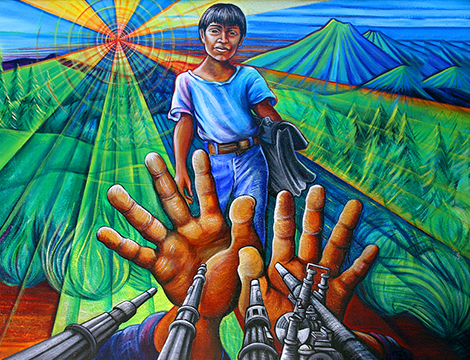
Ceasefire by Juana Alicia
Courtesy Steve Rotman/Flickr

This article was originally published by War is Boring on 31 October 2016.

On Sept. 10, 2016, the U.S.-brokered a ceasefire with Russia and Syria in the besieged city of Aleppo. Although low-intensity fighting never really stopped, the ceasefire didn’t begin to fall apart until a week later, when U.S. aircraft mistakenly killed about 80 Syrian troops.

The killings heightened tensions between the United States and Russia, who had agreed to the ceasefire with the aim of negotiating a combined effort against Islamic State and Al Qaeda-linked fighters. By Sept. 21, the ceasefire collapsed — and the following day, the Syrian government announced a new military offensive to retake Aleppo.

The offensive featured some of the most intensive ground combat and bombing of the entire war, costing hundreds of lives within the span of just a few days. The humanitarian cost on the ground was described by U.N. humanitarian chief Stephen O’Brien as “a level of savagery that no human should have to endure.”

Ten Elections to Watch in 2017

Vote
Courtesy of las.photographs/Flickr. CC BY-NC-ND 2.0

This article was originally published by the Council on Foreign Relations (CFR) on 9 December 2016.

Millions of people around the world went to the polls this year. The results provided plenty of surprises. British voters defied the pollsters and voted to leave the European Union. Colombians did much the same in rejecting their government’s peace deal with FARC, though Colombia’s president found a way to complete the deal a few months later without a vote. The biggest electoral surprise of all might have been in the United States, where Donald Trump defied the political experts and defeated Hillary Clinton. Perhaps 2017 will produce similarly surprising results. Here are ten elections to watch.

The Order of Battle of the Ukrainian Armed Forces

Kiev
Courtesy of Adam Reeder/Flickr. CC BY-NC 2.0

This article was originally published by the Institute for the Study of War (ISW) on 9 December 2016.

The United States and its partners can improve regional security and stability in Eastern Europe by supporting the modernization and reform of the Armed Forces of Ukraine more aggressively. Ukraine has suffered from consistent Russian military aggression since Russia occupied the Crimean Peninsula and militarily intervened in the eastern Ukrainian Donetsk and Luhansk Oblasts in 2014. The overall unpreparedness of the Ukrainian military and its inability to match the capabilities of Russian forces allowed Russian and Russian proxy forces to gain a foothold in eastern Ukraine from which they continue to destabilize the entire country. The Ukrainian armed forces have been partially restructured and strengthened in the face of this constant pressure, enough to stabilize the front lines for a time.  They require significantly more support of all varieties, however, if they are to stop the advance of Russia and its proxies permanently, to say nothing of reversing the armed occupation of Ukrainian territory.

The Global Crisis of Multilateralism

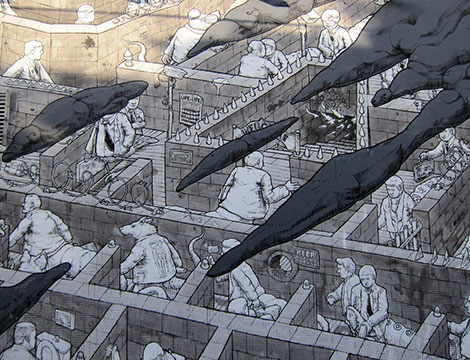
Labyrinth of Wall Street
Courtesy of Wally Gobetz/Flickr. CC BY-NC-ND 2.0

This article was originally published by E-International Relations on 3 December 2016.

Britain’s decision to leave the EU has been labelled an ‘exceptional act of self-harm’. But is it? In October South Africa became the first country to announce its formal withdrawal from the International Criminal Court (ICC). This was soon followed by the exit of Burundi and Gambia and by Russia’s announcement that it intends to withdraw from the Rome Statute which establishes the ICC. Although the Court has been hampered since its inception by the refusal of major states such as the US, China and Russia to submit to its jurisdiction, these withdrawals represent an unprecedented challenge to its legitimacy. Things look no brighter in the area of international security cooperation, as illustrated by the slow acceptance of Additional Protocol safeguards under the NPT and the failure of Annex 2 countries to ratify the Comprehensive Treat Ban Treaty. Even longstanding alliances seem at risk of unravelling. In June Uzbekistan announced its (re-)exit from the Collective Security Treaty Organization, and NATO leaders are growing increasingly nervous that the Trump Administration will turn its back on America’s allies. Meanwhile, there is a growing trend towards withdrawal from and denunciation of international human rights treaties, the G8 has shrunk to the G7, and the use of UNSC vetoes—which were at a historic low during the 1990s—is once again on the rise.

Taiwan, Thorn in China’s Side, Gets New Attention

Taiwan Flag
Courtesy Nicolas Raymond/Flickr. CC BY 2.0

This article was originally published by YaleGlobal Online on 6 December 2016.

Taiwan issue underscores limits of power for the US and China – and the calcification of international policymaking

Since the 1940s, after Chairman Mao Zedong proclaimed the founding of the People’s Republic of China and the defeated Kuomintang retreated to Taipei, the Taiwan Strait has remained among the most intractable issues in international relations and a potential site for conflict in Asia. A brief phone call between the US President- elect Donald Trump and Taiwan’s President Tsai Ing-wen was a startling intervention in what’s become a warily balanced array of power relations sustained by arcane diplomatic formalisms.

The response from China, which maintains territorial claim to the island as sovereign territory, was relatively muted with more annoyance directed toward Taiwan. Immediate reaction elsewhere to the phone call included concerns about an escalation of the conflict for the entire region and the United States.