
Grappling with the Fait Accompli: A Classical Tactic in the Modern Strategic Landscape

Note stating 'It's a fate accompli'
Note stating ‘It’s a fate accompli’, courtesy Adamina/Flickr

This article was originally published by War on the Rocks on 31 May 2016.

Good scholarship doesn’t need to fit within a 2×2 matrix, but it sure helps make sense of things when it does. It’s in this spirit of conceptual clarity that I developed the diagram below depicting variations in the fait accompli, an age-old but underappreciated tactic of the disgruntled and strategically minded. Rather than the naked use of force or threat-making alone—situations whose logics are straightforward even if the best responses aren’t—the fait accompli is a move that pursues an advantage by making it difficult for a competitor to retaliate or counter.
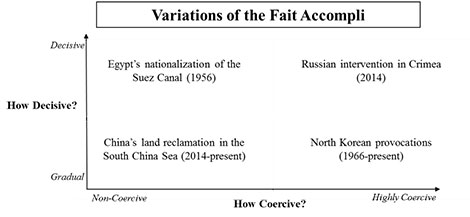
Variations of the Fair Accompli
Variations of the Fait Accompli Table, courtesy Van Jackson/War on the Rocks

This 2×2 diagram is part of a lecture I give at the Asia-Pacific Center for Security Studies on revisionist tactics short of war — what many now call “gray zone” conflicts. Although most security studies scholars and analysts understand broadly what a fait accompli is — literally an “accomplished fact” — the tactic itself has rarely been an object of analysis (two recent rare exceptions are discussed more below). This is a serious oversight, because in the so-called “gray zone” of conflict, the fait accompli is a common means by which states pursue revisionist agendas.

The ‘History Problem’ in Sino-Japanese Relations: What’s the Problem?

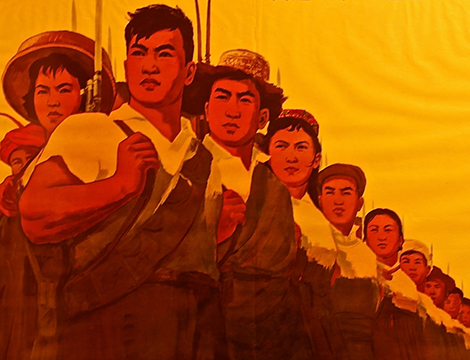
 Chinese Propaganda Poster
Courtesy Pedro Ribeiro Simões/Flickr

This article was originally published by E-International Relations on 31 October 2016.

The so-called history problem has long been seen by academics and pundits as a key obstacle to the improvement of bilateral relations between China and Japan. In the academic literature, the problem is typically described as consisting of a number of sub-issues related primarily to Japan’s attitude towards its invasion of China in the 1930s and 1940s, an attitude that many regard as insufficiently repentant. In this literature the meaning of the history problem tends to be understood as fixed rather than as something that changes over time. Even though numerous discussions of the problem exist and many observers agree on its importance for Sino-Japanese relations, the question of how the history problem itself is understood within Japan and China has received surprisingly scant attention. This article, by contrast, argues that while the specific sub-issues viewed as being part of the problem are indeed important, currently the most fundamental and overlooked aspect of the history problem in Sino-Japanese relations is the lack of agreement on what exactly the problem is.

Interview – Elizabeth Shakman Hurd

Behold the Two Headed Spanish Horse
Courtesy Alan Levine/Flickr

This interview transcript was originally published by by E-International Relations (E-IR) in September 2016.

Elizabeth Shakman Hurd is Professor of Political Science and Religious Studies at Northwestern University. Professor Hurd’s latest book Beyond Religious Freedom: The New Global Politics of Religion (Princeton, 2015) has attracted international attention by framing important debates around what the author believes is a problematic intersection of policy, religion and political interest in global affairs today. In this interview she discusses the implications of her scholarship and where she believes the study of religion in IR is headed.

What motivated you to write your latest book Beyond Religious Freedom?

Beyond Religious Freedom is my response to what I see as a need to rethink how we approach the study of religion and politics in the field of international relations. There’s been a gold-rush mentality lately as scholars scurry to ‘get religion right’ – but many of these efforts are confused, or even troubling. The problem, as I discuss in more detail elsewhere, is that international relations ‘got religion’ but got it wrong. Beyond Religious Freedom encourages scholars to step back from the political fray. It neither celebrates religion for its allegedly peaceful potential nor condemns it for its allegedly violent tendencies. Instead, I propose a new conceptual framework for the study of religion and public life. It accounts for the gaps and tensions that I perceived between the large-scale international legal, political and religious engineering projects undertaken in the name of religious freedom, toleration, and rights, and the realities of the individuals and communities subjected to these efforts.

Categories
CSS Blog

Mediation Perspectives Blog: Applying Mediation and Negotiation Techniques at the Family Dinner

the fight scene
Courtesy of Josué Menjivar/ Flickr. Attribution-NonCommercial 2.0 Generic (CC BY-NC 2.0)

Mediation Perspectives is a periodic blog entry provided by the CSS’ Mediation Support Team and occasional guest authors. Each entry is designed to highlight the utility of mediation approaches in dealing with violent political conflicts. To keep up to date with the with the Mediation Support Team, you can sign up to their newsletter here

During 2016, our mediation perspectives blog covered a variety of topics. We wrote about avenues for Research on Mediation; we honoured deceased mediators; we considered the value of Early Warning/Early Response mechanisms; we looked at national dialogue in Colombia, and we even wrote about the role of meditation in mediation. As the new editor of the Mediation Perspectives blog series, I’d like to round up the year with a more every-day focused blog entry – which should be read with a healthy dose of humour. So, here is today’s question: How can basic mediation techniques help you to avoid fighting at your Christmas Family dinner? (For those who don’t celebrate Christmas, this question is of course applicable to a wide range of big family gatherings.)

The day is here, guests will arrive in a few hours, you’ve set up the table and the decorations, and now you want to sit down to watch a bit of TV and to relax while waiting. The smell of cooking from the kitchen is tempting, and why not pre-taste tonight’s dinner? You go to the kitchen where your wife is busy snipping and steering (Yes, “wife”; if we are honest, in most families it’s still the women who do the cooking, right?) and you help yourself to a spoonful of stew. You smile at your wife, say “just needs a bit of salt”, and walk back to the living room. Or so you thought, because she now starts screaming at you, calling you a lazy bum and threatens to throw the stew out of the window if “monsieur” doesn’t like it. You turn, look at her and say: “What? Throwing out the stew, are you crazy!”

China’s Military Reforms: An Optimistic and a Pessimistic Take

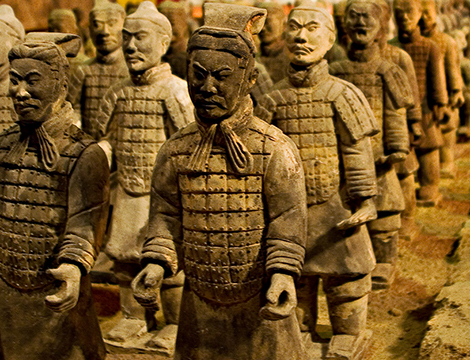
Terracotta Army
Courtesy Shawn Kinkade/Flickr

In today’s blog, Michael Chase and Jeffrey Engstrom face off against Roger Cliff on China’s ongoing military reforms. The two ‘optimists’ believe the reforms will help blunt corruption, strengthen civilian control over the PLA, and modernize the armed forces. Roger Cliff, in contrast, argues that the reforms won’t resolve two of the PLA’s most glaring weaknesses – its limited joint capabilities and the continued dominance of the army.

China’s Military Reforms: An Optimistic Take

This article was originally published in Joint Forces Quarterly 83 by National Defense University Press on 1 October 2016.

China is implementing a sweeping reorganization of its military that has the potential to be the most important in the post-1949 history of the People’s Liberation Army (PLA).1 Xi Jinping, who serves as China’s president, general secretary of the Chinese Communist Party, and chairman of the Central Military Commission (CMC), seeks to transform the PLA into a fully modernized and “informatized” fighting force capable of carrying out joint combat operations, conducting military operations other than war (MOOTW), and providing a powerful strategic deterrent to prevent challenges to China’s interests and constrain the decisions of potential adversaries. Scheduled for completion by 2020, the reforms aim to place the services on a more even footing in the traditionally army-dominated PLA and to enable the military to more effectively harness space, cyberspace, and electronic warfare capabilities. Simultaneously, Xi is looking to rein in PLA corruption and assert his control over the military.