
Categories
Uncategorized

Shape the ISN’s Future


Access to information is no longer the main problem. Today’s challenge is managing the information that’s out there. For almost two decades, the ISN has been dedicated to promote information management and knowledge sharing in the area of international relations and security. We are striving to integrate original current affairs analysis with existing background publications and policy briefs. We offer you a wealth of free, high-quality information services, but we know that we don’t always present it in the best way possible. That’s where we need your help.

We are curious to hear which services you use, which regions and topics you’re interested in, which new services you’d like us to provide and how we can make our website more user-friendly. Please take a few minutes and give us your feedback on how we can improve. We highly appreciate your opinion.

 

Take me to the survey

Categories
Uncategorized

This Week in ISN Insights…

It's week 23 on our editorial calendar, Photo: Leo Reynolds, flickr

Coming up this week in our ISN Insights coverage:

The Kofi Annan Foundation’s Albert Souza Mulli tackles the growing scourge of transnational organized crime on Monday.

On Tuesday, Professor John Mueller of Ohio State University opines about the overblown threat of nuclear weapons.

Dr Alex Wilner of the Center for Security Studies at ETH Zurich argues that combating terrorism involves a better understanding of the radicalization process on Wednesday.

And on Thursday, Francesco Milan, a Researcher with the Ankara-based International Strategic Research Organization, previews Turkey’s 12 June general elections.

And in case you missed any of last week’s special, expanded coverage of the International Security Forum, catch up here with articles on: US-Iranian relations; envisaging the security challenges of a post-nuclear world; uncovering “participationist Islam”; reversing the excesses of post-9/11 policy; developing a more realistic cyberwar threat assessment; and managing China’s rapid rise.

Categories
Uncategorized

This Week in ISN Insights…


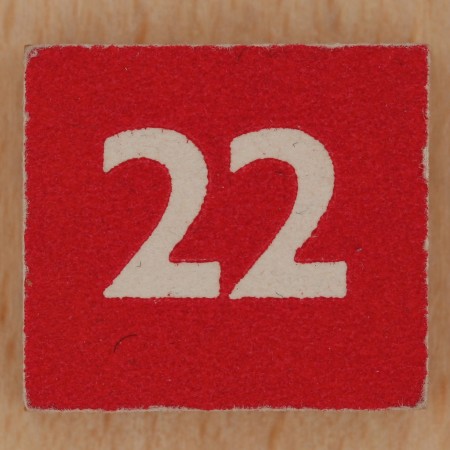
It’s week 22 on our editorial calendar, Photo: Leo Reynolds/flickr


The ISN is pleased to offer you a special, expanded edition of ISN Insights this week, dedicated specifically to coverage of the International Security Forum (ISF) taking place 30 May-1 June 2011, in Zurich:

* On Monday, we take a closer look at the stalled state of US-Iranian relations, and envisage a world without nuclear weapons, with articles, respectively, from Dr John Limbert, Professor of Middle Eastern Studies at the US Naval Academy, and Alyson JK Bailes, Visiting Professor at the Univeristy of Iceland and former Director of the Stockholm International Peace Research Institute (SIPRI).

* Tuesday’s focus on the ten-year anniversary of 9/11 offers selections from Dr Paul Pillar, Visiting Professor and Director of Studies at the Center for Peace and Security Studies, Georgetown University, and Dr Lorenzo Vidino, Visiting Fellow at the Center for Security Studies (CSS), ETH Zurich.

* We’ll offer up on Wednesday an article on managing China’s rapid rise by Dr Kerry Brown, Head of the Asia Program at Chatham House, and a piece by the CSS’ Dr Myriam Dunn Cavelty, on developing a more realistic cyberthreat assessment.

And in case you missed any of last week’s coverage, you can catch up here on: the 20-year anniversary of Operation Solomon; opinion polls and IR; the challenges facing the new European External Action Service (EEAS); and understanding Pakistan’s nuclear rationale.

Categories
Uncategorized

Coming Up at the ISN…

It's week 20 in our editorial calendar, Photo: Leo Reynolds/flickr

This week in ISN Insights and Podcasts, you can look forward to the following content:

  • The tension between India’s search for ‘strategic autonomy’ and its growing relationship with the US is analyzed by Dr Harsh V Pant, Reader in International Relations at King’s College London, on Wednesday.
  • Barbara Haering will discuss explosive weapons in our Friday podcast.

And in case you missed any of last week’s coverage, you can find it here on: resolving the Kuriles conflict; US military ‘brain drain’ and retention problems;  enhanced US-India space cooperation; the efficacy of bin Laden’s assassination; and a podcast on Nigeria.

Categories
Uncategorized

Staying up to date using the ISN’s RSS feeds

What is an RSS Feed?

RSS feeds allow you to subscribe to updates on websites. Special programs, called RSS readers can read these subscriptions and display them in an easy to use format.
Unlike newsletters, these feeds do not land in your email inbox and can be subscribed and unsubscribed without the need to provide any personal information.

Popular online RSS readers include Google Reader and MyYahoo. These readers are free to use.

Offline RSS readers to install on your computer are also available. Microsoft Outlook has an RSS reader included, the company provides a general introduction to RSS feeds and using Outlook to read them.

Where to find RSS Feeds
RSS feeds are available on many sites and the link to the RSS feed is usually marked with a variation of the orange RSS symbol.

RSS symbol
RSS Symbol

The standard RSS feeds of the ISN website can be found one a standalone page listing the ISN RSS feeds, giving you the option to subscribe to Publications, IR directory entries, podcasts or ISN insights. New entries in a chosen RSS feed will then be delivered to your reader.