
Thai Elections – Challenging Times Ahead

Red shirts rally in Thailand
Red, yellow or camouflage? Photo: Clark and Kim Kays/flickr

Thai parties are gearing up for general elections as Prime Minister Abhisit Vejjajiva is expected to dissolve the House of Representatives shortly. His Democrat Party came to power through a parliamentary vote, after the previous government was toppled. The upcoming elections will now put the government’s mandate to a popular test. So far so good. It is very unlikely though that the five-year-old political crisis will end with the formation of a new government.

Thailand’s deep political divide is driven by the underlying monarchical succession – the first of its kind since 1946. The system on which the Thai society is built is in flux, leaving everyone struggling to be in a better position.

The Democrat Party has possibly gained some popularity among ordinary Thais, but all in all it remains an elite movement rooted in Bangkok’s establishment. Thus there’s a good chance that the Pheu Thai Party – the de facto party of deposed Prime Minister Thaksin Shinawatra – receives most votes in the poll.


Categories
Uncategorized

Filtering the ISN to fit your needs – Find Information

Find information

With over thirty thousand content objects in a variety of formats, the ISN holds a vast repository of data on international security research. But how do find what you’re looking for?

To enable you to locate articles, publications or podcasts for your specific area of interest, the ISN provides a filtering tool called “Find information”. The “Find information” box is located on the top right of the ISN website. First, select the most important criterion for your research, either subject or region. After clicking on your item of choice, you are presented with the topmost level of region or subject matter. To narrow down your research area, you can choose a more focused region in the tree view in the left pane. In the example below, we first chose “Africa” as a region and then narrowed the search to “Southern Africa”.

Easily filter by regions
Define the main criteria for your search and easily enhance the filtering.

You could also narrow down the region even further. e.g. by choosing Angola or Comoros, but we will leave this for now and turn to the second filtering option, by subject. The subject tree is right above the region tree in the left pane. Clicking on a subject now will add this filter to the already selected region.

A new State on the Horizon

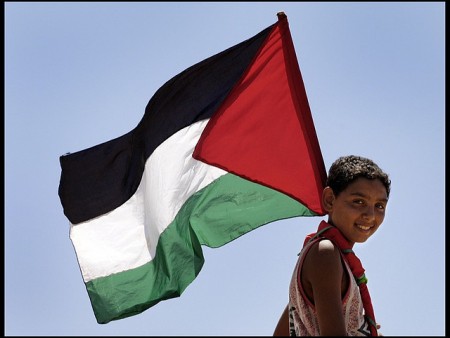
The Times They Are A-Changin. Photo: Rusty Stewart/flickr

Following the breakdown of direct peace talks last autumn, the Palestinian Authority (PA) ruling the West Bank has now come to adopt a new diplomatic strategy: its aim is securing United Nations’ recognition of a Palestinian state based on the 1967 borders, with East Jerusalem as its capital. And chances are that this plan will succeed.

Israel and the United States both oppose such a move, arguing a real solution can only be reached through negotiations. However, if no changes are made between now and September 2011, the UN is almost certain to declare a Palestinian state. And if a state of Palestine is declared, Israel will inevitably be put into the uncomfortable position of being considered an occupier of another UN-member country.

Hardly surprising, therefore, the Palestinian march towards statehood is unnerving both Israel and the United States. As a result they have come out with new peace plans to act as counterweights: Israeli Prime Minister Benjamin Netanyahu, who is to travel to Washington next month, where he will present his initiative, has not yet spelled out the content of his plan. However, it is said to include a repositioning of Israeli occupation forces in parts of the West Bank, as well as some improvements of Palestinian daily life. Furthermore, Israel is said to transfer some of the territories classified as Area B and Area C to Palestinian control. But not a single Jewish settlement will be dismantled.

Categories
Uncategorized

This Week in ISN Insights…

It's week 18 on our editorial calendar, Photo: Leo Reynolds/flickr

Coming up this week in our ISN Insights coverage:

On Monday, Washington, DC-based intelligence analyst Anna Dunin takes on the thriving business of mercenarism in sub-Saharan Africa.

The Jamestown Foundation’s Roman Muzalevsky analyzes the potential impact of the Arab uprisings on Central Asian authoritarianism, on Tuesday.

On Wednesday, The Graduate Institute’s Paolo Cravero examines Italy’s sagging democracy under the weight of Berlusconi.

Dr Rupakjyoti Borah of Manipal University takes a closer look at India’s thirst for nuclear energy despite the cautionary tale of Fukushima – and how Australia could help quench it, on Thursday.

And in case you missed any of last week’s articles, you can find them here on: Gaddafi’s influence in sub-Saharan Africa; controversy over UNESCO’s declaration that Rachel’s tomb is a mosque; the case for UN reconsideration of the Zimbabwean matter; and a podcast on asylum seekers’ rights and states’ responsibilities to them.

Accountability Process in Sri Lanka Disputed

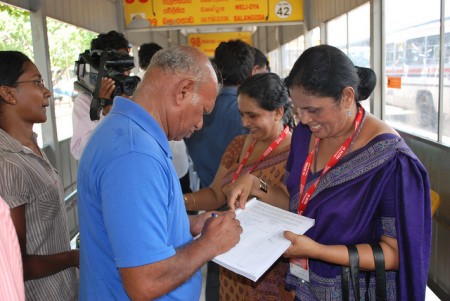
Sign here and smile for the camera, please. Photo: vikalpasl/flickr

The report of the UN Secretary-General’s panel of experts on accountability in Sri Lanka, published on 31 March 2011, reveals “a very different version of the final stages of the war than that maintained to this day by the Government of Sri Lanka.” The panel findings indicate that serious violations of international humanitarian law and international human rights law were committed by both the Government of Sri Lanka and the Liberation Tigers of Tamil Eelam. Some of these violations, if proven, “would amount to war crimes and crimes against humanity.” The UN also got its share of criticism, for failing to take action that might have protected civilians during the final stages of the war.

Unsurprisingly, the Sri Lankan Government denounced the report as “fundamentally flawed”. The Ministry of External Affairs alleged that, among other deficiencies, the report was based on biased material and presented without verification. Although it was originally a joint commitment by the UN Secretary-General and the President of Sri Lanka, the government objected to the publication of the report and claimed that it could damage reconciliation efforts between the Sinhalese majority and the Tamil minority in the country. The government is now seeking international and local support as part of an effort to counter the UN panel report and the implementation of its recommendations.

On the other hand, the Tamil National Alliance (TNA) – the main political party representing the ethnic minority – welcomed the panel’s recommendations and expressed hopes that they will be implemented.