A black swan, making waves. Photo: Aziem Hassan/flickr
These days it seems like everyone knows about ‘black swans.’ Natalie Portman and Mila Kunis aside, Nassim Nicholas Taleb used it as the title for his 2007 book about “low probability, high impact” events to which, he argued, the human mind is especially vulnerable. But ‘black swans’ have an older role in debates about the philosophy of science (as Taleb, a self-described epistemologist, certainly knew) and, thus, relevance for International Relations, a discipline that often aspires to (social) scientific status.
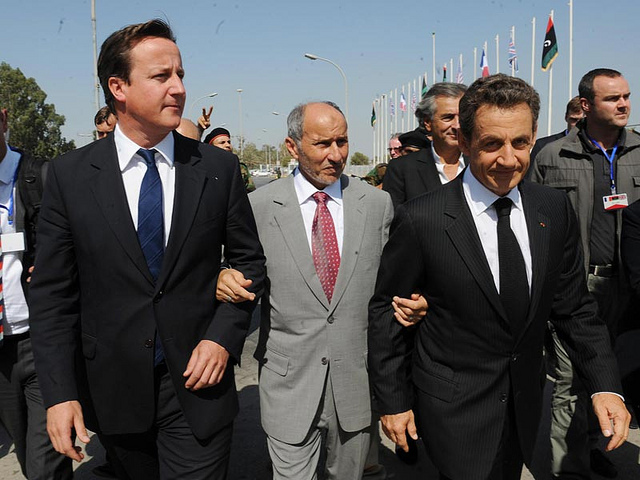
Patronizing or just supportive? David Cameron and Nicolas Sarkozy walking Mustafa Abdel Jalil, head of the Transitional National Council (TNC), during their visit to Tripoli on 15 September; image: The Prime Minister's Office/flickr
On 15 September, a ‘new Libya‘ was welcomed among the members of the international community: first by Nicolas Sarkozy and David Cameron, who visited Tripoli that day; then by the UN General Assembly, which recognized the Transitional National Council as Libya’s rightful representative the following day. The African Union (AU) reluctantly accepted the new reality on 20 September.
Even though Libya has regained its diplomatic status, it is only starting to rebuild itself. In this context, three main questions emerge: What are the problems the new Libya faces? How should these problems be addressed? And finally, what role should external actors play in rebuilding the country?
In the following paragraphs, I will give an overview of how some of the ISN’s partners have begun to answer these questions.
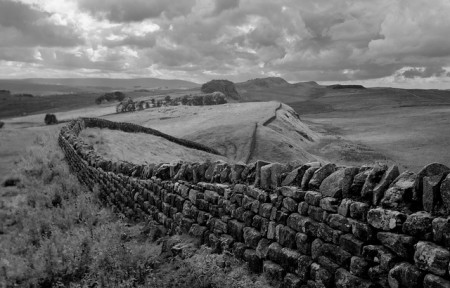
Hadrian's Wall: durable, but no longer a border. Photo: LittleMissBigFeet/flickr
Among the first durable political borders were the Roman limites – built of stone or marked by ditches, or fortifications – at the Empire’s frontiers in North Africa, Germany and Britain. But a border has always meant more than a wall, fence or line; Derrida, for one, writes of the epistemological charm of borders, as expressions of our innate cravings for distinctions and certainty, for comfort and security.
For many in international affairs, borders are material facts, dividing the world into what John Ruggie calls “fixed, disjoint and mutually exclusive territorial formations.” On this view, borders may be “contentious and controversial in their location” (as John Williams argues in his 2006 book The Ethics of Territorial Borders) but not in the function they perform.
Nomen est omen; the pirates have taken Berlin by storm. Although SPD’s Klaus Wowereit was comfortably re-elected as Berlin’s mayor, the strong showing of Germany’s newest addition to a state parliament has taken many by surprise. The pirate party, dedicated to free information and privacy protection, has won 8.9% of the votes. By comparison, the FDP – a junior partner in Angela Merkel’s government – has been completely kicked out.
Though concerned about the results, most established parties shrug the events off as a form of political protest, and describe the party as anything from ‘non-serious’ to ‘meaningless’. Unfortunately, they’re missing what Berlin’s youth has been trying to say.
Freedom of information and privacy issues on the net affect many voters directly. For a long time, Germany’s elite has been ignoring the important role of the internet in many of its citizens’ lives. When they finally touched upon the issue, it made ‘Generation Net’ worry even more. To internet activists, the prospects of telecommunications data retention felt like a 2.0 version of 1984.
Of course some of the party’s demands seem extreme, and their leaders still have to prove that they are committed to playing a constructive role in day-to-day politics. But whatever the future holds: instead of belittling the pirates, the bigger parties had better work out their own positions on a complex issue that concerns far more than 8.9% of the electorate.
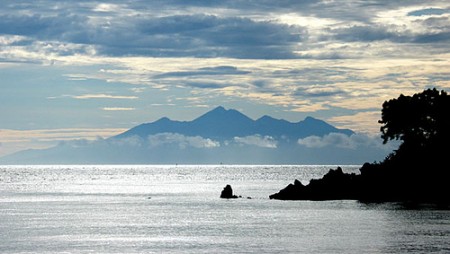
A scenic view of Lombok Island, Indonesia, a site of offshore detention. Photo courtesy of vizzitor/flickr
When the history of the first decades of the 21st century is written, the US military detention facility at Guantanamo Bay Naval Base in Cuba is likely to feature prominently. In the end, ‘Gitmo’ will always be synonymous with humanitarian abuses and allegations of American war crimes perpetrated as part of the ‘war on terror.’