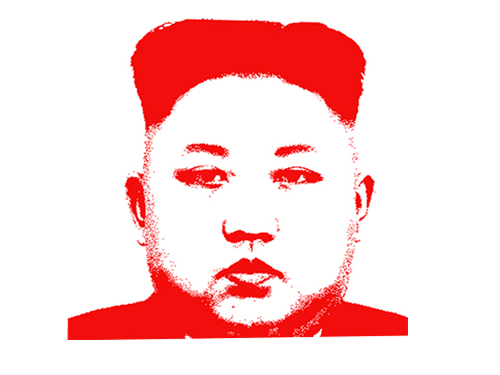
Not everybody would agree, but it seems increasingly likely that Kim Jong Un and his administration (whatever that means) are executing a careful set of market-oriented reforms. These reforms bear some similarities to what the Chinese leadership did in the 1970s, though they are significantly less radical in many regards.
On 23rd of April 2014, Fatah and Hamas signed in Gaza’s Shati refugee camp the latest of a series of reconciliation agreements. Hopes were not particularly high, as a number of similar agreements had been signed in the past (Sana’a 2008, Mecca Agreement of 2008, Cairo Agreement of 2011, and Doha Declaration of 2012) but were incapable of overcoming the factional divide in practice. The Shati agreement had the potential to be different. The parties indeed proceeded to form a Government of National Consensus (GNC) and thus gave proof of significant political will.
At the most recent International Joint Conference on Artificial Intelligence, over 1,000 experts and researchers presented an open letter calling for a ban on offensive autonomous weapons. The letter, signed by Tesla’s Elon Musk, Apple co-founder Steve Wozniak, Google DeepMind CEO Demis Hassabis, and Professor Stephen Hawking, among others, warned of a “military artificial intelligence arms race.” Regardless of whether these campaigns to ban offensive autonomous weapons are successful, though, robotic technology will be increasingly widespread in many areas of military and economic life.
Over the years, robots have become smarter and more autonomous, but so far they still lack an essential feature: the capacity for moral reasoning. This limits their ability to make good decisions in complex situations. For example, a robot is not currently able to distinguish between combatants and noncombatants or to understand that enemies sometimes disguise themselves as civilians.
One of my favorite group exercises in mediation training is the monster game. It begins with the participants forming a big circle and designating someone to be the first monster. The monster then speaks the name of one participant in the circle and slowly approaches him/her making a dangerous looking monster face and terrible monster-like noises. The rules are simple: when you are attacked, you are not allowed to move until you’ve said the name of another participant in the circle. You need to do so before the monster physically touches you. If you can’t give a name in time, or you start moving before you have given a new name, you are “dead” and have to leave the circle. The “survivor” then becomes the new monster and the game continues.
While the aim of the game is to stay alive, many participants don’t survive the first few times they get attacked. That’s because when we get scared, our brains don’t function the way they usually do and raw survival instincts take over. Our first reaction is to escape from the threat as fast as we can. That’s also why we regularly use the monster game in mediation training – complex mediation processes may take unexpected turns. For instance, participants might experience emotions such as insecurity and doubt, or even outright fear and panic. These emotions are neither good nor bad, but merely provide us with information that there is a (perceived) monster in the room. However, our immediate and instinctual reaction may set us back in the sensitive mediation processes we are involved in – just as they may inhibit us from producing the name of another participant in the monster game.
Yesterday marked an important anniversary in the history of modern China. In keeping with Western Europe, the United States and others, the country commemorated the 70th anniversary of the conclusion of the Second World War and remembered its war dead. Beijing declared September 3 to be a national holiday, so that all Chinese citizens could take part in events. However, the rhetoric and tenor of the Chinese commemorations was different in many respects from the somber, understated and generally uncontroversial American and European ceremonies.