Cuba: Russia’s Unsinkable Aircraft Carrier

The Embassy of the Russian Federation in Havana, Cuba. Image: nickdemarcofoto.com/Wikimedia

This article was originally published by the Jamestown Foundation on 30 October, 2015. Republished with permission.

Despite all of the other major foreign policy issues on its agenda, Russia has not forgotten Cuba. Indeed, it appears that Moscow’s strategic interest in this Caribbean island country has grown steadily, despite reported stagnation in their bilateral economic ties (House.gov, October 22). Recently, Russian Deputy Prime Minister Dmitry Rogozin announced plans to establish a signals calibration center in Cuba for Russia’s Global Navigation Satellite System, more commonly known as GLONASS—the Russian equivalent of the United States’ Global Positioning System (GPS). He also announced that Russia may set up an aviation engineering center in Cuba (TASS, October 22). These initiatives are not coincidences or wholly new gambits. Russia has sought to reestablish military bases in Cuba for some time. For instance, in February 2014, Defense Minister Sergei Shoigu announced that Moscow was seeking a network of global naval bases that included Cuba and Nicaragua; and Russia could be discussing similar arrangements with Argentina as well (RIA Novosti, February 26, 2014). Although Moscow’s top diplomat, Sergei Lavrov, denied that Russia was seeking or needs foreign bases, he did admit that his country wants “repair and maintenance stations” for its ocean-going fleet. Yet, at the same time, Shoigu observed that Moscow not only wanted the use of ports for its ships but also installations for the refueling of its long-range bombers (TASS, March 17, 2014).
Categories
Terrorism

Russia’s Recent Airstrikes in Syria

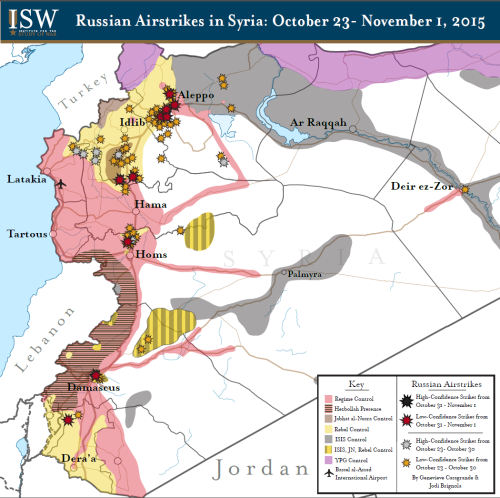
Russian Airstrikes in Syria from 23 October – 1 November, 2015 (click to enlarge). Image: Genevieve Casagrande/Institute for the Study of War

This map was originally published by the Institute for the Study of War on 2 November, 2015.

The Russian Ministry of Defense (MoD) discontinued the release of daily airstrike reports from October 28 – November 1 amidst multilateral talks on the Syrian Civil War held in Vienna on October 30 and continued reports of civilian casualties. Nevertheless, credible local sources continued to report airstrikes in Dera’a, Damascus, Homs, Hama, Idlib, and Aleppo from October 31 – November 1. Russian airstrikes predominantly targeted rebel-held areas in Aleppo Province in conjunction with regime ground offensives against ISIS in the southeastern countryside of Aleppo and rebel forces southwest of Aleppo City. Local activist reporting claimed that Russian airstrikes and regime forces killed 64, including 28 children in Aleppo on October 31 alone.

Categories
Terrorism Regional Stability

Could an Independent Iraqi Kurdistan Defend Itself?

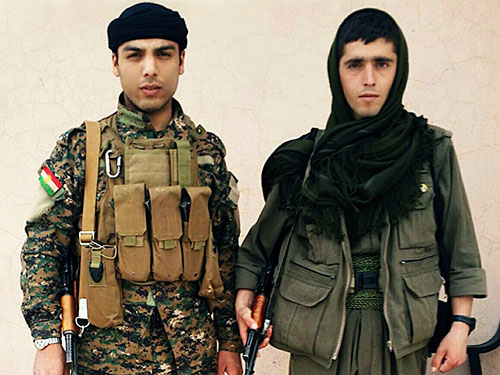
Kurdish Peshmerga and PKK fighters. Image: Kurdishstruggle/Flickr

This article was originally published by Offiziere.ch on October 22, 2015. Republished with permission.

Most Iraqi Kurds want independence and do not trust the Iraqi army to protect them. But the question is — how would an independent Iraqi-Kurdistan defend itself?

It won’t be easy. The Kurdish region is sandwiched between the Iraqi state, Turkey and Iran. All three states oppose Kurdish independence. The Kurdish military is a factionalized slew of paramilitary groups with mostly light weapons.

For the Kurds, Baghdad may very well be the capital of a foreign country. This is why the Kurdistan Regional Government (KRG) is annoyed that arms shipments to the Peshmerga go through Baghdad. No surprise, the Iraqi government keeps the heaviest weapons for itself.

Migratory Labor for Extractive Industries Creating “Sons of Soil” Conflict in China

Miners entering a coal mine. Image: Unsplash/Pixabay

This article was originally published by New Security Beat on 13 October, 2015.

In May 2011, two weeks before I was scheduled to start research in the region, a Mongol herder named Mergen was hit by a mining truck while protecting his pastureland in Xilingol, Inner Mongolia. He was dragged 140 feet and killed. His death sparked a month of protests.

It was not the first or last time extractive industries have collided with ethnic minorities in northern China’s Inner Mongolia Autonomous Region, an area nearly twice the size of Texas and home to 25 million people, 17 percent of whom are ethnic Mongols. Several studies have shown that natural resources – whether through abundance or scarcity – are sometimes linked to the onset, duration, and intensity of armed conflict. Yet, the identity of those who exploit natural resources has been largely ignored. A closer look at tensions surrounding China’s voracious appetite for nature resources reveals this may be mistake.

Categories
CSS Blog

Mediation Perspectives: Building Consensus on Security Sector Transformation in Zimbabwe

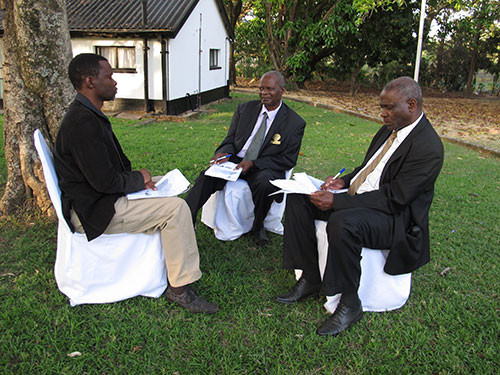
Traditional leaders in Zimbabwe preparing a mediation role play exercise. Image: Valerie Sticher/Center for Security Studies (CSS), ETH Zürich.

This article was originally published in the Bulletin on Swiss Security Policy, a publication of the Center for Security Studies (CSS) at ETH Zurich, on 27 October, 2015.

After years of estrangement, Zimbabwe and the West have slowly started to re-engage with each other. The popular approval of a new constitution in 2013 – which introduced significant civil rights – and the subsequent peaceful elections provided the impetus for the thawing of relations. This included the easing of European Union (EU) restrictive measures imposed in 2002 following Zimbabwe’s controversial land reforms.

But that’s not to say that the country’s myriad challenges have been resolved once and for all. The unresolved succession of 91-year-old President Robert Mugabe, who has ruled Zimbabwe since independence in 1980, continues to paralyze the country’s politics and economy. High levels of unemployment and empty state coffers make economic survival most Zimbabweans’ main concern. Finally, there’s a growing need to undertake a series of far-reaching institutional reforms, particularly when it comes to Zimbabwe’s security sector. But how do you tackle such an undertaking in a country where there is a lack of political will and capacity for such sensitive reforms?