Categories
Humanitarian Issues

What Can Make Displaced People More Vulnerable to Extremism? A Study in Afghanistan Offers Clues for Better Policies in the World’s Violent Conflict Zones

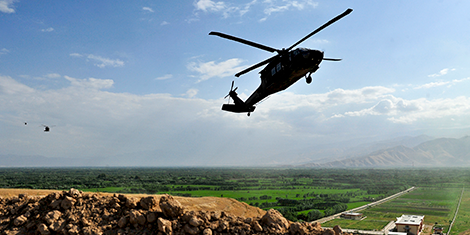
Image courtesy of Joshua Ives/DVIDS.

This article was originally published by the United State Institute of Peace (USIP) on 14 March 2019.

As the international community works to prevent new generations of radicalization in war-torn regions, debate focuses often on the problem of people uprooted from their homes—a population that has reached a record high of 68.5 million people. Public discussion in Europe, the United States and elsewhere includes the notion that displaced peoples are at high risk of being radicalized by extremist groups such as ISIS. Scholars and peacebuilding practitioners have rightly warned against such generalizations, underscoring the need to learn which situations may make uprooted people vulnerable to radicalization. A new USIP study from Afghanistan notes the importance of specific conditions faced by displaced people—and it offers indications suggesting the importance for policy of supporting early interventions to stabilize the living conditions of displaced people after they return home.
When Corruption Stops, Trust in Government Can Start

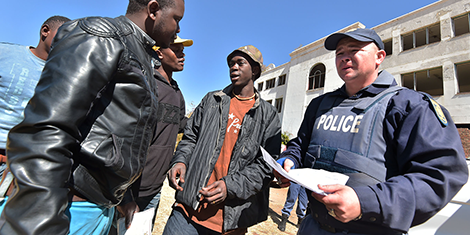
Image courtesy of GovernmentZA/Flickr. (CC BY-ND 2.0)

This article was originally published in ISS Today by the Institute for Security Studies (ISS) on 12 March 2019.

Trust is the glue that binds people together. When people trust in democratic institutions they are free to interact and trade with strangers, restrain violent impulses and obey the law without fear of being cheated. But in South Africa, trust is sorely lacking.

Research suggests that one of the most reliable ways to build trust is through education. Reducing inequality also improves trust. Solving South Africa’s education and inequality crises is crucial, but will take many years.

Categories
CSS Blog

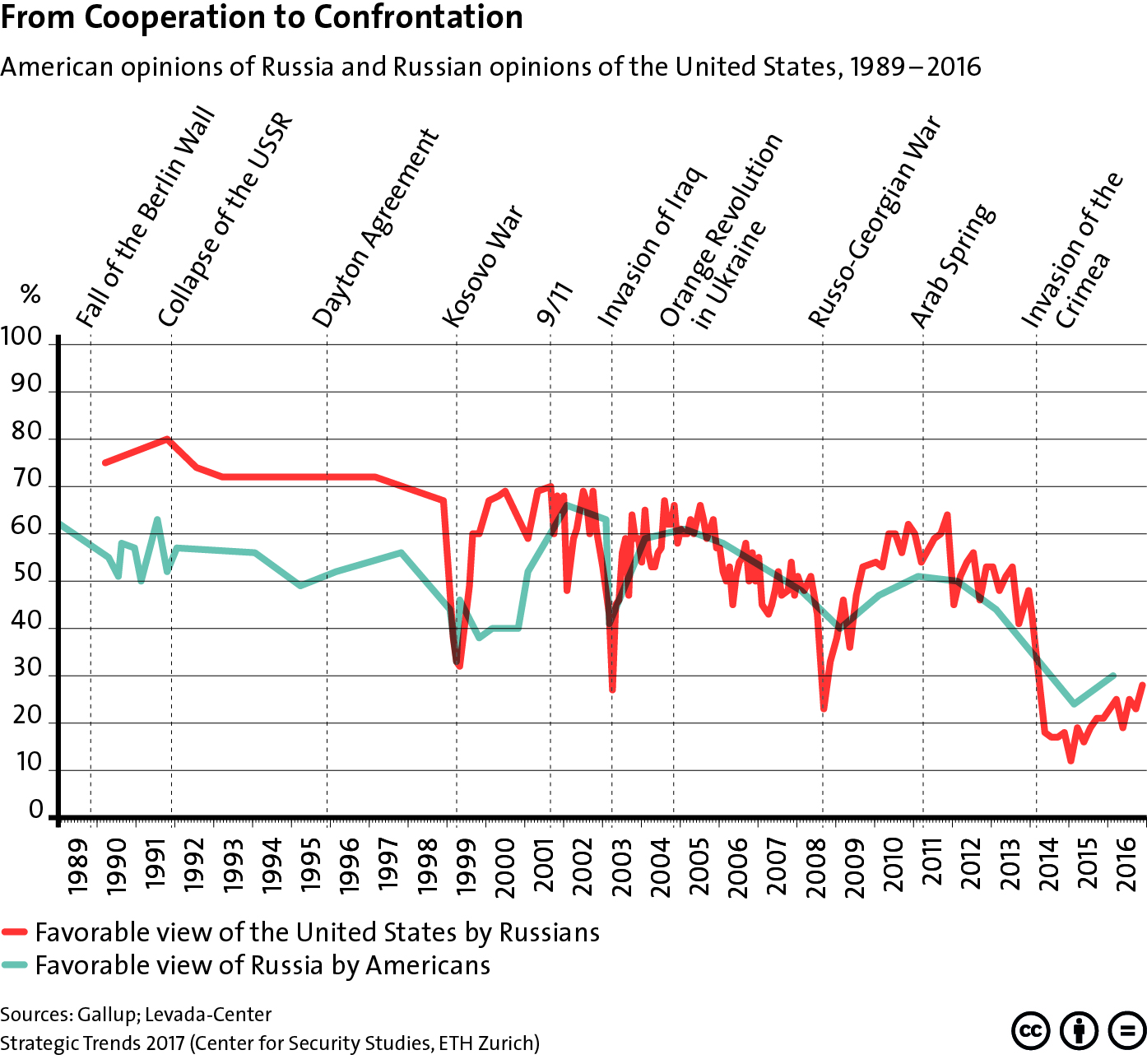
From Cooperation to Confrontation

EmailFacebookTwitter

This graphic tracks how American opinions of Russia and Russian opinions of the United States have developed over time. To find out more about how these developments influenced Europe’s post-Cold War security architecture, see Christian Nünlist’s chapter in Strategic Trends 2017 here. For more CSS charts, maps and graphics, click here.

A Middle Path? US Public Opinion and Grand Strategy

Image courtesy of Presidio of Monterey/Flickr.

This article was originally published by E-International Relations (E-IR) on 3 March 2019.

In recent years, a sharp debate dominates the scholarly literature on American foreign policy and grand strategy: should the United States retrench from the expansive commitments undertaken in the aftermath of World War II as a globe-spanning military superpower, or should it renew its efforts to pursue the present strategy of global leadership? This issue is not merely of parochial interest to academics; rather, it represents the key dilemma faced by Washington foreign policymakers in the aftermath of the 2016 election campaign and the changes brought by the anti-establishment Trump presidency. Both sides of this debate contend that the American public supports their preferred strategy. However, a closer examination of recent public opinion date actually shows that the American people favor a “middle path” rather than either of the two preferred grand strategies advanced by proponents of Global Leadership and Restraint, respectively.

How US Military Aid Can Backfire

Image courtesy of the US Army/Flickr. (CC BY 2.0)

This article was originally published by Political Violence @ a Glance on 15 March 2019. 

Can military forces mitigate insurgent activity—“win hearts and minds”—by implementing small, localized aid projects? Evidence from the recent wars in Afghanistan and Iraq has provided contradictory answers to the question of aid’s ability to mitigate violence. Some research finds that aid projects increase the legitimacy of the state among civilians and, under specific circumstances, dampen violence. Other studies, however, show that aid projects provoke insurgent activity, even when delivered by non-military organizations.