Categories
CSS Blog

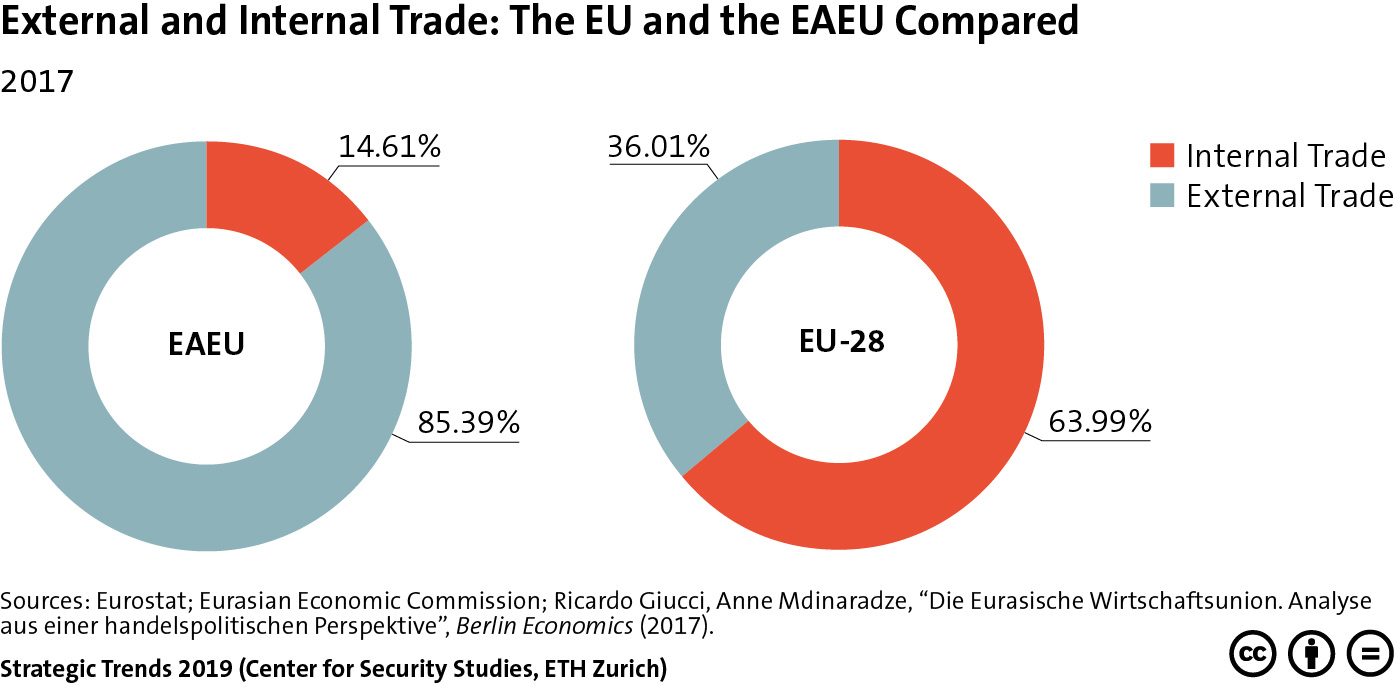
External and Internal Trade: The EU and the EAEU Compared

EmailFacebookTwitter

This graphic shows how the the overall level of internal trade among the member states of the Eurasian Economic Union (EAEU) remains relatively low at 14.6 percent, especially when compared to the European Union (EU), where around 64 percent of trade was between members in 2017. The graphic also shows the percentage of external trade for both unions. For an insight into Russia’s policy towards the EAEU and how this fits into Moscow’s Eurasian strategy, see Jeronim Perović’s chapter in Strategic Trends 2019 here.
Yesterday Warlord, Today Presidential Candidate: Ex-military Leaders Running for Office in Post-civil War Societies

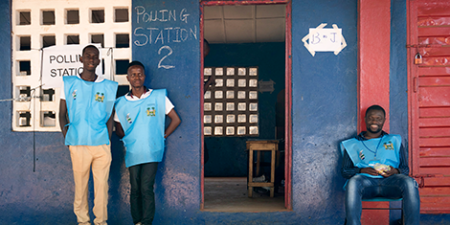
Image courtesy of USAID in Africa/Flickr

This article was originally published by the Nordic Africa Institute (NAI) on 13 June 2019.

In many African countries where civil war raged not so long ago, former warlords are today running for office in elections. This policy note assesses the effect that these warlord democrats have on democratisation and security.

EU Policy in the Face of the Chinese Challenge

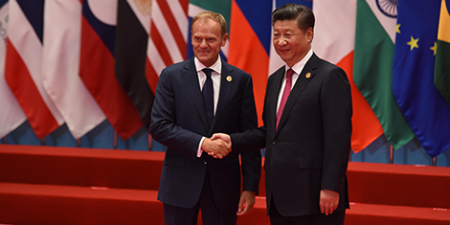
Image courtesy of European Council President/Flickr. (CC BY-NC-SA 2.0)

This article was originally published by the Elcano Royal Institute on 6 June 2019.

As the People’s Republic of China transforms itself into a technological and military superpower, while maintaining a party-state system, there is increasing debate at the heart of the EU about the terms on which relations with the country should be pursued. Pressure has been exerted on the debate by the EU’s main ally, the US, whose strategic rivalry with China is growing daily.

Have Strategists Drunk the “AI Race” Kool-Aid?

Image courtesy of Ecole polytechnique/Flickr. (CC BY-SA 2.0)

This article was originally published by War on the Rocks on 4 June 2019.

Has global strategic competition become a race for dominance in artificial intelligence (AI) between the United States and China? Versions of this claim have become something of an axiom, offered by officialdom and the analytical community alike. That AI will be the primary axis of future strategic competition is contestable, however. Moreover, the notion of an AI race in and of itself will generate policy risk. Making policy based on those assumptions could lead to narrowing options, not only in the realm of competition between states but regarding human affairs in general.

Categories
CSS Blog

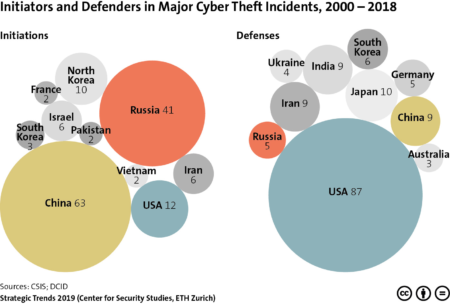
Initiators and Defenders in Major Cyber Theft Incidents, 2000 – 2018

EmailFacebookTwitter

This graphic provides an overview of the nations in which major cyber theft incidents were initiated as well as the countries affected by these attacks between 2000 and 2018. To find out what this highlights about the eclipse of Western military-technological superiority, read Michael Hass’ chapter for Strategic Trends 2019 here.