Polio is Back

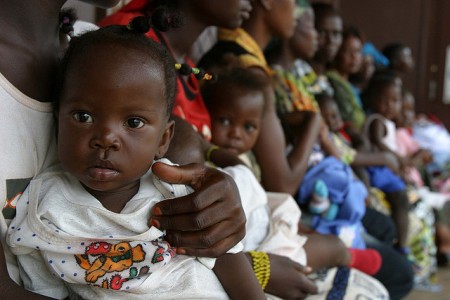
Mothers and babies waiting in line for a Polio vaccination; photo: hdptcar/flickr

A mere two weeks after World Polio Day, a fast moving polio outbreak has struck three central African countries. The first confirmed re-appearance of the disease was reported on 4 November in the Republic of Congo (also known as Congo-Brazzaville), but the disease then quickly spread to both the Democratic Republic of Congo and Angola. Within a week, the UN reported 226 infections and 104 deaths, with numbers rising quickly.

Polio is a contagious viral disease that attacks the body’s nervous system. Left untreated, polio can cause paralysis and death. It strikes children and young adults of both sexes equally. Usually, however, less than 10 percent of cases actually develop symptoms, and only 1 percent of these remain permanently paralyzed. This particular outbreak, meanwhile, is proving past medical statistics wrong.

According to the joint communiqué released by the World Health Organization (WHO) and the UN Children’s Fund (UNICEF), the rate of mortality for the current outbreak is alarmingly high. This has spurred the government in Brazzaville and numerous international agencies to launch a large-scale emergency vaccination campaign, which is to begin today. The vaccination drive is supposed to provide vaccinations to 3 million children and adults in central Africa.

Over the last decade, the number of polio cases reported annually had ground to a virtual standstill. Nigeria, for example, long considered to be Africa’s polio hot spot, had an impressive 98 percent drop in cases since 2009. International health authorities are therefore still musing on the causes of last month’s outbreak. It seems that the immunity of the children, teenagers and young adults in the region may have been lower than expected. Furthermore, today’s virus seems to be of a relatively new Indian strain that was first found in Angola in 2007 and which now slowly found its way further north.

Although the current outbreak may be considered an unexpected setback in what can otherwise be considered a fairly successful fight against the disease, we must never become complacent. As promised time and time again, polio must be made history.

The ISN holds an excellent set of resources on infectious diseases, epidemics, pandemics, and disease control. In addition, the ISN Digital Library also offers a comprehensive list of international health organizations.


Deportation Mania

Leaving Switzerland behind bars, image: Nicolas Macgowan/flickr

Zurich Airport, 18 March 2010. A Nigerian immigrant, convicted of drug dealing died shortly before boarding the plane on which he was to be deported to his home country. As a consequence, deportation of illegal immigrants was stopped. Diplomatic relations between Switzerland and Nigeria became strained.

Of the 1800 Nigerians who immigrated to Switzerland last year, only 1 percent were granted asylum. The rest are asked to leave the country. Those who refuse to move are deported forcefully.

Last week the Swiss government announced that a memorandum of understanding  with Nigeria had been signed, allowing for “special flights” to be resume on 1 January 2011. A Nigerian state secretary insisted that Nigeria agreed “voluntarily” and his Swiss counterpart talked of a “win-win-situation.”

What’s the deal?

Saving the World, Ruling the Earth?

China: Where modernity is a mantra, photo: Trey Ratcliff/flickr

China’s rise to the center stage of world affairs has been much faster and more multifaceted than anyone expected.

The Chinese themselves seem to have been taken aback by their new-found might, and although prophesies about China’s future dominance should be taken with a whole spoonful of salt (a lot can still go wrong), a deep confidence is permeating the country. And it seems like the rest of the world is finally taking note.

I wrote a short piece in October 2008 for the Finnish Business and Policy Council (EVA) about what I thought would be the geopolitical ramifications of the financial crisis, in its very early stages at the time. America, as the epicenter of the crisis, was shocked into a state of socio-political and economic self-denial and panic that was given tangible expression in last week’s midterm elections. In many of the individual races the anger and vitriol was directed at the great ‘new’ menace- China. In the meantime a real and perceived shift to the East has taken place. It is only beginning to take shape, but its effects are already being felt.

Categories
Keyword in Focus

Keyword in Focus: Western Sahara

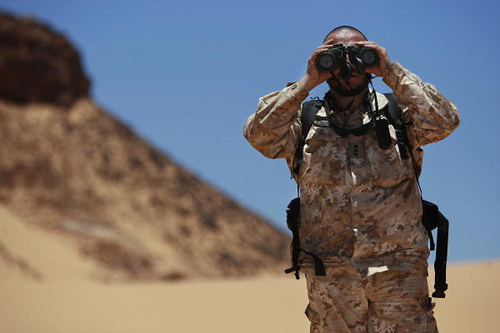
Antonio Achille, working with the Military Liaison Office of the UN Mission for the Referendum in Western Sahara (MINURSO), looks through binoculars during a ceasefire monitoring patrol in Oum Dreyg, Western Sahara.
MINURSO monitors ceasefire in Western Sahara, courtesy of UN Photo/Martine Perret

Resource-rich Western Sahara is at the top of the news this week, and the “last colonial conflict” in Africa is definitely an issue to watch.

Al Jazeera’s bureau in Morocco was closed down two weeks ago by the authorities. The news network gave its coverage of the Western Sahara issue as one of the main reasons. So if the Moroccan government doesn’t want us to know about what’s going on there, chances are it must be something interesting and worth digging deeper into.

Representatives of Morocco, the Polisario Front, Algeria and Mauritania are currently gathered in New York for a round of UN-brokered informal talks in an effort to end a conflict that has its roots in the 1970s. Just before the talks started, a raid by Moroccan forces on a Western Saharan refugee camp left dozens injured and four dead.

Western Sahara is likely to gain strategic importance as world reserves in phosphate are depleted, because it is one of the few regions in the world to hold large quantities of this key fertilizer. Moreover, the region possesses significant fisheries and offshore oil reserves, raising the strategic stakes further.

Morocco doesn’t want to let go of such a treasure vault, but the Polisario front has been pressing for a referendum on the independence of the region for years. The UN, on the other hand, has been monitoring a ceasefire between the two parties since 1991, keeping a fragile and unsustainable ‘peace’ of sorts in place.

But what does the recent raid and the closing down of Al Jazeera’s Morocco bureau say about Moroccan tactics in Western Sahara and will negotiations this time lead anywhere?

To learn more about the background to this conflict, explore our Digital Library holdings on Western Sahara. Some resources worth highlighting include:

  • A policy brief by the United States Institute of Peace (USIP) outlining why the mediation process by the UN is not working
  • This situation report by the Institute for Security Studies (ISS)  presenting the perspectives of both Morocco and the Polisario Front on the conflict
  • This report by International Crisis Group describing the costs of this protracted frozen conflict
Categories
Uncategorized

ISN Insights: Look Back, Week Ahead

The ISN Insights week starts today, photo: Caro's Lines/flickr

Last week ISN Insights looked at:

  • The US mid-term elections in a preview piece by John M Donnelly and a post-election podcast with Bob Benenson of the Congressional Quarterly.

This week we’ll be examining: the US military’s COIN (counterinsurgency) strategy, the UK strategic defense review, Bahrain’s elections, tactical nuclear weapons in the New START treaty, and Tanzania’s elections.

Make sure to check back each day for the newest ISN Insights package. And if you’re an active Twitter or Facebook user, look us up and become a follower!