Facing up to Fiji

Bread and circus for the people of Fiji? photo: Mark Heard/flickr

As seems to be the case with most countries that have experienced coups, once the initial furor over the regime change has died down and change is not readily forthcoming, the international media quiets down. Whether this is because a public scolding is not seen as the best way to induce progress towards more democratic rule, or simply because there is nothing headline-grabbing to cover, it is a widely repeated pattern.

The Republic of the Fiji Islands is no exception, with coverage having dwindled following the 2006 coup. This is a shame, as the (interim) government of Commander ‘Frank’ Bainimarama has recently instituted some very interesting policies.

Perhaps inspired by Juvenal’s idea of “bread and circuses”, the 2010 Price Control Order was implemented on 6 Novemver by the Commerce Commission. The Order required that the price of 24 “essential” basic foodstuffs – such as baby food, milk, garlic and edible oils – be reduced by 10-20 percent to a government-set maximum. ‘High-end’ products – such as olive oil – were notably exempt. In updating the 1970 Price Control Order, criticized for its complexity and opacity – so far, so good. However, the circus soon followed.
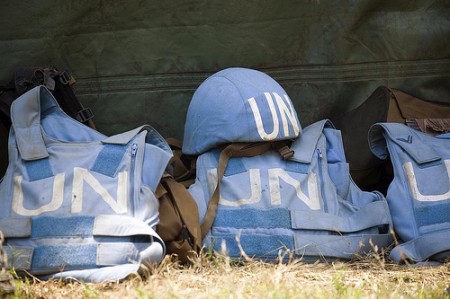

Thoughts on Peacekeeping

Helmet and Flack Jackets of MONUC Peacekeepers, courtesy of United Nations Photo/flickr

As anger in Haiti intensifies, with some residents blaming Nepali peacekeepers for having brought cholera to the island, a closer look at the composition of UN peacekeeping missions seems in order.

In October 2010 the UN had approximately 100,000 police officers, military experts and troops operating around the world in more than 17 UN peacekeeping missions. These operations cost the UN, in the 2005-2006 period, more than $5 billion, more than triple the UN’s core operating budget.

If we look at who the main contributors are, somewhat surprisingly, almost 30 percent of UN troops come from three countries that can be found in one of the most unstable parts of the world: Pakistan, India and Bangladesh. How is it possible that a country like Pakistan, that ranks 10th on the Failed States Index of 2010, is also the second most active country in terms of UN peacekeeping? The answer, of course, is money. Poorer countries earn valuable financial resources by contributing to UN missions. But shouldn’t these soldiers be at home, trying to stabilize their own countries and can they, if ‘thrown together” in a single mission operate together effectively despite deep-rooted animosities ‘at home’?

Advocates of UN peacekeeping missions, and the biggest financial contributors to the UN itself, namely EU countries and the US, are among the countries that contribute the least with troops. Except for Spain, France and Italy, no other European country contributes more than 1,000 troops. Even countries like Yemen and Zimbabwe contribute more troops to peacekeeping missions than the US. The question naturally arises: Why do western countries not put their money (and their manpower) where their mouth is by sending well trained, well equipped troops to trouble spots around the world, where they, by international consensus, are needed the most?

Categories
Uncategorized

New ISN Partner: Jungle Drum

Jungle Drum

The ISN is happy to announce that Jungle Drum has joined our network as a partner.

Jungle Drum is a not-for-profit information technology provider and communications consultant. It aims to provide IT solutions that boost international cooperation to effectively tackle global challenges. Jungle Drum’s broader vision is to provide the world society connected online spaces for intensified information exchange and cooperation, which can be linked across disciplinary and organizational borders.

The ISN and Jungle Drum will work together on ResolutionFinder.org, an innovative database that lets users easily browse UN resolutions and conventions by topic.

China, a Superpower. Really?

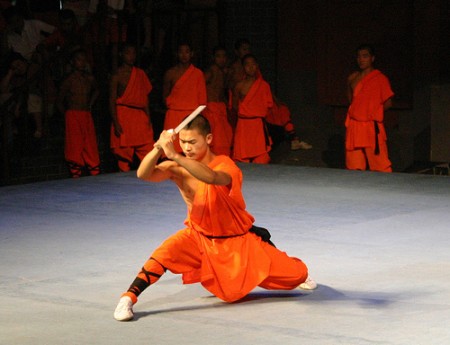
A Shaolin Warrior, courtesy of Sven Laqua/flickr

Last week, my colleague Kaisa Schreck wrote an excellent blog post on China. In it she argued that China had already saved the world economy and that it was bound to rule the region if not the world in the near future. Forbes’ ranking of Hu Jintao as the most powerful man in the world seemed to validate this assessment.

I personally think that China is lacking one key element to become a superpower: moral gravitas and appeal. And if we look at history, every powerful region or country has not only been powerful economically or militarily, but also “morally”.

Let’s look at the Roman Empire first. The empire ruled the whole Mediterranean region for centuries and its capital, Rome, had more than one million inhabitants,  a significant number 2000 years ago. The Empire was not only powerful because it could crush its enemies, it was also morally powerful. By taking up Greek philosophy and focusing on philosophical and scientific education, the Romans quickly surpassed their enemies in thought and morality. The arts had a powerful place in Roman civilization and it shined from the shores of Portugal to Iran. Its values of citizenship, arts and philosophy were not only adopted by the Roman elites, but also by many of the neighboring elites.

Categories
Uncategorized

ISN Insights: Look Back, Week Ahead

A new ISN Insights week starts today, photo: kh1234567890/flickr

Last week ISN Insights examined:

This week we’ll be looking at the New START treaty, Hong Kong’s status as a democratic enclave in the PRC, Obama’s India visit, the complex and increasingly fraught Pakistan-India-USA triangle, and sanitation, in honor of World Toilet Day on Friday, 19 November.

Make sure to check back each day for the newest ISN Insights package. And if you’re an active Twitter or Facebook user, look us up and become a follower!