Categories
Global Voices

Chinese Investment: Boon or Bane for Southeast Asia?

Spontaneous protests against Myanmar’s power blackouts received news coverage in May because the government seldom permits anti-government activities. Even more significant were the protests that took place in front of the Chinese embassy in Yangon.

Protesters came together to raise their voice against the government’s decision to sell Myanmar’s limited energy reserves to China. Below is a comment from the Facebook page of Eleven Media Group [my], one of the largest private media organizations in Myanmar, which echoed the sentiment of many consumers in Myanmar:

“70% of electricity supplied to Yangon is from Law Pi Ta and Ye Ywar hydro-powered stations, that from the Shwe Li station goes to China, so there is a shortage of electricity in Yangon. Why? Go and cut China’s power!”

Protest against electricity shortages around City Hall, Yangon. Image from Facebook page of CJMyanmar.
Categories
Global Voices

Southeast Asia: Home to the World’s Longest Ongoing Civil Wars

Southeast Asia is more than just white sand beaches, temples and resorts: it is also one of the most war-ravaged regions of the planet. Laos, Cambodia, and Vietnam, for example, were among the most heavily bombed countries in the world over the past century. Nearly a third of the cluster bombs dropped by the United States in Laos between 1964 and 1973 failed to detonate and are still scattered across the country. Anna MacDonald, head of Oxfam International’s Control Arms Campaign, outlines the quiet but dangerous rural scenery of Laos:

“Stepping off the plane at Xieng Khuang province we were in a very rural area. Fields with water buffalos and rice paddies abound, and the hilly countryside is criss-crossed with farmer’s fields and small traditional wooden houses. It’s a gentle, peaceful setting that belies the deadly war-time legacy which is all around – 100% of villages here have UXO (unexploded ordenance) in their fields and surroundings.”

Occupy’s Ineffective Media Strategy

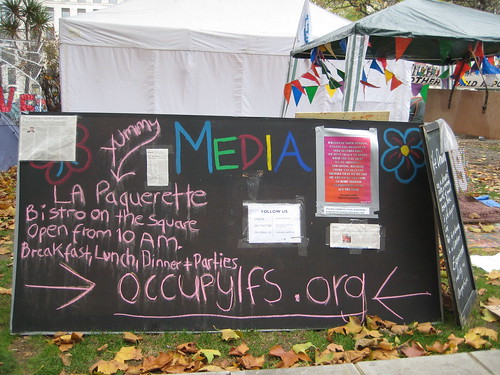
Media - Occupy London - Finsbury Square - Real Democracy Now
Media, Occupy London, Finsbury Square. Photo: AndyRobertsPhotos/flickr.

Since the very beginning of the movement, Occupy has had a tense, and very often adversarial, relationship with the mainstream media. This should not come as any surprise—corporate media outlets are considered by Occupiers to be the mouthpiece of the One Percent’s policy preferences, and could therefore be expected to attempt to stifle the movement’s message, whether through a lack of coverage or through aggressively biased stories.

However, this did not change the standing fact that an act of civil disobedience needs some kind of publicity in order to be effective; otherwise, the act is simply a criminal one.

Voices from BRISMES

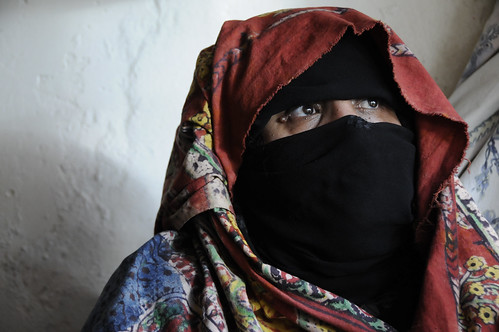
Yemeni Woman
Photo: World Bank Photo Collection/flickr.

Earlier this week we provided an overview of the 2012 British Society of Middle Eastern Studies (BRISMES) conference. This post takes some of the highlights of the conference and provides a more in-depth look at some of the topics discussed.

Regional Cooperation in Afghanistan: What Makes the Heart of Asia Beat?

ISAF soldiers provide aid at Kabul airport.
Turkish civil-military cooperation teams from the ISAF’s Regional Command provide aid at Kabul airport. Photo: isafmedia/flickr.

The new grand bargain went into its next round. On 14 June 2012 the Heart of Asia group gathered in Kabul to push forward the Istanbul Process on Regional Security and Cooperation for a Secure and Stable Afghanistan. The real potential for regional security and cooperation, however, remains a contentious issue. Some observers disregarded the gathering as yet another useless meeting which failed to take concrete steps towards a regional security architecture. Others like UN-Secretary-General Ban Ki Moon praised it as “real progress on the path to security and broad-based development”.