US Ambassadors: Local Powerbrokers in the Balkans

Image by Quinn Dombrowski/Flickr.

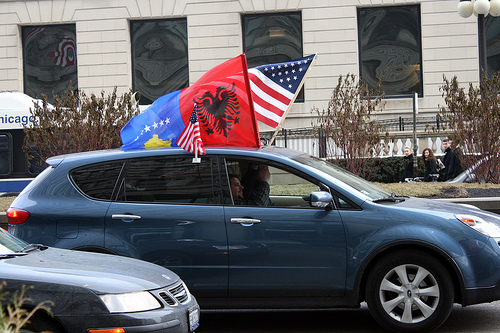
Former U.S. President George W. Bush was not very popular at home when he visited Albania in June 2007. In fact, everywhere he traveled in Europe at the time, he faced protests, some of them violent. Protestors taunted him from the Czech Republic to Germany to Italy. The dramatic confrontations in Rome paralyzed parts of the city.

However, when Air Force One landed in Tirana’s Mother Teresa Airport, Bush was hailed by a 21-gun salute, while cheering locals swarmed the heavily cordoned streets, branding slogans, such as “proud to be partners.”

In the small town of Fushe Kruja, where Bush stopped briefly to discuss a U.S.-funded microloan programme with a baker, a barber, a tailor, and a shepherd, he received a rock-star welcome. Today a 2.85-meter statue of the 43rd U.S. president adorns the town’s main square.
Categories
Global Voices

A Weak African Union for 53 Member States

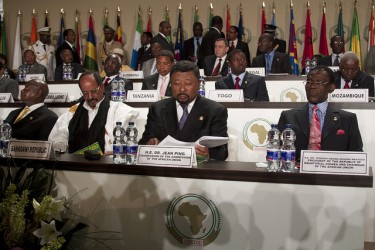
Equatoguinean Teodoro President Obiang and African Union Chairman Jean Ping at the African Union Summit in Malabo. Photo from Embassy of Equatorial Guinea
2011 was a tumultuous year for the African continent with revolutions, attempted coups and violent political crises. Unfortunately the union of 53 African states that has as its mission to help strengthen regional peace and development has proved its own shortcomings in dealing with these situations.

Categories
Global Voices

Israel: Defense Budget vs. Social Justice

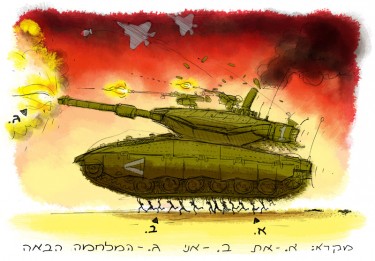
The Defense Budget by Amitai SandyCartoon of The Defense Budget by Amitai Sandy. Used with permission. Text from right-to-left: A-You, B-Me, C-the next war. 
 

One of the major results of the social justice protests in Israel in the last year has been a renewed debate about the budgetary priorities of the state. The social justice movement (also known as #j14) demanded a more equal distribution of wealth in Israel, including funneling a greater share of the budget to welfare services for the population such as subsidized housing, free education, and better medical services, at the expense of current budgetary priorities – namely, the defense budget.

Categories
Global Voices

China: Sparking the ‘Exile is Not Freedom’ Debate

On 27 April, 2012 blind Chinese lawyer and activist, Chen Guangcheng, escaped from a remote village surrounded by security forces in the middle of the night. International media widely covered the story, and the events turned out to be a diplomatic headache for both the Chinese and American governments, which were getting ready for their annual summit in Beijing.

Since Chen ran towards freedom, it made sense that he sought refuge at the American Embassy. While at the embassy, however, Chen made a surprising statement: he did not want to leave China, nor did he want asylum. If Chen was a headache for the US, so was the US for Chen.


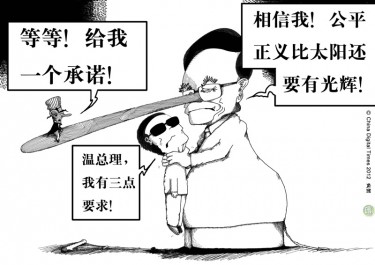
“More Glorious than the Sun” by Crazy Crab of Hexie Farm for China Digital Times.

Chen Guangcheng: “Premier Wen, I have three requests!”
Uncle Sam: ”Wait, wait! Give me a promise!“
Wen Jiabao: ”Trust me! Fairness and justice are more glorious than the sun.“
‘More Glorious than the Sun’ by Hexie Farm’s Crazy Crab for China Digital Times.

Categories
Global Voices Uncategorized

India, Pakistan: Working Towards Thawing the Siachen Conflict?

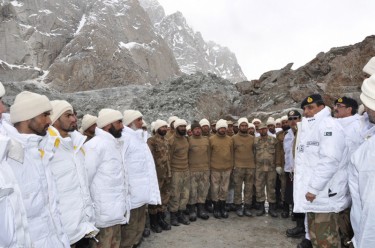
Pakistan Army rescue operation at the world's highest border Siachen Pakistan Army rescue operation at the world’s highest border in Siachen. Photo by Mohsin Hassan © Copyright Demotix (April 8, 2012)

On April 7, 2012, a deadly avalanche hit a Pakistani military camp in the Gayatri Sector, 30km west of the Siachen glacier, killing over 130 people, most of them military personnel. The scale of the tragedy once again brought into focus a long-standing conflict between India and Pakistan over Siachen, often referred to as “the world’s highest battlefield.”