The Ukraine Crisis and the Issue of National Minorities

Pro-Russian Meeting, courtesy of Lystopad

This article was originally published by Security and Human Rights.

National minorities are a political and social fact in Europe and many other parts of the world. In Europe, the issue of national minorities became particularly acute after the breakup of the Austro-Hungarian Empire in 1918 as well as more recently after the breakup of the former Yugoslavia and the collapse of the Soviet Union at the beginning of the 1990s. The newly created independent states became hosts to national minorities: for example, the Baltic States and Ukraine to a Russian minority, Romania to a Hungarian minority, Croatia to a Serb minority and vice versa, just to name a few.

Acting Time; or, Ending Sexual Violence in Conflict

Foreign Secretary William Hague and Angelina Jolie chairing the “End Sexual Violence in Conflict” Global Summit in London. Image: Flickr.

This article was originally published June 17, 2014 by The Disorder of Things.

The attention lavished on sexual violence in conflict [three weeks ago] was in many ways unprecedented. As well as convening the largest ever gathering of officials, NGOs and other experts for the Global Summit on Ending Sexual Violence in Conflict, co-chairs William Hague (Foreign Secretary of the United Kingdom of Great Britain and Northern Ireland) and Angelina Jolie (Special Envoy of the United Nations High Commissioner on Refugees) also generated very many pages – both print and digital – of commentary.

In some myopic quarters, that achievement was in itself a distraction from the really important politics of blossoming conflict in Iraq. Such views should remind us that there are still those who insist on seeing gender violence as marginal to international peace and security. Worthy, yes, “no doubt important”, obviously a cause for concern , and so on, but naturally not the real deal.

Categories
CSS Blog

Mediation Perspectives: Security Arrangements Key to Justice

Photo:Flickr/Stein Ove Korneliussen

Peace processes – and the mediators that shepherd them – increasingly address the legacy of large-scale human rights violations.  They can provide a crucial ‘moment’ for addressing the causes and consequences of an earlier conflict. To this end, peace agreements often include justice provisions: attempts to begin to deal with the past through a range of judicial and non-judicial measures such as amnesties, prosecutions, truth-seeking and reparations. While ‘justice provisions’ such as these are important, the argument here is that security arrangements in peace agreements are as important, if not more so, for accountability. Mediators’ influence on the content of a peace agreement may be limited, but there are still ways in which they can contribute to more effective security arrangements.

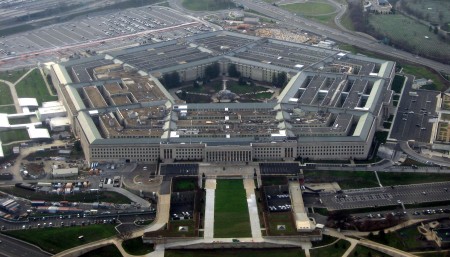
Hacking Defense: Changing How DoD Innovates

The Pentagon, January 2008. Image: Wikimedia Commons

This article was originally published June 23, 2014 by War on the Rocks.

Product innovation in the U.S. Department of Defense follows an implicit rule: “Better, cheaper, faster—pick two.”

Today, the military is simultaneously confronted with declining budgets, skyrocketing system development costs, and a diverse spectrum of rapidly evolving, complex military threats. To mitigate this challenge, the Pentagon should place renewed emphasis on its corporate approach to technology innovation in order to identify and exploit opportunities to do more with less.

The Better Buying Power initiative focuses on DoD’s innovation problem, but to be successful, such efforts must eschew traditional notions of defense system development. From iterative, design-based product development approaches to open, distributed ecosystems of partners and suppliers, the techniques employed by Silicon Valley and the most innovative sectors of the global high-tech economy should inform a new model of defense innovation that enables better, cheaper, and faster outcomes.

Categories
Regional Stability

Are Security and Energy Concerns Moving Turkey and Israel Toward Reconciliation?

German Patriot Missiles in Turkey, courtesy of Medien Bundeswehr/flickr

This article was originally published June 20, 2014 by IPI Global Observatory.

Earlier this month, about 3,000 people marched through the streets of Istanbul in memory of the eight Turkish citizens and one Turkish-American killed by Israeli Defense Forces when the Mavi Marmara ship, known as the Gaza Freedom Flotilla, tried to break through Israel’s naval blockade of the Gaza Strip in May 2010. The incident marked a nadir in Israel and Turkey’s strained relationship in recent years, and neither country’s ambassador has since returned to his former post.

Four years later, a possible reconciliation agreement between these former allies has fueled speculation of a normalization of relations between the two countries. The agreement would entail reparations for the Mavi Marmara victims’ families; a mechanism to rescind all legal claims against Israeli Defense Force officers implicated in the attack; and approval
to facilitate Turkish civilian aid to the Gaza Strip.