Categories
Regional Stability

THINK AGAIN: Is Somaliland Still a Good News Story?

Ahmed Mohamed Mohamoud Silanyo, President of Somaliland, speaking at a Chatham House Event on Friday, 26 November 2010. Image: Chatham House/Wikimedia

This article was originally published by the Institute for Security Studies (ISS) on October 28, 2015.

In Somaliland, most politicians are known by their nicknames. So President Ahmed Mohamed Mohamoud is ‘Silanyo,’ which translates to ‘skinny lizard’ – a throwback to his youth when he was tall and slim. President Silanyo is not skinny anymore, however, and nor should he be president – his term in office was supposed to expire on 26 June 2015.

But after the scheduled elections were repeatedly postponed, Silanyo is still in charge, and no one is particularly surprised. Although Somaliland is famed for its regular, peaceful elections – an oasis of peace and democracy in a region usually associated with authoritarianism and conflict – almost every election in its history has been subject to lengthy delays.
Does Surveillance Mean the Death of Democracy?

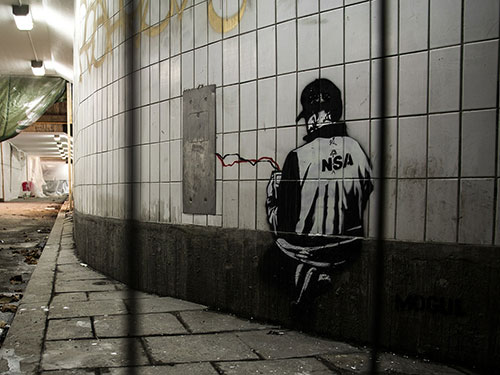
NSA Grafitti in Stockholm, Sweden. Image: beppek/Pixabay

This article was originally published by openDemocracy on 29 October, 2015.

In computing, a “segmentation fault” occurs when a program tries to access information that it has no business accessing.

Emotion vs. reason. Instinct vs. analysis. Heart vs. brain. Perhaps there is no other dichotomy in our intellectual history that still holds similar sway. From an early age, we are taught to dissect what goes on in our minds and neatly compartimentalise it into these two boxes. When, in 2015, we survey the challenges facing our democracies, it is easy to slide back into this old habit.

Obama’s Failure to Demilitarize US Foreign Policy

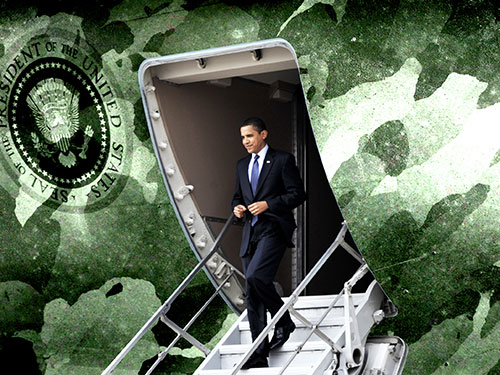
Obama exiting a camouflaged Air Force One. Image: Truthout/Flickr

This article was originally published by War on the Rocks on 30 October, 2015.

The Obama administration has received much attention for its policy of rebalancing to the Asia-Pacific region. The rebalance has been described as President Obama’s signature foreign policy initiative. Launched in 2009, it has received much attention from academics, practitioners, think tanks, and the media. In reality, the rebalance to the Asia-Pacific has been more evolutionary than revolutionary; a U.S. shift in focus and grand strategy began well before President Obama’s inauguration in January 2009.

If the Obama presidency in fact initiated a revolutionary rebalancing, it was his effort to rebalance American foreign policy generally from over-reliance on the military and toward greater reliance on diplomacy and development. Despite a concerted effort, when viewed through several lenses it seems clear that demilitarization has failed and U.S. foreign policy remains very, perhaps overly, militarized. As a result, the Pentagon can expect to be handed messy military operations short of inter-state war that it may not be prepared, equipped, or organized to handle efficiently or effectively.

Could Iran Be the Next Country to Legalise Cannabis and Opium?

Marihuana Grafitti. Image: Benzene Aseel/Flickr

This article was originally published by The Conversation on 22 October, 2015.

After Uruguay courageously legalised the use of cannabis under a new drug policy, could Iran be the next country to make it legal? From the outside, the image of Iran as retrograde and inherently conservative hardly fits with the reality of a more dynamic domestic political debate within. But drug policy is one of the areas of debate in which the Islamic Republic has produced some interesting, yet paradoxical, policies.

Iran has a conspicuous drug addiction problem – which officially accounts for more than 2m addicts (though unofficial figures put this as high as 5-6m). Drug traffickers risk harsh punishments that include the death penalty. Yet Iran also has very progressive policies towards drug addiction, which include distribution of clean needles to injecting drug users, methadone substitution programmes (also in prisons) and a vast system of addiction treatment.

Categories
Terrorism

Russia’s Recent Airstrikes in Syria

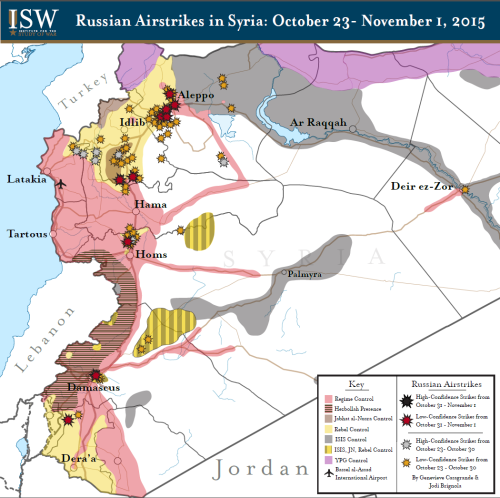
Russian Airstrikes in Syria from 23 October – 1 November, 2015 (click to enlarge). Image: Genevieve Casagrande/Institute for the Study of War

This map was originally published by the Institute for the Study of War on 2 November, 2015.

The Russian Ministry of Defense (MoD) discontinued the release of daily airstrike reports from October 28 – November 1 amidst multilateral talks on the Syrian Civil War held in Vienna on October 30 and continued reports of civilian casualties. Nevertheless, credible local sources continued to report airstrikes in Dera’a, Damascus, Homs, Hama, Idlib, and Aleppo from October 31 – November 1. Russian airstrikes predominantly targeted rebel-held areas in Aleppo Province in conjunction with regime ground offensives against ISIS in the southeastern countryside of Aleppo and rebel forces southwest of Aleppo City. Local activist reporting claimed that Russian airstrikes and regime forces killed 64, including 28 children in Aleppo on October 31 alone.