Categories
Uncategorized

1 Malaysia No More?

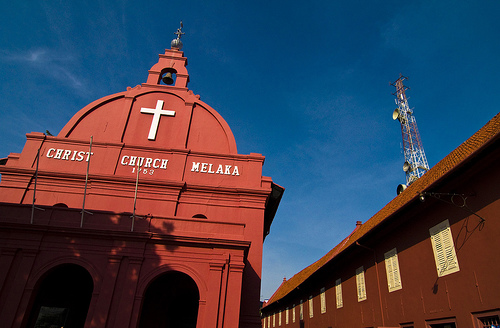
Church in Malacca, Malaysia, photo: HKmPUA /flickr

After a tense weekend, the Malaysian online news media is teeming with commentaries on the controversy regarding the use of the word ‘Allah’ by Christians in Malaysia and the subsequent arson attacks against Christian churches in and around the capital.

The camps, quite predictably, are divided along the pro-Malay, pro-government camp, made up primarily of pious Malay Muslims, devoted to the concept of a Malay-dominated Malaysia and opposed to the use of ‘Allah’ in non-Muslim contexts, and Malaysians (Muslims, Christians and Hindus) who wish to see historically divisive Malay-dominance dismantled and genuine pluralism embraced in its place.

Although Prime Minister Najib Razak was quick to condemn the attacks, even twitteringIt’s been a difficult weekend for all. I share your outrage. We must stand united & not allow these incidents to break us,” outrage and dismay over the government’s pro-ban stance is boiling over. So far venting from the pluralist camp has been confined to cyberspace, although it is not so clear how long non-Malay calm will last if ethnic rifts continue to deepen.
Categories
Uncategorized

The Power of Photography: A Journey through Southeast Asia, Afghanistan and Yemen

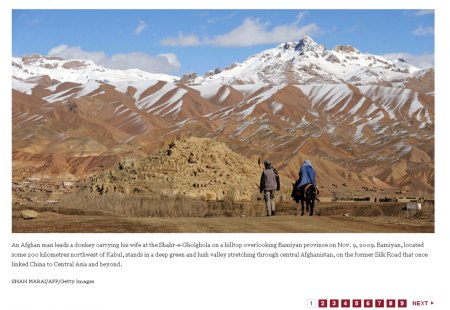
Screenshot of Foreign Policy photo essay

Not only do pictures say a thousand words, they provide insights to worlds, lives and people behind the headlines, news stories and carefully researched in-depth articles. Words can never quite convey the reality of life in conflict zones or after natural disasters.

I found the following photo essays to provide just such insight. They are beautiful as photographs, but also as pictorial narratives that we as visually wired creatures can appreciate, analyze and use in the formation of a more comprehensive picture of world events and places.

The first one is a harrowing and touching photo essay on the aftermath of the 2004 Tsunami in Southeast Asia, put together by Alan Taylor of the Boston Globe.

The second and third collection provide insights into two of the most talked about conflict zones in the world, Afghanistan and Yemen. These photo essays by Foreign Policy show life behind the headlines, often normal and ordinary; historically rich and sometimes stunningly beautiful.

Categories
Uncategorized

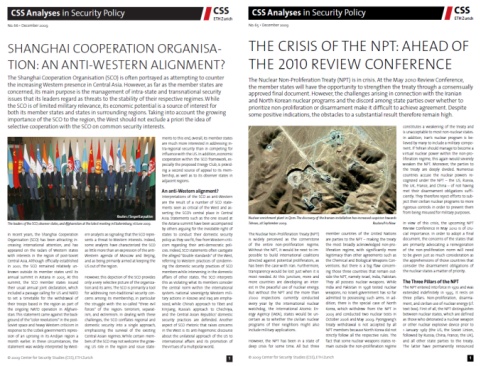
NPT Review Conference / Shanghai Cooperation Organisation

CSS Analyses
CSS Analyses in Security Policy

The Center for Security Studies has just published two new policy briefs:

    • Oliver Thränert analyzes the main issues to be discussed at the May 2010 Review Conference of the Non-Proliferation Treaty (NPT). According to him, the challenges of the Iranian and North Korean nuclear programs make it difficult to achieve agreement. He also point out to the discord among state parties over whether to
      prioritize non-proliferation or disarmament.

  • Stephen Aris examines the role of the Shanghai Cooperation Organisation (SCO) in Central Asia. He argues that it is not as anti-western as you would think. Taking into account the growing importance of the SCO to the region, he writes, the West should not exclude a priori the idea of selective cooperation with the SCO on common security interests.
Categories
Uncategorized

ISN Partners’ Copenhagen Specials

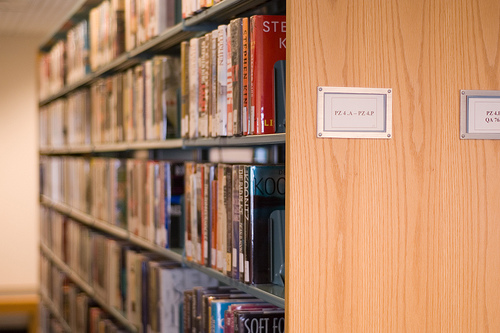
Image by CCAC North Library / flickr

My colleagues and I have seen an impressive surge in publications on climate change in the run-up to the Copenhagen Summit.

This demonstrates just how widely relevant the issue of climate change is. Across geographical and thematic research focus, a large part of the ISN’s partner institutes have published on the topic in the last few months.

Here is a small selection of what has come across our desks recently:


  • … and for many more, see publications classified under ‘climate change’ in the ISN digital library.
Categories
Uncategorized

Mindanao after the Massacre

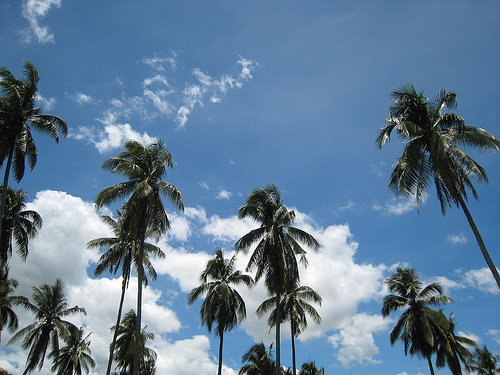
Waiting for blue skies over Mindanao, photo: monnaka/flickr

The horrific massacre in the south of the Philippines that targeted and killed 57 of the family members of mayoral candidate Esmael Magundadatu as well as 30 accompanying journalists, has unleashed tensions, heated debates and new political dynamics in the most restive corner of the country.

A region mostly known for its Islamic insurgency, highlighted in our blog in September, was, in one violent act, revealed as a hotbed of clan politics, powerful civilian militias and potentially devastating political alliances that have implicated the highest echelons of the Philippine political establishment, including President Arroyo herself.