
Categories
Uncategorized

Engaging Boko Haram: Militarization, Mediation, or Both?

Image by notionscapital/Flickr.

Boko Haram has persistently defied all attempts by the Nigerian government to stop the violent spread of its activities from the northern part of the country, and sectarian violence and attacks have assumed new and dangerous dimensions in Africa’s most populous state. Nigerians are currently experiencing an era characterized by intensive military operations similar to those previously launched against Niger Delta militants, and an uncertain mood is prevailing which some have compared to the state of affairs during the Nigerian civil war.

Military regiments of the Joint Task Force (JTF) have been deployed across areas considered to be the country’s “geographies of terror,” from the cities of Maiduguri to Jos, and from Kano to Damaturu, the extent of which is reflected in unprecedented security expenditure figures rising to nearly a quarter of the national budget for 2012. In spite of these efforts, the first half of 2012 has seen a rise in the incidence of Boko Haram attacks. While armed action cannot be totally discounted, its utility as a single tactic has proved futile and has underscored the need for the Nigerian government to unify under a common goal and intensify its efforts at dialogue and mediation.

Categories
Uncategorized

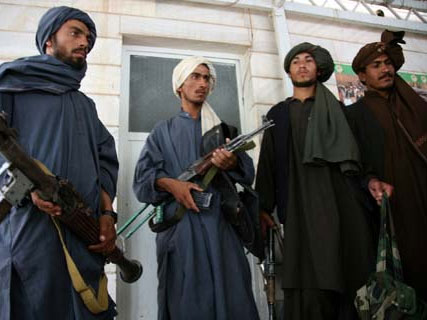
Reviewing Pakistan’s Peace Deals with the Taliban

Former members of the Taliban surrender their weapons. Image by Fraidoon Poya for UNAMA.

By the end of 2014, normal U.S. combat forces are scheduled to withdraw from Afghanistan. As this departure date approaches, Afghanistan and its U.S.-led allies continue to explore potential peace deals with the Afghan Taliban. At the same time, the Pakistani government is reportedly considering its own peace talks with factions of the Pakistani Taliban—the conglomerate responsible for daily small-arms and suicide bomb attacks in Pakistani territory.

Since the emergence of the Pakistani Taliban, Islamabad has entered into a handful of peace deals with factions belonging to the group—both written and unwritten—in attempts to placate the militants. Most of these peace deals, however, resulted in the further strengthening of the Pakistani Taliban, and only a few of the agreements lasted beyond a few months. Violence flared not long after the agreements became effective, and the Pakistani Taliban then demanded even further concessions from the government. The only exception was the situation in the Swat Valley, where the government launched an aggressive military operation against the Pakistani Taliban after the peace deal failed to render any results. In that case, the Mullah Fazlullah-led Pakistani Taliban faction was forced to flee the Swat Valley, and that region remains in control of the government today.

This article reviews the key peace agreements reached between Islamabad and various Pakistani Taliban factions, and it assesses whether the deals achieved their objectives.

Categories
Uncategorized

Tajikistan: Potential Energy Boom Could be Geopolitical Game-Changer

Colorful Old Oil Barrels. Image by L.C.Nøttaasen/Flickr.

There’s a potentially huge story developing in Tajikistan: Central Asia’s poor cousin may be sitting atop a vast pool of oil and natural gas. Yet, no one in Dushanbe – neither government officials, nor energy company executives – seems eager to discuss the prospect of an energy boom.

In July, Tethys Petroleum announced that its development zone in southwestern Tajikistan could hold over 27 billion barrels of recoverable oil equivalent. The estimate, if accurate, would represent more than the remaining oil in United Kingdom’s North Sea field. In a July 19 press release, Tethys boss David Robson asserted that Tajikistan had “super-giant potential.”

It’s not just Tethys – a company listed on both the Toronto and London stock exchanges, and registered in the Cayman Islands – that seems to believe in Tajikistan’s energy-production potential. Russia’s state-controlled conglomerate Gazprom has already started drilling a 6,300-meter well to reach what it hopes to be more than 60 billion cubic meters of natural gas, while Australian-based Santos is starting seismic studies after acquiring a 70-percent share in Tajikistan’s Somon Oil.

But since that initial burst of fanfare announcing its potential oil find back in July, Tethys executives have become tight-lipped. Representatives of the company repeatedly declined to speak on the record to EurasiaNet.org on oil and gas-related issues in Tajikistan. Gazprom and Santos are similarly reticent.

Categories
Uncategorized

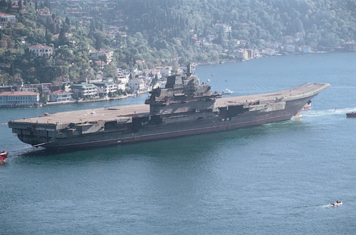
Making Waves: Debates Behind China’s First Aircraft Carrier

Image by roberthuffstutter/Flickr.

China commissioned its first aircraft carrier, the Liaoning, on September 25, 2012. It was a milestone that owes much to the vision of Admiral Liu Huaqing, who commanded the Chinese navy – formally the People’s Liberation Army Navy – from 1982 to 1988 and served as a vice-chairman of the Central Military Commission until 1997. In those positions, he helped shape China’s maritime outlook and shift its navy from a coastal defense force to one capable of projecting power into the western Pacific. Liu argued that for the navy to fully transform it had to have an aircraft carrier. Ultimately he prevailed over resistance from the army and within his own service, though he did not live to see the Liaoning underway at sea.

While the aircraft carrier is not a revolutionary combat platform today, it remains symbolic of a navy that has reached the world’s first rank. Since China accelerated its naval modernization in the 1990s, its shipyards have produced scores of new vessels that range from nuclear-powered ballistic missile submarines to amphibious assault ships. And over that time, Chinese naval engineers have had many opportunities to study aircraft carrier design—including decommissioned foreign aircraft carriers that Chinese entities acquired as well as the information gleaned from various exchanges. In one such exchange in 1995, Spain’s Empresa Nacional Bazan, which built the light aircraft carrier Chakri Naruebet for Thailand, offered China plans for a similar ship. Chinese officials also inspected and received bids for other retired aircraft carriers, such as France’s Clemenceau in 1996 and Argentina’s Vienticinco De Mayo in 1997.

Categories
Uncategorized

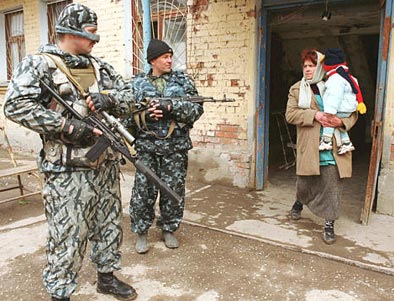
Russia Conducts Large Security Operation In North Caucasus

Image by LOreBoNoSi/Flickr.

Russia’s National Counterterrorism Committee (NAK) says that a large operation in the North Caucasus involving forces from the Federal Security Service and Interior Ministry has resulted in 49 militants and bandits being killed, including nine whom the committee called “odious” leaders of militant and outlaw groups.

The NAK reported on October 21 that the operations were carried out in Kabardino-Balkaria and Daghestan.

According to the NAK, four militant leaders were among those killed in Kabardino-Balkaria. It identified them by the names Batyrbekov, Ulbashev, Karkayev, and Tutov.

At least two separate operations were conducted in Daghestan, also leading to the deaths of several men who have been described as militant commanders.