Categories
Humanitarian Issues Regional Stability

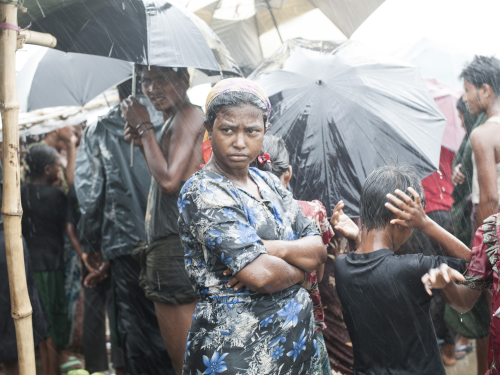
Refugee Crisis Tests Limits of Southeast Asian Cooperation

Rohingya Woman in the rain. Image: Steve Gumaer/Flickr

This article was originally published by the IPI Global Observatory on 15 May 2015.

A growing Southeast Asian refugee crisis largely involving Myanmar’s persecuted Rohingya minority has strong echoes of the humanitarian disaster on Europe’s doorstep. International observers have similarly called on Myanmar; refugee destinations such as Malaysia, Thailand, and Indonesia; and regional bloc the Association of Southeast Asian Nations (ASEAN) to face up to the challenge, as the European Union finally appears to be doing with its own crisis.

At first glance the Southeast Asian situation appears more easily managed: both the origin and intended destinations of the refugees are in the same region, and the main countries concerned are all members of ASEAN. This could theoretically provide the opportunity for a more coordinated response. The story is made more complex, however, by a history of limited official commitments to human rights in the region—and to refugees’ rights in particular—coupled with a traditional ASEAN policy of non-interference in member states’ domestic policies.

Categories
Humanitarian Issues

The Military is Not the Answer to South Africa’s Xenophobic Violence

A South African soldier with an ammo belt. Image: Cpl. Jad Sleiman, U.S. Marine Corps/Wikimedia

This article was originally published by the Fund For Peace (FFP) on 22 April 2015.

A rapid rise in anti-immigrant violence has emerged in South Africa, with at least seven people killed and many more local immigrants’ properties and businesses destroyed. In response to this wave of xenophobic crime, the South African government announced the deployment of troops to areas that have been most affected by the violence, including parts of Durban in Kwa-Zulu Natal and the impoverished district of Alexandra in Johannesburg.

Categories
Humanitarian Issues Global Voices

Blue Helmets: Why Europe Should Contribute More Troops to the UN

Italian UN soldier with the UNIFIL mission in Lebanon. Image: www.esercito.difesa.it/Wikimedia

This article was originally published by Europe’s World on 9 April, 2015.

As tens of thousands of Western troops have withdrawn from Afghanistan in recent months, there remains a pressing need for peacekeeping troops in many other unstable parts of the world.

Samantha Power, the U.S. ambassador at the United Nations, recently asked Europe to contribute more UN peacekeeping troops. This may sound ironic as the United States stopped providing Blue Helmets after the 1993 debacle in Somalia, which cost the lives of 43 U.S. soldiers. Europe, however, should answer the American call. Studies show the deployment of peacekeeping troops can diminish the chance of renewed conflict by 80%. In recent examples, UN Blue Helmets have calmed the situation in northern Mali and prevented atrocities in the Central African Republic.

Categories
Humanitarian Issues

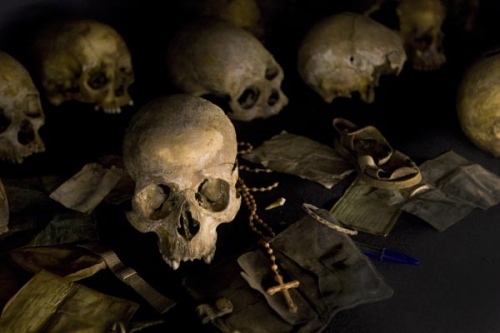
Rwanda: How to Deal with a Million Genocide Suspects

Skulls of victims of the 1994 genocide. Image: Steve Evans/Flickr

This article was originally published by The Conversation on 7 April, 2015.

Twenty-one years ago – on April 7, 1994 – the genocide that would kill up to one million people in Rwanda began. Another million individuals would be implicated as perpetrators, leaving Rwandans and many others to ask: how does a country begin to bring so many suspects to justice?

In 2002, the Rwandan government created the gacaca – or “grass” in the country’s official language of Kinyarwanda – court system to tackle this enormous problem. Based on a traditional form of community dispute resolution, the gacaca courts functioned for ten years – until 2012.

Despite receiving much international attention at their outset, little is known about what the courts actually accomplished. This is surprising. For the past three years, I have been analyzing court data and conducting research in Rwanda to better understand this unique legal system whose punishments for the “genocidaires” (or those involved in the genocide) would likely be seen as light in many other countries.

Categories
Humanitarian Issues Regional Stability

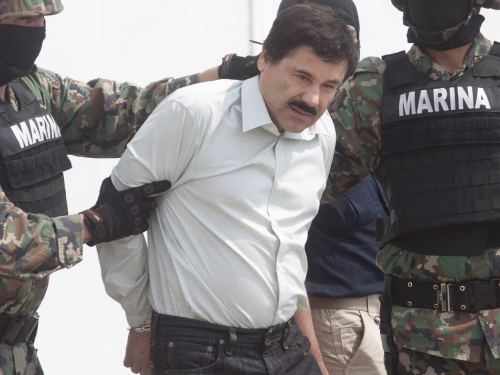
Mexican Cartels as Vicious Firms

Joaquin ‘El Chapo’ Guzmán arrested by members of the Mexican Navy. Image: Galaxy fm/Flickr

This article was originally published by the Small Wars Journal on 15 March, 2015.

At the height of his power, Sinaloa cartel kingpin, Joaquin “El Chapo” Guzman, was on Forbes’ most powerful list just below Robin Li, the CEO of China’s number one search company, Baidu.  Unlike Apple and Baidu, which have to report their annual earnings, acknowledge the members of their companies, and open their finances to government scrutiny, Mexican drug cartels have no such requirements.