Categories
Humanitarian Issues

The Push and Pull of the World’s Most Dangerous Migration Route – What’s Really Behind The Flock of Thousands to Europe These Days?

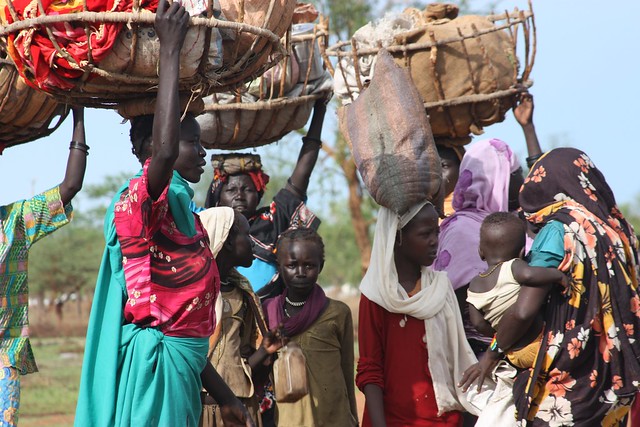
Migrants arriving on the island of Lampedusa in August 2007. Image: Sara Prestianni/Wikimedia

This article was originally published by Politics in Spires on 22 February, 2015.

The  Mediterranean Sea is today’s most dangerous border between countries not at war with each other. Just last week, 300 persons departing Libya on four rubber dinghies have gone missing at sea, after drifting for days without food and water. News reports in the past six months have regularly commented upon the rising number of persons disembarking on Italy’s coastline – benefiting from its search and rescue operation Mare Nostrum. Despite the increase in new arrivals from 33,000 to 200,000, the life-saving mission has now been discarded. Italian policy makers believe Mare Nostrum is as responsible for overcrowded reception centres as it is for the rising number of persons risking their lives at sea. But is it truly to blame for the surge? Because more than 50 per cent of arrivals are either Syrian or Eritrean, news commentators have provided some other potential explanations. Some point to the protracted conflict in the Middle East, whilst others highlight the strain on neighbouring Jordan, Lebanon and Iraq in continuing to receive thousands of Syrian refugees. “Poverty in Africa” is mentioned occasionally, and for the better informed, an oppressive military regime and indefinite conscription in Eritrea are to blame. Yet these supposed  ‘causes’ of the latest wave in irregular migration to Europe are speculative at most and have in fact been ongoing for many years now.

Categories
Terrorism Humanitarian Issues

Drones: From Technology to Policy, Security to Ethics

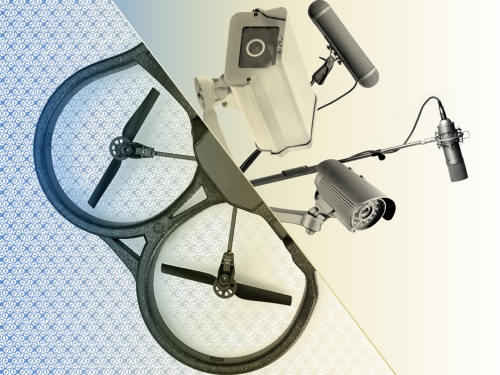
«Drones: From Technology to Policy, Security to Ethics». Poster for the conference organized by the ISN and ETH Global. Image: ISN

Rapid technological advances are making drones cheaper, more accessible and highly adaptable. Once the exclusive preserve of the world’s most advanced armed forces, unmanned platforms are now being used by civilian actors for a wide range of applications. Yet, while members of the technical community have tended to emphasize the opportunities that this technology offers, their counterparts in international relations and other fields have increasingly raised questions about the legal, ethical, humanitarian and security implications of unmanned aerial systems (UAS). Against this backdrop, ETH Global and the ISN recently hosted a one-day conference that brought together over 160 experts from the fields of robotics, environmental science, law and ethics, and international relations and security. Since ETH Zurich is considered one of the world’s leading ‘competence centers’ in the field of robotics systems and control, its activities offer a glimpse into emerging UAS technologies and their potential social impact in the future.

Categories
Humanitarian Issues

Minimum Criteria for Sustainable Global Governance

The globe. Image: geralt/Pixabay

Strong statist positions and a fixation on state sovereignty once inhibited progress toward more just and effective models of global governance. However, there can be no denying that globalization has not only led to the unprecedented transformation of our societies, but also the role that states play in the international system. Yet, even as states gradually share more responsibilities with corporations, sub-national entities and international organizations, their structural significance still remains indisputable – particularly when it comes to finding near-term solutions for better modes of global governance. This should result in a more equitable and representative international state system to which global governing structures will remain accountable.

Categories
Humanitarian Issues Regional Stability CSS Blog

Mediation Perspectives: Time to Build Bridges between Tribes in South Sudan

Image: European Commission/flickr

When, a decade ago, the independence of South Sudan became a serious option, it was politically correct to foster great illusions about its future. However, as Sudan itself was considered to be a failed state, there was a risk that simply dividing the country might create two failed states. In addition, a glance at the modern history of Eritrea, Ethiopia, Uganda and Rwanda reveals a pattern from which South Sudan could hardly expect to escape.  In each of these countries, when victorious rebel armies took full political control, they established authoritarian regimes that remain in power decades later.

Categories
Humanitarian Issues Terrorism Regional Stability

If You Liked Vietnam, You’ll Love the War With the Islamic State

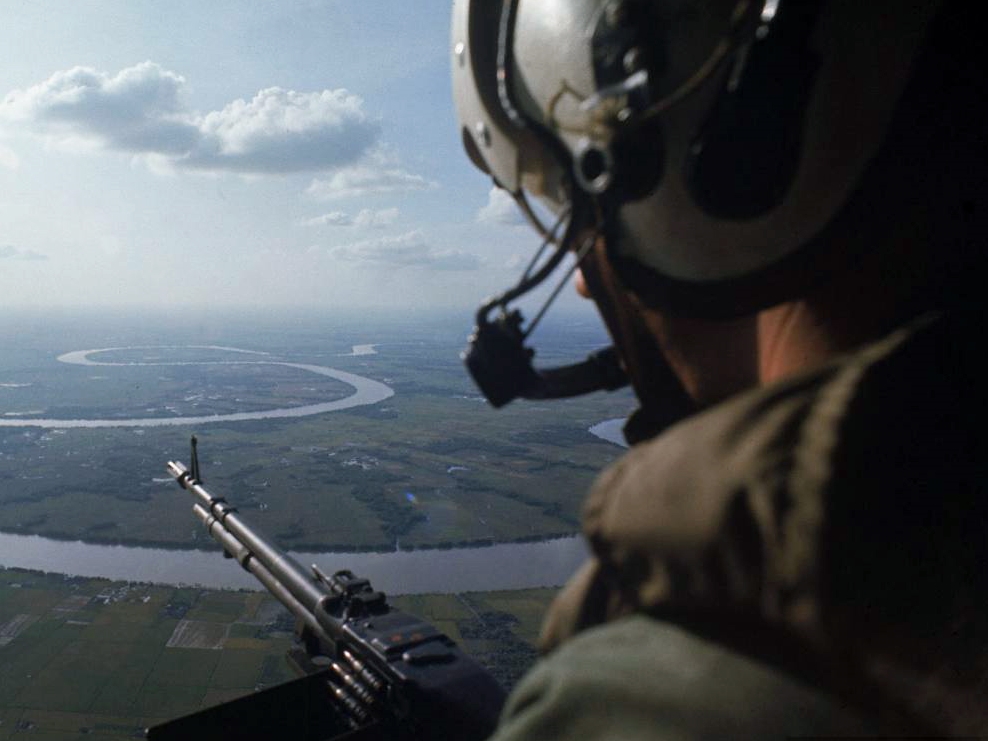
Helicopter patrol over the Mekong Delta. Image: Manhai/Flickr

This article was originally published by Small Wars Journal on 12 September, 2014.

Vietnam analogies are often overused, particularly by people who want to stay out of a proposed war or get us out of one we are fighting. Although I agree that the Islamic State, or whatever it is calling itself this week, must be dealt with militarily; the strategy with which the Obama administration is going about it is deeply disturbing and its basic elements bring vividly to mind the War in Vietnam which began in earnest when I was in the Tenth Grade; American involvement did not end until I was a senior Marine Corps First Lieutenant in 1973. I am not yet senile enough to have forgotten key details.