Managing Paul Kagame, Africa’s Enfant Terrible

Image: Flickr

Editor’s note: This article was originally published by the Institute for Security Studies (ISS) on 30 March 2014.

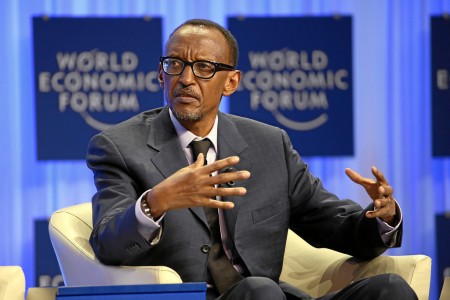
South Africa is conducting a fairly delicate struggle with Rwanda, trying to choreograph and coordinate complex moves to manage the difficult and dangerous President Paul Kagame – on the hard streets of Johannesburg, in the polite halls of diplomacy, in the courts of law, and, by proxy, on the field of battle.

On Tuesday this week the terrain of this struggle moved to multilateral diplomacy in Luanda, where President Jacob Zuma once again attended a summit of the International Conference on the Great Lakes Region (ICGLR). South Africa is not a member of this body, but Zuma has become a sort of country member, having been invited to the last few summits as a special guest.

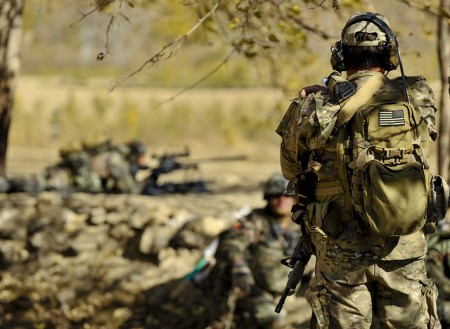
Book Review: When Soldiers Say No: Selective Conscientious Objection in the Modern Military, edited by Andrea Ellner et al.

Image: Wikipedia

This article originally appeared at LSE Review of Books.

When Soldiers Say No: Selective Conscientious Objection in the Modern Military. Andrea Ellner, Paul Robinson and David Whetham (eds.) Ashgate. January 2014.

When Soldiers Say No brings together arguments for and against selective conscientious objection, as well as case studies examining how different countries deal with those who claim the status of selective conscientious objectors Gary Wilson writes that this collection adds considerably to the literature by bringing together a range of perspectives on the merits of selective conscientious objection, as well as consideration of its application (or lack thereof) in a number of states.

Categories
Humanitarian Issues

Elections Not Enough to Bring Stability to Troubled Guinea-Bissau

Image: Flickr.

Editor’s note: This article was originally published by IPI’s Global Observatory on 25 March 2014.

It is widely accepted that elections do not make a democracy, but they are generally viewed as a key first step in that direction. As the campaign for legislative and presidential elections kicked off in Guinea-Bissau last Saturday, it was clear that hopes for this first step may be overstated.

Guinea-Bissau is one of the world’s poorest nations, and the West African country of 1.7 million people has been plagued with political problems over the last several years. No president has ever fully completed his term. And though the late 2000s were marked by a modest yet cautious increase in international confidence in the country, the most recent period of unrest was triggered by the March 2009 assassination of the head of the armed forces and the apparent revenge killing of the president shortly afterwards. Three years later, the military carried out a coup in April 2012 as a new government was being formed, removing the front-runner for the presidency, Prime Minister Carlos Gomes Júnior.

Categories
Regional Stability

The Eclipse of Europe: Italy, Libya, and the Surveillance of Borders

Image: Flickr.

Editor’s note: This article was originally published by E-IR on 30 March 2014.

Bilateral Agreements between Italy and Libya: Security without Human Rights

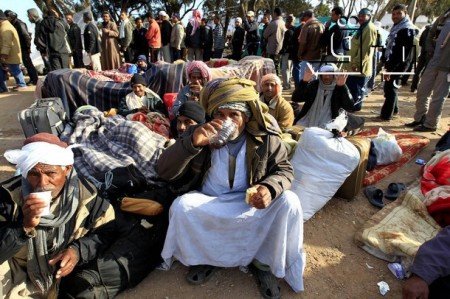
Not much has been said about the Ministerial Conference held in Rome on the 6th of March 2014, where foreign ministers, high-level delegations from Libya, and representatives from international organisations gathered to discuss the current situation of Libya. At the forefront of the conference were the economic ties between Libya and its partners, the disarmament of paramilitary groups necessary to defend those ties, the patrolling of borders, and the subsequent issue of illegal migration. These last two points come as no surprise, given that Libya is among the signatories of the UN Convention against Transnational Organized Crime (CTOC) protocol to prevent human trafficking. Yet not even a word was spent on the life-straining conditions of Libyan migrants who ­– despite coming from countries such as Syria, Eritrea, Somalia, Togo, and Mali – are not regarded as potential asylum-seekers, but rather considered “illegal” and “unwanted” people, as they were under the Gaddafi regime.

Is the DoD Innovating? How the New Budget Stacks Up

Image: Flickr.

Editors note: This article was originally published by War on the Rocks on 17 March 2014.

As the Pentagon faces inevitable budget cuts, “innovation” and “adaptation” are the buzzwords of the day, but are they reality? The recent Department of Defense (DoD) Quadrennial Defense Review (QDR) identifies innovation as a core theme, and Department leaders have gone to great lengths to stress that they have chosen to protect key investments for the future, even in lean times. The capability areas that DoD says it is protecting—cyber operations, special operations forces, and development of a new long-range bomber—indeed make sense strategically and will be extremely useful in future operating environments. DoD has also stressed that it is maintaining research and development funding in order to retain the U.S. military’s technological edge.

These overarching principles are almost certainly the right ones, but resources need to back them up. As the saying goes: “if it ain’t in the [budget], it ain’t.” In some areas, DoD is putting its money where its mouth is.