“Corruption undermines Governments’ ability to act and serve their people. It siphons off the finance intended to reduce poverty and discourages investment in economies,” (Helen Clark, Administrator of the United Nations Development Programme (UNDP))
There is no doubt: the existence of corruption can poison the legitimacy of otherwise stable and secure governments. When the state itself is corrupt, how can it hope to encourage the rule of law among its citizens? Furthermore, corruption is directly linked to poverty and insecurity, and can severely stifle development in education and health. This syllabus on corruption and asset recovery aims to share some insight into the issue of corruption and efforts to combat it across the globe.
It's week 35 on the ISN's 2011 editorial calendar, Photo: cloud_hopper/flickr
We’ll take a closer look at the following topics this week — among many others:
In ISN Insights on Monday, Dr Robert Cutler, of Carleton University’s Institute for European, Russian and Eurasian Studies, synthesizes the history of the eurozone debt crisis — bringing us to a better understanding of how and why the financial morass has deepened.
Tuesday’sISN Special Feature offers up a reading syllabus on corruption.
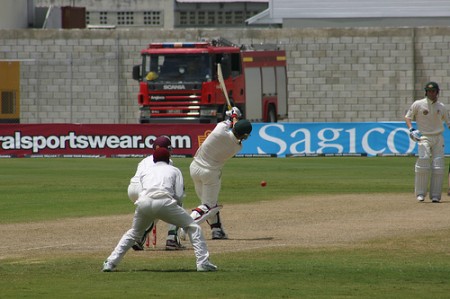
International cricket in Barbados. Photo: flickr/phik
Cricket, as they say, is a funny old game. Few sports can claim to inspire, in equal measure, its extensive and fanatical support — as the second-most popular sport in the world– and the blank incomprehension and derision of the uninitiated. In India and Pakistan, the emotional lives of a billion people seem implicated in every flash of the willow on leather. In the US, the game is often confused with (or willfully misunderstood as) croquet.
Case studies show that water scarcity is just as likely to promote cooperation as to increase the risks of violent conflict. Photo: flickr/Jasper ter Schegget
What are we to believe about the relationship between environmental degradation and security? Does environmental change open the door to conflict, or is it a force for cooperation? Is it best to manage environmental change by focusing on its role in security narratives; or, to the contrary, by keeping security out of it?
The relevance of these questions coincides with the “World Water Week 2011” conference in Stockholm, which the ISN has covered in its two previous Special Features. To round off our coverage, I will raise a caveat: questions like the ones posed above should always be kept in mind when discussing the political implications of environmental degradation.
The Rebels are almost victorious, but Darth Gaddafi has missed his chance at a final-scene reconciliation
The world media is abuzz: the Libyan conflict is almost over. And the international community hasn’t been so united behind a ‘rebel’ victory since the fall of the Galactic Empire in Return of the Jedi. Nevertheless, while fireworks will surely rain over Tripoli this week, much like the final scenes of the classic 1980 film, Libyan citizens are unlikely to receive the same sense of closure as Han, Luke and Leia.
As the conclusion to the ordeal plays itself out, Darth Gaddafi has failed to demonstrate to the audience that there was a little ‘good’ in him after all. It appears that there will be no final conciliation scene where he poetically realizes the error of his ways and cleanses his tortured soul. Faced with defeat and presumably hidden somewhere in Tripoli, he has remained defiant. He has refused to acknowledge the jurisdiction of the International Criminal Court, and their arrest warrant against him for crimes against humanity. He has continued to categorically deny the atrocities committed by the armed forces under his command. And he has consistently remained deluded as to the will of the Libyan people.
Rather than admit the evil of his ways, he has retained an Idi Amin-like stubbornness to the bitter end – announcing once again last night that he will fight until ‘martyrdom or victory’. While he remains hidden, he remains free. And therefore closure will not be possible for the Libyan people just yet – at least not until he is captured and forced to accept the consequences of his crimes.