Algeria and Morocco’s Migrant Policies Could Prevent Violent Extremism

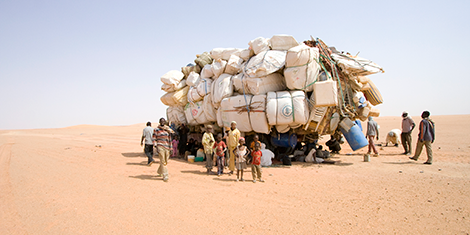
Image courtesy of EU Civil Protection and Humanitarian Aid Operations/Flickr. (CC BY-SA 2.0)

This article was originally published by the Institute for Security Studies (ISS) on 27 February 2018.

Legalising migrants can boost economic growth, improve international relations and prevent radicalisation.

Algeria and Morocco have for the past decade been important transit and stopover countries for migrants moving to Europe. Many also stop to seek informal work in Algeria’s $548.3 billion hydrocarbon economy and Morocco’s $257.3 billion diversified economy.
Categories
CSS Blog

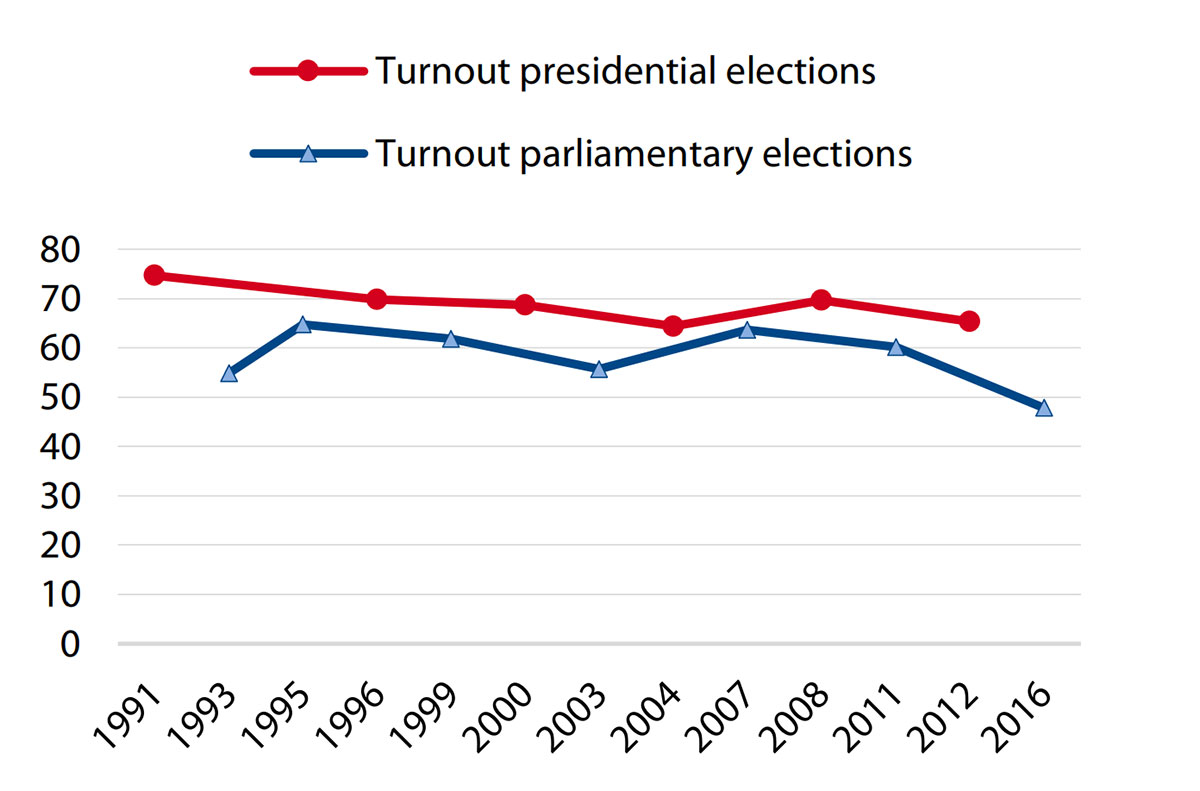
Electoral Turnout in Russian Presidential and Parliamentary Elections, 1991 – 2016

Data sources: International Institute for Democracy and Electoral Assistance, at <https://www.idea.int/data-tools/data/voterturnout>, Central Electoral Commission of Russia, at <http://www.izbirkom.ru/region/izbirkom>, and the CD-rom Rossiiskievybory v tsifrakh i kartakh (Mercator and IGRAN 2007).

EmailFacebookTwitter

This graphic tracks overall voter turnout in Russian presidential and parliamentary elections from 1991 to 2016. To find out more about voter turnout trends and electoral mobilization in Russian federal elections, see Inga Saikkonen’s contribution to the latest edition of the Russian Analytical Digest here. To check out the CSS’ full collection of graphs and charts, click here.

Preventing Future Conflicts in Outer Space

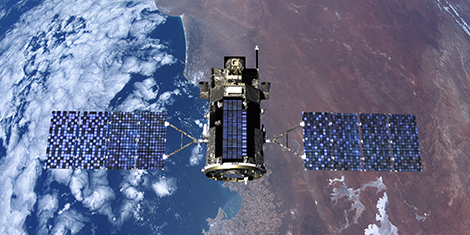
Image courtesy of NASA Goddard Space Flight Center/Flickr. (CC BY 2.0)

Mankind’s dependence on space-based services has grown exponentially in the last few decades. As early as 1994, the UN noted  that “space has become an important factor in the social and economic well-being and development of many States”. Today, a growing number of experts argue that sustaining modern life in an increasingly interconnected world will not be possible without ensuring the sustainable use of outer space. From instant communication and the use of global positioning systems, to weather forecasting and environmental monitoring, space technologies bring us irreplaceable and far-reaching benefits, which must be protected responsibly.

The Real and Hidden Costs of Russia’s Foreign Policy

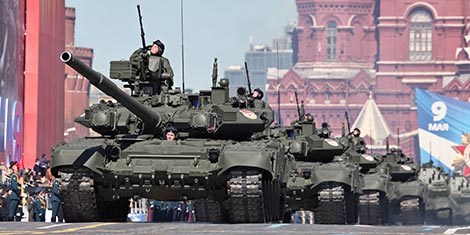
Image courtesy of Vitaly V. Kuzman. (CC BY-SA 3.0)

This article was originally published by the European Union Institute for Security Studies (EUISS) in February 2018.

Russia is set to hold presidential elections on 18 March 2018, and Vladimir Putin has expressed his intention to run for another term. His high approval ratings, the vast administrative resources at his disposal and the non-competitive political environment in Russia make the outcome a foregone conclusion. However, if the election result is predictable, it is still unclear what direction the country will take afterwards. In recent years, Russia has resorted more and more frequently to military force to advance its foreign policy objectives. This overreliance on force, however, came with a price tag attached. In this context, it is useful to explore whether Russia’s foreign policy will take a softer and more economic-oriented turn after the elections. Alternatively, if Russia continues down the same path, which factors will be responsible?

In Syria, Alliances Shift Again

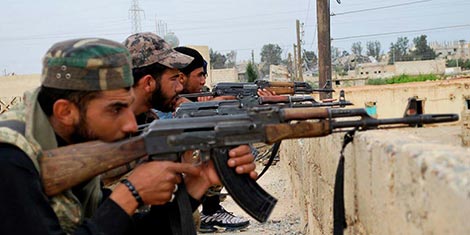
Image courtesy of Kurdishstruggle/Flickr. (CC BY 2.0)

This article was originally published by Geopolitical Futures (GPF) in February 2018.

The nature of the conflict in Syria is changing shape again, with two important developments taking place over the past week. First, Turkey proposed cooperation with the United States in Afrin and Manbij, both of which are held by Syrian Kurds, whom the Turks consider hostile forces. Though no formal agreement has been reached, U.S. Secretary of Defense James Mattis said the U.S. would work with Turkey to coordinate their actions in Syria. Second, the Syrian Kurds appear to be willing to work with the Syrian regime against the Turkish assault on Afrin. Pro-regime forces reportedly entered Afrin on Feb. 20, a move that would require coordination with the Kurdish People’s Protection Units, or YPG, which controls the region.