He has called himself ‘an international leader, the dean of the Arab rulers, the king of kings of Africa and the imam of Muslims.’ And today, the self-proclaimed ‘king of kings of Africa‘ has a lot to celebrate.
I am talking of course of Muammar Al-Gaddafi, the ‘Brotherly Leader and Guide of the Revolution,’ who today celebrates the 40th anniversary of the Libyan Revolution, which brought him to power.
Photo: antheap, flickr
‘Celebrate Libya’, as today’s event is called, will be one of the biggest events the African continent has seen in modern times. Tonight’s ceremony is said to be comparable in magnitude to an Olympic opening ceremony. Hundreds of thousands of spectators, 800 performers, sound and light shows, 1000 camels, military bands, acrobatic planes, flame ballet and spectacular fireworks will mark the occasion.
The celebrations can be monitored on the official Celebrate Libya website.
Change had been predicted, change occurred. Parliamentary elections in Japan brought two victors: First, the Democratic Party of Japan (DPJ), which won almost two thirds of the seats in the House of Representatives. Second, opinion pollsters, who predicted the Liberal Democratic Party (LDP) would be defeated. My skepticism towards the opinion polls proved unjustified.
In the latest edition of ISN Podcasts, I talked to Dan Harada, an insider to Japanese politics, about the elections and their implications. According to him, the DPJ now faces a dilemma: On the one hand, the new government needs to fulfill its election pledge and strengthen the role of politicians in lawmaking at the cost of bureaucrats. On the other hand, the DPJ needs to cooperate with the bureacracy in order to realize their policies.
Migrant integration in Europe is one of the hot topics on the continent, especially concerning Muslims. A number of Muslim immigrants in France arrived from Algeria in the second half of the 20th century due to the colonial relationship that lasted until 1962. In France, and the rest of Europe, its the cultural-religious differences between devout Muslims and the secular majority that gives sociologists and right-wing politicians a lot to write about.
As one of the interesting side effects of globalization, Algeria itself now seems to have some problems with non-Muslim immigrants. There are an estimated 35,000 Chinese who live in the country who seem to be unwilling or unable to assimilate to the cultural norms of their hosts.
The CIA has disclosed a long-awaited report on its controversial interrogation methods as part of President Obama’s transparency promise. On his second day in office, he signed an executive order strengthening the Freedom of Information Act.
So now is the time for the public to read that █████ ███ ██ █████████ █ █████████ █████. And even more is revealed, e. g. ██████████ ██ ████ ███████ █ ███ █ ███████. If you have no idea by now, better ████████████████ ████ ████████ █ ██████ ██ ████████, because ████████████████████████ ██████ ██ ██ ██████████████.
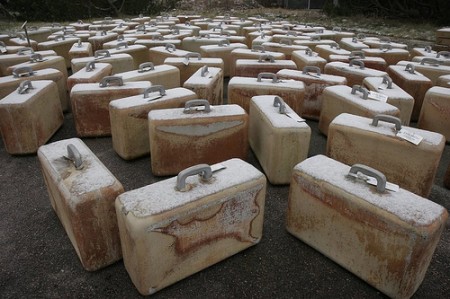
The CIA's report on interrogation methods
In the future, the newly created “High Value Detainee Interrogation Group” will handle the questioning of high-level prisoners. It is led by the FBI and will act in strict accordance with the the US Army field manual on interrogations, the █████████. I’m sorry, this one, the FM 2-22.3, is of course “approved for public release; distribution is unlimited”.
If it is approved for public release, it cannot be bad, right? And if CIA spokesman Paul Gimigliano notes that “The CIA in no way endorsed behavior – no matter how infrequent – that went beyond formal guidance. This has all been looked at. […] That’s how the system was supposed to work, and that’s how it did work,” then I wonder whether that formal guidance was blacked out in the first place, too?
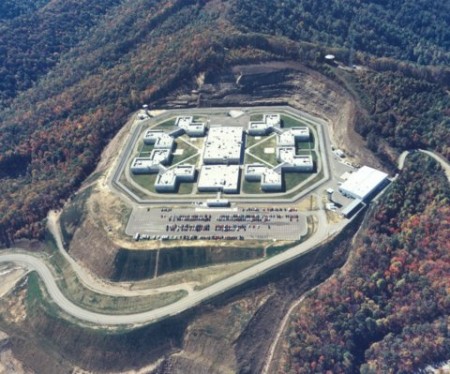
Wallens Ridge State Prison /Photo: dombrassey, flickr
Once upon a time, prisoners used spoons stolen at lunch to dig their way to freedom. Today’s prisoners seem to have found more comfortable methods. They prefer private helicopters to fly elegantly to freedom, as did one of Belgium’s most dangerous criminals, Ashraf Sekkaki, together with two other inmates. Apparently the aircraft was in the prison courtyard for five minutes without even encountering a guard.
Since the procedure was not as cheap as old-school methods, the trio was probably in dire need of money: Only a week after their escape, the three were suspected of having robbed a bank, a gas station and two storage facilities – all within two hours.
Their helicopter escape was not an original idea though. It seems to be a general trend in Europe, with 14 cases in the last eight years, mostly in Belgium, France and Greece. The three Belgian fugitives add to 36 others in their country alone – since the beginning of this year.
European prison services blame not only lax controls at tourist chopper rentals, but also their lack of funding at correctional facilities. There’s not even enough money to erect simple iron cables to stop choppers from landing.
Policymakers could be tempted to look across the Atlantic for money-saving, and even profit-making, solutions. With more than 2 million prisoners (more than 1 percent of the adult population) the US has found a way to create a recession-proof multimillion dollar industry out of incarcerations.
Reuters last week reported that the share price of Corrections Corporation of America has more than doubled since March. The company, which provides about half of America’s private ‘corrections solutions’ (or prisons, as they were once called) and has 77,000 beds on offer, cuts a profit of about $22 per inmate per day. Incoming CEO Damon Hininger says he would “love the opportunity” to take some of the 40,000 prisoners that must be transferred from overcrowded California prisons.
In other cases, the industry has taken a more direct approach to increasing its client base:
The Guardian reported that “[T]wo judges in Pennsylvania were convicted of jailing some 2,000 children in exchange for bribes from private prison companies.” Some of the offenses were “so trivial that some of them weren’t even crimes.”
With such worrying prospects, I hope that Belgian prison services will find other ways to deal with their lack of funding.