Israel and the Bomb

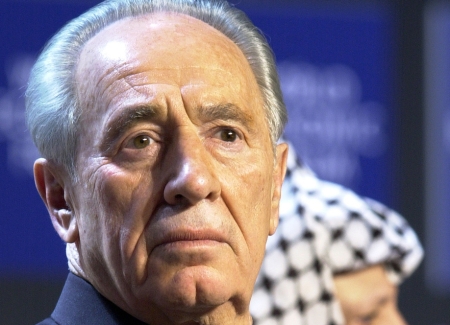
Israeli President Shimon Peres
Photo: World Economic Forum/flickr

After years of speculation, journalists from the UK paper the Guardian and US historian Sasha Polakow-Suransky disclosed information that could prove what many had been suspecting for years: Israel has the bomb.

Polakow-Suransky came across a bundle of classified documents when conducting research in South Africa. These papers were handed over by the current South African ANC government but date back to the times of the Apartheid regime in 1975. The documents include a memo, meeting minutes, as well as an agreement between South Africa and Israel for the transfer of nuclear weapons to the Apartheid regime signed by Shimon Peres – the current president of Israel and then minister of defense.

If the authenticity of the documents is verified, this would be the first time the world has written proof about Israel being a nuclear power and the implications thereof are not yet sorted out.

What will happen to the current multilateral negations on nuclear non-proliferation and the specific case of Iran? Just in this month, Iran agreed to abandon its nuclear enrichment research program and to cooperate with Turkey. How will the Iranians now perceive the new development and the factual existence of a hostile nuclear power in the region? Moreover, how is Israel going to position itself once it can no longer deny to be in possession of nuclear weapons?

President Peres immediately denied any involvement of Israel and himself in negotiations on the exchange of nuclear weapons with the South African Apartheid regime. Nonetheless, Israeli government officials tried to block the South African government from handing out the respective documents to Mr. Polakow-Suransky, giving rise to the question why the Israelis care about these papers in the first place.

For further reading:
The Guardian Article on “Israel’s Nuclear Weapons: Time to Come Clean”
Israel-South Africa Agreement
Letter from Shimon Peres from November 11, 1974
Declassified memo from South African General RF Armstrong
Minutes of third ISSA meeting from June 30, 1975
Minutes of further ISSA meeting

Categories
Uncategorized

ISN Weekly Theme: Iran – Reckless or Rational?

Detail of a carpet depicting Iran's Supreme Leader Ayatollah Khāmene’i, photo: youngrobv/flickr

The Islamic Republic’s recent political provocations against the West have left observers wondering: Is such behavior the result of careful calculation or messianic madness?

  • An Analysis by Philip McCrum about Iranian President Ahmadinejad’s fragile hold on power five years after his contested election win.
  • A Podcast interview with Dr John Mueller on the Iranian nuclear threat – or lack thereof.
  • Security Watch articles on Iran’s struggling Jewish community, the nuclear question and much more.
  • Publications housed in our Digital Library, including recent US Congressional Research Service analyses on US foreign policy toward a nuclear hungry Iran.
  • Primary Resources, including last week’s joint declaration By Iran, Turkey and Brazil on the non-proliferation of nuclear weapons.
  • Links to relevant websites, such as the ArmsControlWonk blog published by Dr Jeffrey Lewis of the New America Foundation.
  • Our IR Directory, featuring the Center for Middle Eastern Studies at Harvard University.
Categories
Uncategorized

The ISN Quiz: Nationalism

We’re examining concepts of national identity and nationalism in Switzerland this week, but what do you know about these concepts in other countries? Test your knowledge and find out.

[QUIZZIN 23]

Responsibility in Practice

Oil rig in a forest, courtesy of DW from the peg/flickr

Last December in Copenhagen, the Northern and Southern Hemispheres were at odds over how climate protection and economic development should be linked.

To make it short, the North argued that southern countries should develop themselves in a sustainable and ecological way. The South replied vehemently by claiming their right to development and their right to do it the same way the North did.

Apparently, Ecuador got a head start in understanding the concerns of the West and decided to put responsibility in practice. The country started the project Yasuni ITT in 2007. This project implies a conceptual break in the understanding of development and climate change.

The idea is pretty simple. Ecuador will not exploit the 850 millions of oil barrels that lie below the Yasuni forest for the sake of world heritage and climate change.

The rest of the world, mostly western countries, should in exchange contribute financially to a fund that will be internationally monitored and that will allow Ecuador to diversify its energy sources. The fund will amount to half of the benefits that Ecuador could make if it decided to exploit the oil, which is approximately €6 billion.

The project is supported by various Nobel Prize Laureates such as Mohammed Yunus, Desmond Tutu and Al Gore. Prominent environmental personalities are also on board.

This initiative is revolutionary for more than one reason.

  • It acknowledges the notion of ecological world heritage. The Yasuni forest not only benefits Ecuador. It’s also a reserve of biodiversity for the whole planet.
  • The project forces western countries to face up to their responsibilities. European and North American countries need to join the project if they want to remain credible. Unfortunately, only a few European countries, Germany, Norway, Spain and Switzerland, support the initiative.
  • It creates an example for the southern hemisphere. By renouncing oil exploitation, Ecuador acknowledges the responsibility of southern countries in the fight for climate change. It sets an example of ecological development that other countries could use. Being host of the most natural resources, the southern hemisphere has surely something to learn from the Ecuadorian experiment.
  • The project proposes to add a third generation of carbon bonds that could be traded on the ‘carbon market.’ This new generation (G3) of bonds would be given to countries that avoid or prevent environmental pollution of the atmosphere. This new concept challenges the previous understanding of carbon bonds that so far were only available for countries or companies that reduce  their level of pollution. By rewarding countries and companies that prevent pollution, this new system would move away from the “license to pollute” that has been created by the Kyoto Protocol and would ensure a more positive understanding of the carbon market.

So, why has such an alternative project not been given a greater public attention worldwide? Why only a few European countries are supporting it?

I think it is time for the West to put responsibility in practice.

Deconstructing Swiss Identity

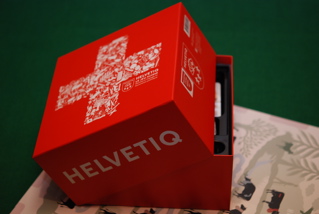
HELVETIQ, a new board game about Switzerland, created by a successful candidate for naturalization, photo: HELVETIQ, flickr

Swiss national identity and political culture hold a unique place in European history – and maintain an air of ‘exceptionalism’. But does a cohesive Swiss national identity exist today – and if so how can it be characterized?

This ISN Special Report contains the following content:

  • An Analysis by Dr Irène Herrmann on the evolution of Swiss political identity, showcasing the results of her Swiss National Foundation study.
  • A Podcast interview with Dr Hanspeter Kriesi about Switzerland’s special nation-state status.
  • Security Watch articles on current Swiss foreign and domestic policy.
  • Publications housed in our Digital Library, including studies on ethnic cleavages and immigration policies in Switzerland.
  • Primary Resources, including the Swiss Federal Charter of 1291 (“Bundesbrief”).
  • Links to relevant websites, such as the Swiss Forum for Migration and Population Studies.
  • Our IR Directory, featuring Swiss Diplomatic Documents, a project that publishes key documents on Swiss foreign policy.