We’re focusing on sport and development in this week’s theme. See how well your knowledge of how sport’s impact on communities has developed.
[QUIZZIN 26]
 CSS Blog Network
We’re focusing on sport and development in this week’s theme. See how well your knowledge of how sport’s impact on communities has developed.
[QUIZZIN 26]
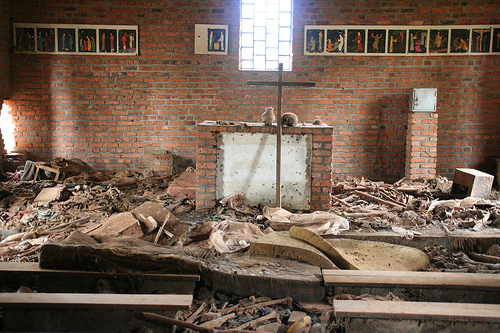
A week ago, a landmark case in Finland against a 59-year-old Rwandan preacher concluded with a life sentence for mass murder (the Finnish legal term joukkotuhonta actually roughly translates as ‘mass/group destruction’). The man, Francois Bazaramba, had sought asylum in Finland in 2003 and was arrested in 2007 in Porvoo, Finland, accused by the Rwandan authorities of involvement in the Rwandan genocide in 1994.
Although not unprecedented, Finland’s exercise of the so-called universality principle in public international law, has revived the controversy surrounding the principle which, in theory and if codified in national law, allows national courts to prosecute individuals suspected of involvement in genocide or other grievous and systematic attacks against civilian populations, regardless of the location of the crime or the nationality of the suspect.
More importantly, however, it has marked another step in the torturous road toward justice and reconciliation in Rwanda.

With the first World Cup hosted on African soil underway, the ISN takes a closer look this week at the impact of sport beyond the headlines – particularly as a tool for development.
This ISN Special Report contains the following content:
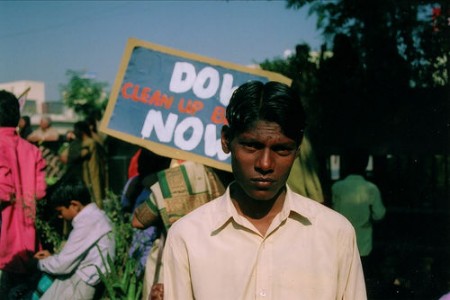
The ongoing BP oil spill in the Gulf of Mexico and and the 1984 Bhopal disaster have been hot topics in the news as of late. Both events have reproduced a popular debate regarding multinationals using and abusing their host countries, particularly within the environmental context. But rather than analyzing the power of the multinational companies in relation to the state, what appears more noteworthy is the conflicting attitude of the US. This in turn has influenced the hierarchy of states that exists on the world stage.
What I find interesting is how aggressively the US has condemned BP’s activities, even in the face of damaging trans-Atlantic relations. Yet, it has been so passive about the extensive damage done by American Union Carbide Chemicals, now Dow Chemicals, in Bhopal.
The Rise of the Right in Europe is our focus this week. How much do you know about right-wing politics on the continent?
[QUIZZIN 25]