The Truth will Set You Free

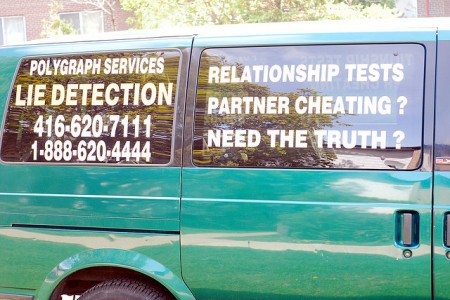
Lie Detecting Politics. photo: PearlsofJannah/flickr

Explosive claims about guerrilla bribes, narco-trafficking and vote tampering have rocked Ecuador’s president, Rafael Correa, just days after he appeared to triumph in a national referendum. Today, prosecutors in Ecuador have finally decided to investigate allegations that President Rafael Correa’s election campaign accepted funds from Colombian rebels back in 2006.

It all began last week, when the London-based International Institute for Strategic Studies (IISS) published a report which claims that the Revolutionary Armed Forces of Colombia (Farc) helped to fund Mr Correa’s 2006 presidential election campaign. The 240-page oeuvre cites evidence that a $100,000 payment was delivered by the Revolutionary Armed Forces of Colombia to Correo’s election coffers and goes on to claim that for the Colombian guerrillas, this was a “climax” of years of efforts to infiltrate Ecuador. The report is based on a two-year study of e-mails and documents recovered during a raid by Colombian forces on a Farc camp in Ecuador in March 2008 and testimony provided by a former rebel who later defected.

Meanwhile, at a news conference in Ecuador’s capital Quito, President Correa denied ever meeting the Farc or a representative thereof. “I’ll take a lie detector test to prove I never received funds from the Farc,” he proclaimed. Yet the sense of alarm in Quito deepened even further when Jay Bergman, the US Drug Enforcement Administration’s Andean region director, stated that Ecuador was slowly turning into a “United Nations” of organized crime, with drug traffickers from Albania to China using it as a staging ground for Andean cocaine.
Uganda’s Anti-Gay Law Shelved – Backgrounder

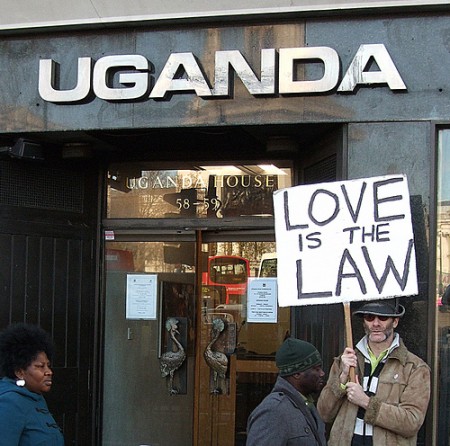
A different approach. Photo: Russel Higgs/flickr

Promising news from Uganda: the parliament has adjourned without debating a controversial bill that would have mandated life prison for homosexual acts and the death penalty for ‘aggravated’ cases. The move to wipe the draft laws from the agenda came amid mounting pressure from governments and citizens around the world. Bills not completed in the old parliament must be resubmitted to be considered. The fight isn’t over yet, but last week’s developments may prove to be a critical milestone for gay rights in Africa.

We have offered regular coverage of this issue:

  • You Can Run – Or You Can Hide recounts the assassination of gay rights campaigner David Kato Kisule and how homophobia in Uganda has grown even stronger in the wake of the murder.
Categories
Uncategorized

Coming Up at the ISN…

It's week 20 in our editorial calendar, Photo: Leo Reynolds/flickr

This week in ISN Insights and Podcasts, you can look forward to the following content:

  • The tension between India’s search for ‘strategic autonomy’ and its growing relationship with the US is analyzed by Dr Harsh V Pant, Reader in International Relations at King’s College London, on Wednesday.
  • Barbara Haering will discuss explosive weapons in our Friday podcast.

And in case you missed any of last week’s coverage, you can find it here on: resolving the Kuriles conflict; US military ‘brain drain’ and retention problems;  enhanced US-India space cooperation; the efficacy of bin Laden’s assassination; and a podcast on Nigeria.

Categories
Uncategorized

Staying up to date using the ISN’s RSS feeds

What is an RSS Feed?

RSS feeds allow you to subscribe to updates on websites. Special programs, called RSS readers can read these subscriptions and display them in an easy to use format.
Unlike newsletters, these feeds do not land in your email inbox and can be subscribed and unsubscribed without the need to provide any personal information.

Popular online RSS readers include Google Reader and MyYahoo. These readers are free to use.

Offline RSS readers to install on your computer are also available. Microsoft Outlook has an RSS reader included, the company provides a general introduction to RSS feeds and using Outlook to read them.

Where to find RSS Feeds
RSS feeds are available on many sites and the link to the RSS feed is usually marked with a variation of the orange RSS symbol.

RSS symbol
RSS Symbol

The standard RSS feeds of the ISN website can be found one a standalone page listing the ISN RSS feeds, giving you the option to subscribe to Publications, IR directory entries, podcasts or ISN insights. New entries in a chosen RSS feed will then be delivered to your reader.

Eurovision Song Contest: Kitsch and Politics

Serbia Eurovision Song Contest 2011, courtesy of flickr
Serious business. Photo: mjohn2101/flickr

It is a tacky show, and one well worth watching. This year’s Eurovision Song Contest features another round of spacy outfits and cheesy tunes with charming titles, ranging from Norway’s ‘Haba Haba’ to Armenia’s ‘Boom Boom’ and Finland’s ‘Da Da Dam’.

The first Eurovision contest took place in Switzerland in 1956, and only seven countries participated. Britain, Austria and Denmark were not present because they failed to apply on time. While most of Western Europe still doesn’t take the contest too seriously, it’s a different story in the East.

Looking at winning countries over the last two decades, there has been a marked move eastwards, as more countries from the former Communist block have joined the contest and award points to each other. The causes of bloc voting are debatable; some say it’s political, others argue that it is cultural.