Categories
Regional Stability

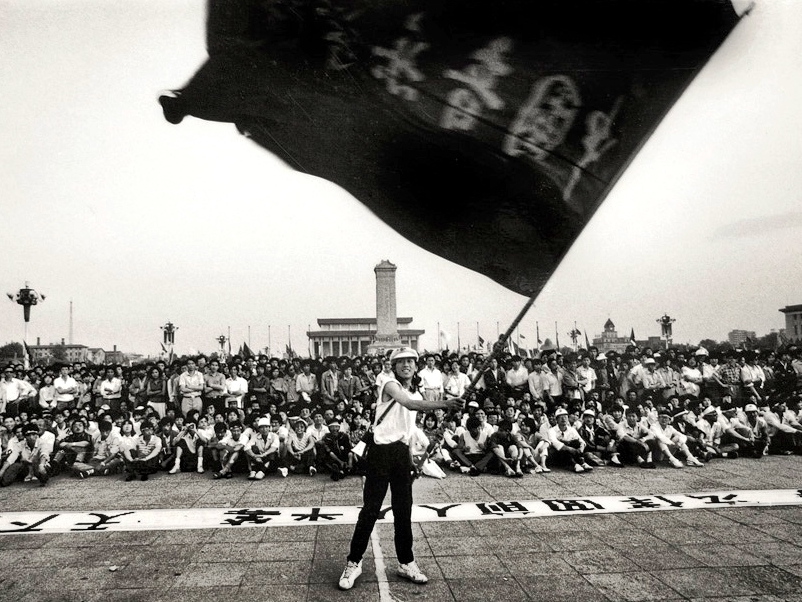
Book Review: The People’s Republic of Amnesia: Tiananmen Revisited by Louisa Lim

Image: Robert Croma/Flickr

This article was originally published by the LSE Review of Books on 15 September, 2014.

The People’s Republic of Amnesia: Tiananmen Revisited. Louisa Lim. Oxford University Press. 2014.

It is astonishing that the 25th anniversary of one of the key events in China’s modern history has triggered comparatively little academic activity. The occupation of Tiananmen Square by student demonstrators in the spring of 1989 and the ensuing massacre in the streets of Beijing committed by the People’s Liberation Army was an event that brought many consequences for China. It thoroughly put an end to any reform of China’s political system while ensuring the continuation and indeed acceleration of the country’s economic transformation. It also ushered in a new era in which the history of class struggle has been turned into a history of China’s national humiliation. Finally, it made it possible to elevate nationalism and consumerism to core values supported by the party-state and to legitimate to a considerable extent the enormous effort and cost of the now most important task of ‘stability maintenance’.

North Korea: Northeast Asia’s New Tourism Hub?

This article was originally published by 38 North on 4 September 2014. Republished with permission.

At first glance, last week’s wrestling exhibition in Pyongyang seems to have been a one-off event similar to others with which North Korea has used in the past to try to shift attention away from its nuclear program. As such, it could be dismissed as little more than a dose of regime propaganda. However, this interpretation seems inaccurate. Instead, Kim Jong Un appears intent on actually developing the tourism sector to attract much needed capital inflows. Seen in this light, a group of international wrestlers fighting inside a North Korean ring and holding arm-wrestling competitions with local children can be interpreted as in line with recent efforts to attract more visitors.

Categories
Humanitarian Issues

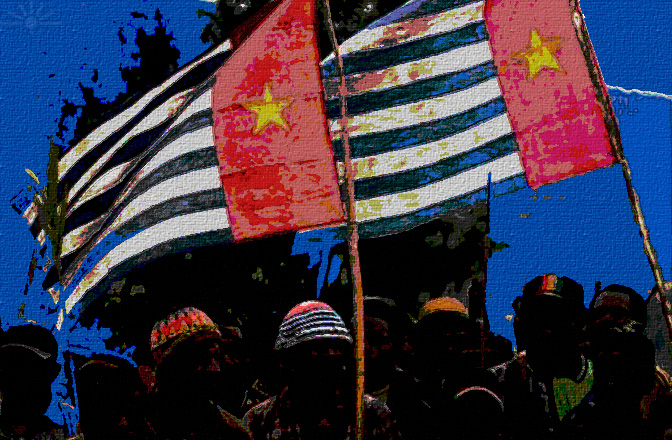
Benny Wenda: “West Papuans Are Living in a Prison”

This article was originally published by Contributoria.com on 1 September 2014.


Last month, as Indonesians prepared to vote for a new president, dozens of West Papuan activists were reportedly attacked by security forces for urging local people to boycott the elections. Mischa Wilmers speaks to the exiled leader of the Free West Papua movement, Benny Wenda, about his lifelong struggle for justice and asks why nobody is talking about the territory he calls ‘little South Africa.’

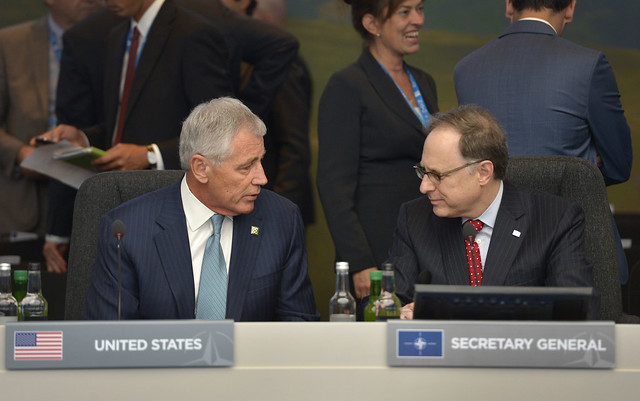
A Succesful NATO Summit? Proof Will Be in the Pudding

Image: Chuck Hagel/flickr

This article was originally published by War on the Rocks on 10 September 2014.

Was the recent NATO Summit in Wales a success? As with any such question, the answer depends heavily on the expectations of the respondent as well as the political perspective in which the answer is set. If the most important goal of the summit was to maintain solidarity among NATO members, the meeting was a great success. But the long-term judgment will be determined by the outcomes sought or hoped for in the final decisions of the allied leaders.

Why Are Police Becoming More Like Soldiers?

Image: Sdlewis/Wikimedia

This article was originally published by openSecurity on 1 September 2014.

In the last decades, militarisation of the state and surveillance of the population have grown exponentially in many western countries. Police forces, civilian institutions and even urban spaces have followed this trend of securitisation. Images of heavily armed police forces clashing against protesters in the US, UK, France and many other countries are becoming increasingly common. Leaked official documents have detailed the extensive surveillance programmes several states use to spy on their denizens, under the auspice of “national security”.

While the “war on drugs” and the “war on terror” have often provided the pretext, those affected by militarisation and surveillance are mostly neither criminal kingpins nor “terrorists” but ordinary citizens. It has been political activists and groups, those who express dissent and protesters, as well it is true as small-time criminals, who have been on the receiving end of police SWAT team raids, extensive (often illegal) surveillance and assaults by heavily-armoured riot police.