From Maritime Security to European Seapower

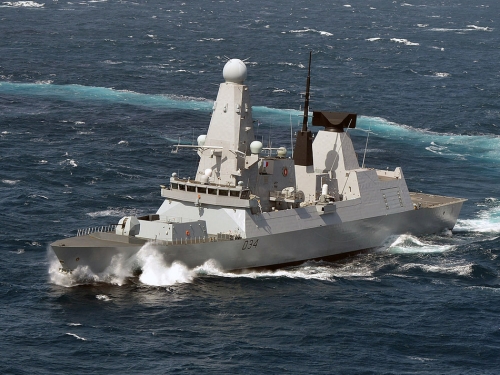
The Royal Navy’s HMS Diamond conducts an exercise with French Navy. Image: LA(Phot) Weatherston/Flickr

This article was originally published by European Geostrategy on 3 December, 2014. Republished with permission.

Maritime security is the new buzz-phrase in Brussels policy circles. 2014 has witnessed the publication of the EU’s first maritime security strategy. This strategy is premised upon the assumption that maritime security is a comprehensive business that covers a wide range of issues, from harbour safety, biodiversity conservation and the control of illegal fishing, through to piracy, all the way up to the support of crisis management operations. This emphasis on comprehensiveness is hardly surprising. The comprehensive approach is part of the European Union’s (EU) DNA, and it permeates through pretty much every instance of the newly adopted maritime security strategy.

Peak Youth – Seizing the Moment

School kids smiling for the camera in Nakempte, Ethiopia. Image: Tim & Annette Gulick/Wikimedia

This article was originally published by IRIN on 25 November 2014.

We have accepted the concept “peak oil” – the point where oil production goes into an irreversible decline. Now we are being asked to contemplate that we are also rapidly approaching “peak youth”, when there will be more young people than ever before in the history of the planet, and when young people as a proportion of the population will reach a maximum, before starting to drop.

The UN Population Fund (UNFPA) reckons there are already 1.8 billion people aged 10-24 in the world. In its annual report it presents them as a great force for accelerated development and a better quality of life, but only if the demographic changes going on can be harnessed for good.

India Reinforces Maritime Domain Awareness but Challenges Remain

Two vessels of the Indian Navy. Image: Vranitzky/Wikimedia

This article was originally published under the title “India and Maritime Security: Do More” by the Institute of Peace and Conflict Studies (IPCS) on 1 December 2014.

Six years ago, in November 2008, a group of Pakistan-based terrorists landed at unsecured waterfronts in Mumbai, the financial capital of India, and attacked public places such as hotels, restaurants, and a railway station. Although the Indian security forces were quick to respond, the attack, popularly referred to as 26/11, exposed three significant gaps in India’s maritime security apparatus: a. the porous nature of India’s coastline; b. the poor surveillance of the maritime domain; and c. the lack of inter-agency coordination.

China Dreamin’

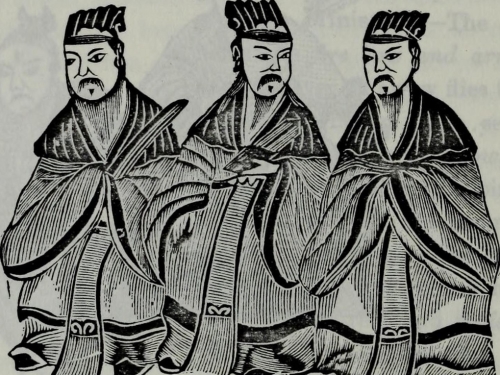
The three Mandarins, icons of Confucianism. Image: Internet Archve Books Images/Flickr

This article was originally published by E-International Relations on 8 December, 2014.

Every Chinese leader since Mao has attempted to separate themselves from their predecessor by articulating a new overarching praxis. For Xi Jingping this grand idea is the ‘China Dream’ – that is, a call for ‘national rejuvenation’ which improves people’s livelihoods, strengthens the military, and restores China’s status as a great power. The ‘dream’ has come with an official propaganda blitz – everything from TV shows and educational campaigns, to Party School courses and academic funding streams to research the ‘dream’.

Chinese Firm Planning a Canal Through Nicaragua Has PLA Ties

The proposed canal routes (red) crossing through Nicaragua. The Panama canal is marked blue. Image: Soefrm/Wikimedia

This article was originally published by Offiziere.ch on 5 December, 2014.

A Chinese company is preparing to begin work on the Nicaragua Interoceanic Canal. Once — and if — the canal is ever finished, it will size up to more than 170 miles (about 275 km) and connect the Caribbean Sea to the Pacific Ocean, with Lake Nicaragua in the middle. It’s a major project — larger than any other geo-engineering project underway in the world. Officially, it’s an opportunity for development championed by Nicaraguan President Daniel Ortega. But critics look at the canal as a boondoggle, and a means by which Ortega is developing a long-term relationship with Beijing — and China’s geopolitical interests. The builders of the canal also have important ties with the Chinese People’s Liberation Army (PLA).