Debacle at Debaltsevo Calls For a New Approach to Ukraine

Anti-Putin grafitti in Debaltsevo. Image: Pryshutova Viktoria/Wikimedia

This article was originally published by the Centre for International Policy Studies (CIPS) on 18 February, 2015.

Before coming up with solutions it is first advisable to determine the nature of the problem. Right now the United States is considering sending arms to Ukraine, while here in Canada the Defence Minister, Jason Kenney, has been mulling the deployment of Canadian soldiers to train the Ukrainian Army. But is a lack of arms or training the real reason for the Ukrainian Army’s defeats?

To answer that question, it is worth looking at what has been happening in the town of Debaltsevo, where a large Ukrainian contingent, possibly several thousand strong, was encircled by rebel forces. The government in Kiev has repeatedly denied that its troops were surrounded, but even Ukrainian military journalists acknowledge that the main road out of Debaltsevo is in rebel hands and that troops of the Donetsk and Lugansk People’s Republics have captured most of the town, as well as a substantial number of prisoners. On the night of February 17-18, a large part of the garrison escaped through gaps in rebel lines, but Ukrainian sources report heavy casualties in the process. Substantial quantities of equipment have been destroyed or have fallen into rebel hands. Ukraine has suffered a serious defeat.

Categories
Regional Stability

A Vulnerable Peace: What’s at Stake in the Upcoming Burundian Elections

Flag of the National Council for the Defense of Democracy–Forces for the Defense of Democracy (CNDD-FDD); a political party and former rebel group in Burundi. Image: MrPenguin20/Wikimedia

This article was originally published by the IPI Global Observatory on 20 February 2015.

Starting in May, Burundians are scheduled to go to the polls for the third time since the Arusha Peace and Reconciliation Agreement and subsequent cease-fire agreements ended the Burundian civil war in 2003. These are important elections with significant consequences for the consolidation of peace and economic recovery in the country, as well as for democracy in the wider Great Lakes region.

The ruling party, the CNDD-FDD, is a former rebel movement that belatedly signed a cease-fire agreement in 2003 and then went on to win the first post-war democratic elections in 2005, and the second ones in 2010. Complex power-sharing provisions were agreed upon during the Arusha peace negotiations and enshrined in the Burundian Constitution, which intended to ensure a certain degree of inclusivity in governance. While the civil war was fought partly over the issue of ethnic exclusion, the Burundian Constitution requires that executive and legislative organs are multiethnic.

Categories
Humanitarian Issues

The Push and Pull of the World’s Most Dangerous Migration Route – What’s Really Behind The Flock of Thousands to Europe These Days?

Migrants arriving on the island of Lampedusa in August 2007. Image: Sara Prestianni/Wikimedia

This article was originally published by Politics in Spires on 22 February, 2015.

The  Mediterranean Sea is today’s most dangerous border between countries not at war with each other. Just last week, 300 persons departing Libya on four rubber dinghies have gone missing at sea, after drifting for days without food and water. News reports in the past six months have regularly commented upon the rising number of persons disembarking on Italy’s coastline – benefiting from its search and rescue operation Mare Nostrum. Despite the increase in new arrivals from 33,000 to 200,000, the life-saving mission has now been discarded. Italian policy makers believe Mare Nostrum is as responsible for overcrowded reception centres as it is for the rising number of persons risking their lives at sea. But is it truly to blame for the surge? Because more than 50 per cent of arrivals are either Syrian or Eritrean, news commentators have provided some other potential explanations. Some point to the protracted conflict in the Middle East, whilst others highlight the strain on neighbouring Jordan, Lebanon and Iraq in continuing to receive thousands of Syrian refugees. “Poverty in Africa” is mentioned occasionally, and for the better informed, an oppressive military regime and indefinite conscription in Eritrea are to blame. Yet these supposed  ‘causes’ of the latest wave in irregular migration to Europe are speculative at most and have in fact been ongoing for many years now.

Ten Reasons Why China Will Have Trouble Fighting a Modern War

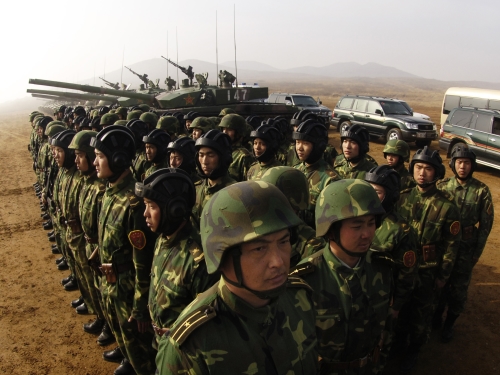
PLA soldiers in training. Image: Myles Cullen/Wikimedia

This article was originally published by War on the Rocks on 18 February, 2015.

The introduction of new weapons and platforms into the People’s Liberation Army (PLA) has captured the attention of much of the world for well over a decade. However, new equipment is only one element of the PLA’s long-term, multi-dimensional modernization process. There is much to be done and no one understands this better than the Chinese themselves. Based on what PLA commanders and staff officers write in their internal newspapers and journals, the force faces a multitude of challenges in order to close the perceived gaps between its capabilities and those of advanced militaries.

Categories
Humanitarian Issues Terrorism

Drones: From Technology to Policy, Security to Ethics

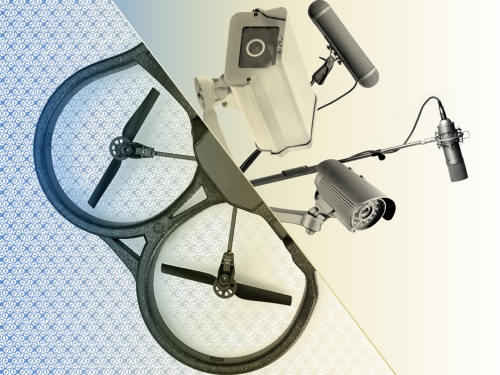
«Drones: From Technology to Policy, Security to Ethics». Poster for the conference organized by the ISN and ETH Global. Image: ISN

Rapid technological advances are making drones cheaper, more accessible and highly adaptable. Once the exclusive preserve of the world’s most advanced armed forces, unmanned platforms are now being used by civilian actors for a wide range of applications. Yet, while members of the technical community have tended to emphasize the opportunities that this technology offers, their counterparts in international relations and other fields have increasingly raised questions about the legal, ethical, humanitarian and security implications of unmanned aerial systems (UAS). Against this backdrop, ETH Global and the ISN recently hosted a one-day conference that brought together over 160 experts from the fields of robotics, environmental science, law and ethics, and international relations and security. Since ETH Zurich is considered one of the world’s leading ‘competence centers’ in the field of robotics systems and control, its activities offer a glimpse into emerging UAS technologies and their potential social impact in the future.