Political scientists generally agree that democracies have a foreign policy advantage, particularly when it comes to conflict. Democracies – at least when compared to autocracies – make more credible threats, fight less, and win more.
There’s a lot more debate about why this might be the case, but in research with Matt Baum I argue that it comes down to institutional constraints. Free and fair elections are fine and well, but unless political opposition and an informed public are up to the task of forcing leaders to be responsive, the democratic advantage fades away. Driving the point home, some autocracies are so institutionalized that they effectively constrain leaders and, when they do, those countries look more like democracies in their conflict behavior and outcomes.
Thanks to a sequence of fortunate accidents around 2005-2006, the world discovered the intellectual legacy of David Galula (1919-1967). Since then, two books and one monograph restituted the story of his life or vast segments of it. Although some went into a fascinating level of detail, none of these, in my view, are an easy read for a non-military audience. A minimal awareness in terms of war studies is needed to really capture what they had to say. Besides, the French-speaking readership is still far from hearing about Galula. These are the two reasons why I decided to tell the story of Galula’s life – in French.
Writing a book about David Galula amounts to recounting the story of a paradox (many of them actually). On the one hand, there is a consensus on him being the founding father of counterinsurgency, a groundbreaking theory in modern military affairs. Galula was a self-made man in various aspects; born into a relatively modest environment, he rose to positions where no one expected him to, in virtue of his faith and social background. He traveled the world and exerted the full scope of his talents in a diversified career ranging from diplomat, author and secret agent to infantry officer. Many influential people liked him and very few voiced any opposition or hostility at his respect. Yet, Galula’s legacy went silent after his premature death in 1967. During forty years, neglect and bad luck buried Galula’s unorthodox and stimulating contributions to the art of war. Neither book royalties nor a military pension were enough to keep his widow from having to look for a job to make a living and raise their only child. Galula is still mostly unheard of in his home country, France.
Around the world, political and criminal actors appear to be working more closely together than ever before. In 2011, the White House warned that criminal networks were forging alliances with political actors to undermine the interests of the United States. Spanish prosecutors have alleged that in many former Soviet states organized crime groups work “as a complement to state structures,” doing “whatever the government…cannot.” Concerns about political and public sector corruption in eastern Europe have grown. A recent report suggests that organized crime groups are taking control of local democracy in countries as varied as Afghanistan, Colombia, and Niger. In the Middle East, organizations such as Hezbollah in Lebanon and the Islamic State combine local social service provision, militant activity, and transnational organized crime to develop governmental power. And in North Korea, the ruling regime is accused of counterfeiting, drug-running, and even human trafficking. “Mafia states,” as this convergence of political and criminal power has been described, appear to be on the rise worldwide.
Why Now?
Political and criminal actors have long collaborated—not least in the US. As I show in my new book, Hidden Power: The Strategic Logic of Organized Crime, the US government worked closely with the American mafia during World War II and the Cold War to extend its power overseas. In the process, the Mob became an active player in international affairs, mounting armed insurgences, engaging in transnational terrorism, and even engineering regime change in some countries. But the move towards criminalized politics appears to have accelerated in the last two decades. Why?
China’s Belt and Road Initiative (BRI) – a plan to build a vast network of roads, rail lines, new ports, and other infrastructure improvements a in more than 60 countries, at a cost of $4 trillion – is an economic policy designed to radically expand trade and investment in Asia and around the Indian Ocean. Critically, however, it is also a security initiative with the aim of facilitating economic integration and promoting longer-run peace in the region.
The economic benefits are likely to be large, but there may be rough patches along the new Silk Road. While the proposed investments are precisely the types of trade-enhancing projects development economists have long called for, the geopolitical implications of BRI are complicated. From the restive western Chinese province of Xianjing to Jammu-Kashmir, the Myanmar-Chinese border, and the Indian Ocean, BRI-related initiatives target or traverse some of the world’s most contested territories. Major power development programs abroad – such as the US Marshall Plan and Alliance for Progress – have always been motivated by a mixture of economic and security concerns. Indeed, BRI is intended in part to address security fears emanating from these regions by improving economic prospects.
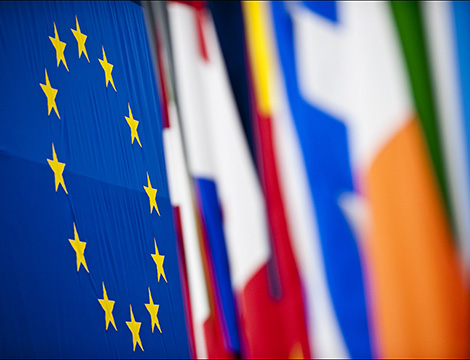
The debate about the EU military headquarters is not as vacuous as some of its British critics claim, although it has undoubtedly been given a new lease of life by the Brexit vote. Still, the UK would be well-advised to drop its vociferous opposition to the scheme, even if it continues to entertain doubts about its viability.
During her recent visit to the UK, Germany Defence Minister Ursula von der Leyen asked the British not to block EU efforts to build deeper security and defence cooperation. Her comments followed British criticism of Franco-German plans to build an EU headquarters and suggestions that London might block such a measure, as long as it remained in the EU.
There is a whole bundle of post-Brexit vote politics at play here, for which the HQ issue has become something of a lightning rod. The 27 other EU governments are keen to show some unity and that the bloc remains relevant for their citizens, especially for their security. Plus, although it is not entirely fair to blame the UK for the EU’s lack of progress on military matters, cheerleaders for EU defence policy – and not only in Berlin and Paris – have seized on the Brexit vote as a golden opportunity to relaunch that policy.