
Strategic Contours of China’s Arms Exports

Image courtesy of Manuel Faisco/Flickr. (CC BY-NC 2.0)

This article was originally published by the S. Rajaratnam School of International Studies (RSIS) on 11 September 2017.

Synopsis

China’s global geopolitical aspirations, backed by growing economic clout, shape the direction and character of its military-technological choices and China’s strategic interest to strengthen its position in global arms markets.

Commentary

Over the past decade, China has been able to accelerate its transition from a large arms importer to a major exporter, with a potential to become one of the world’s leading arms exporters, by providing low cost and affordable service and upgrade packages without geopolitical strings.

According to recent data by SIPRI, the Stockholm-based think-tank, Chinese exports of major arms have increased by 74 percent between 2012 and 2016, and its share of global arms exports rose from 3.8 to 6.2 percent, making it the world’s third-largest supplier in the world, after the United States and Russia. The geographic spread and number of recipients of Chinese weapons exports have also increased. In 2012-16, China delivered major arms to 44 countries – more than 60 percent of China’s exports went to Pakistan, Bangladesh and Myanmar and another 22 percent went to Africa. China also delivered major arms to ex-Soviet states for the first time, including the 2016 delivery of surface-to-air missile (SAM) systems HQ9 (FD-2000) to Turkmenistan.


Categories
Humanitarian Issues

Myanmar’s Rohingya Suffer Under the Crisis in Humanitarianism

Image courtesy of AK Rockefeller/Flickr. (CC BY 2.0)

This article was originally published by the IPI Global Observatory on 20 September 2017.

As the United Nations General Assembly kicked off in New York this week, Myanmar’s State Counselor Aung San Suu Kyi—notably absent from the multilateral forum’s high-level session—finally spoke at length about the current crisis involving her country’s Rohingya ethnic minority. Suu Kyi’s national address on September 19, although condemning “all human rights violations and unlawful violence,” has done little to calm the critics who believe Myanmar’s leader is not doing nearly enough to acknowledge the dire humanitarian situation and help ensure that current challenges are overcome.

Three weeks into the current wave of violence that erupted in Rakhine State, reports continue to filter out, despite curbs on media access. These detail the Burmese army and Buddhist gangs directly targeting civilians, including perpetrating rapes and burning whole villages to the ground.

Macron’s European Defense Doctrine

Image courtesy of Thierry Ehrmann/Flickr. (CC BY 2.0)

This article was originally published by Carnegie Europe on 28 September 2017.

“A sovereign, united, democratic Europe.” This is the vision French President Emmanuel Macron outlined in a landmark speech on September 26, at the Sorbonne in Paris. Calling for a more united and democratic EU is not new. However, for a leader from a major country to passionately assert that European integration reinforces national sovereignty, rather than diminish it, is refreshing.

The last decade has been difficult for the EU, considering the combination of economic and security crises, alongside the 2016 UK decision to leave the Union and the rise of Euroskepticism across Europe. Even so, “We forgot that we are Brussels . . . Only Europe can give us some capacity for action in today’s world,” Macron declared. He bolstered his bold vision with a breathless list of policy proposals, including on European defense.

Macron’s defense vision seems to draw less on traditional French strategic ideology, or a teleological idea of European integration, and more on the urgent strategic necessity for Europeans to work together infused with a strong sense of political opportunity.

Categories
CSS Blog

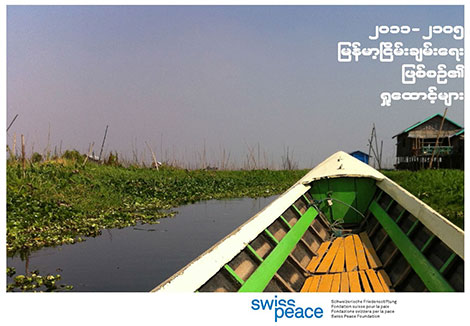
Mediation Perspectives: The Myanmar Peace Process 2011-2015 Through National Glasses

Mediation Perspectives is a periodic blog entry that’s provided by the CSS’ Mediation Support Team and occasional guest authors. Each entry is designed to highlight the utility of mediation approaches in dealing with violent political conflicts. To keep up to date with the Mediation Support Team, you can sign up to their newsletter here.

Swisspeace has been involved in and on Myanmar since 2012, focusing on the nationally-driven peace process between the government, the army and ethnic armed organizations. In addition to direct support to local actors involved in the process, we have also contributed by capturing the stories and experiences from Myanmar actors to draw lessons and nourish the next phases of the national efforts.

This blog is about our new publication and shows how essential it is to write about and value local peace efforts in order to better understand the situation and respond in more sustainable manner. In this blog we also implicitly reflect upon our rather unique methodological approach. This text is adapted from the editors’ reflections in the publication itself. The full publication is available online, or can be ordered in print.

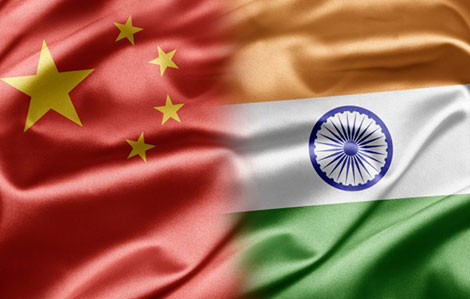
China and India Pull Back on Doklam, Choosing to Fight Another Day

Image courtesy of Times ASi/Flickr. (CC BY 2.0)

This article was originally published by YaleGlobal Online on 14 September 2017.

India deftly used the BRICS summit to end the standoff with China in Bhutan, but challenges remain for bilateral relations

One week can be a long time in inter-state relations. In a week’s time, India and China had kissed and made up after their armies stood eyeball to eyeball at the Doklam Plateau for more than two months. The trouble at the India-Bhutan-China tri-junction started June 16, when Indian soldiers detected construction activity on what is considered disputed territory on the Doklam Plateau. Chinese workers seemed to be building a road that would have allowed China to project power further into the territory claimed by Bhutan, thereby giving Beijing an ability to cut India’s northeast from the mainland.

India’s response was immediate. The government sent troops into Bhutan to halt the roadbuilding, demanding restoration of status quo ante. As the Indian external affairs minister explained in the Indian Parliament: “Our [Indian] concerns emanate from Chinese action on the ground which have implications for the determination of the tri-junction boundary point between India, China and Bhutan and the alignment of India-China boundary in the Sikkim sector.” Sushma Swaraj added that “dialogue is the only way out of the Doklam standoff…and this should be seen in the context of the entire bilateral relationship.”