Categories
CSS Blog

Mediation Perspectives: Women Mediators’ Networks

Image courtesy of Geralt/Pixaby

Mediation Perspectives is a periodic blog entry that’s provided by the CSS’ Mediation Support Team and occasional guest authors. Each entry is designed to highlight the utility of mediation approaches in dealing with violent political conflicts. To keep up to date with the Mediation Support Team, you can sign up to their newsletter here.

The Women, Peace and Security (WPS) agenda has shown mixed results. While it is possible to report that some small gains in the number of women mediators in high-level positions are on their way, we are still at the beginning of a long journey. The growth of women mediators’ networks can be seen in this context. While these networks do seem to help professionalize women mediators and create linkages, they also face challenges. For example, these include issues related to the selection of mediators and the sustainability and linkages between networks. This blog explores the reasons for the growth of women mediators’ networks, and attempts a tentative analysis of where we stand in order to provide ideas for future efforts.
Categories
CSS Blog

Mediation Perspectives: Training Secular Diplomats on the Religion-Peacebuilding Nexus

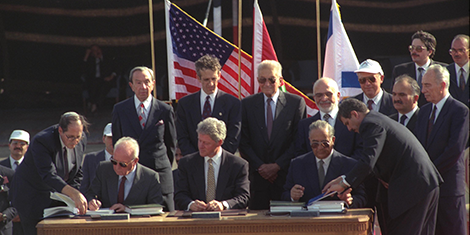
Image ‘Signing the Israel-Jordan Peace Treaty‘ courtesy of Government Press Office/Flickr. (CC BY-NC-SA 2.0)

Mediation Perspectives is a periodic blog entry that’s provided by the CSS’ Mediation Support Team and occasional guest authors. Each entry is designed to highlight the utility of mediation approaches in dealing with violent political conflicts. To keep up to date with the Mediation Support Team, you can sign up to their newsletter here.

The waters of international relations and diplomacy for peacebuilding can no longer be effectively navigated without understanding religion and its role in armed conflict. Some foreign ministries like those of Switzerland, Finland and Germany have started training their staff. However, many secular or non-religious diplomats who serve as their foreign ministries’ skippers in the peace processes their countries support are not equipped to deal with religion. This blog offers thoughts on why this is and where diplomats can receive the knowledge and skills they need.

Categories
Regional Stability CSS Blog

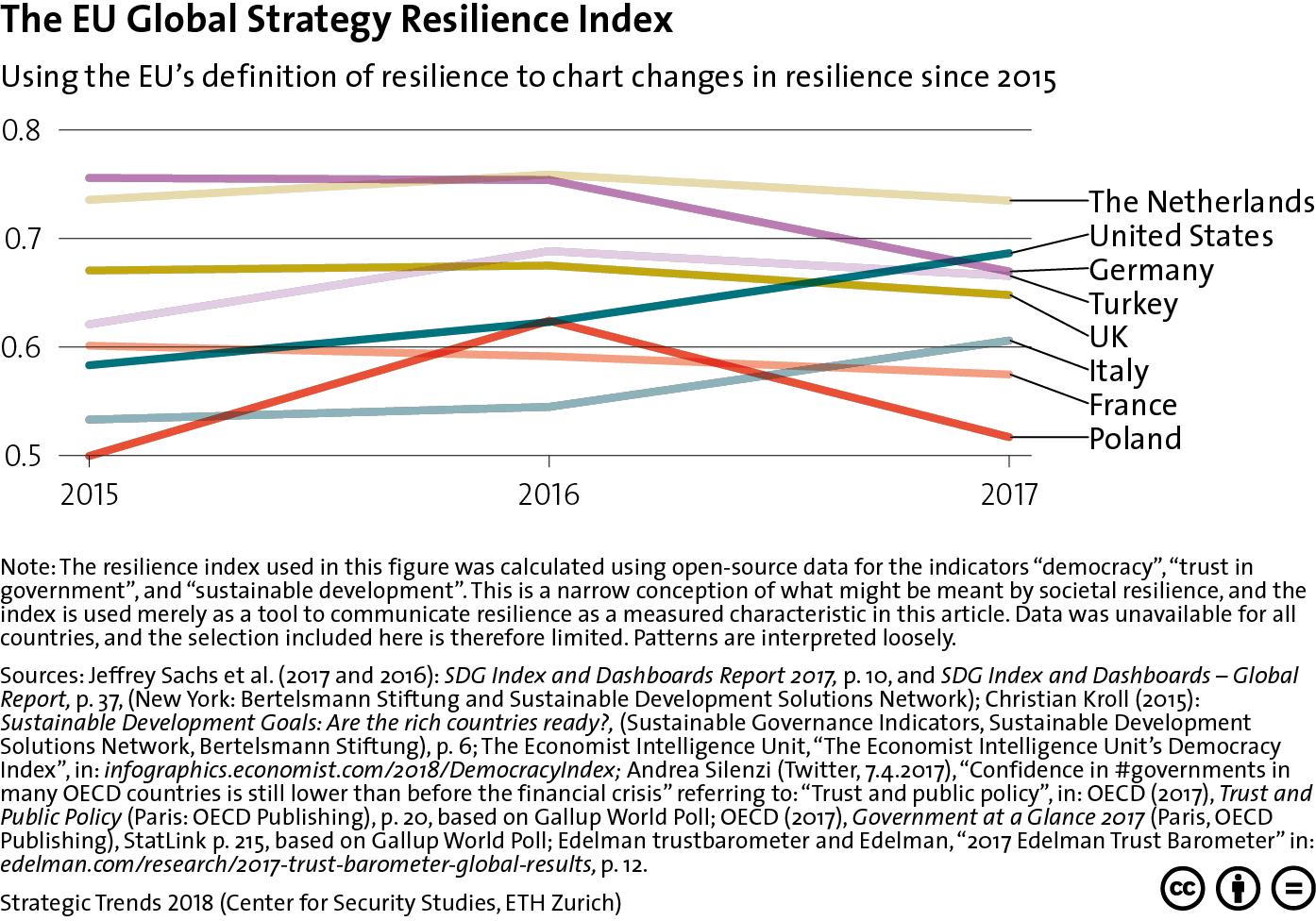
The EU Global Strategy Resilience Index

EmailFacebookTwitter

This graphic charts changes in resilience (using the EU’s definition of resilience) of select EU member states from 2015 to 2017. For more on the role of resilience in contemporary deterrence efforts, see Tim Prior’s chapter for Strategic Trends 2018 here. For more CSS charts, maps and graphics on defense policy, click here.

Categories
CSS Blog

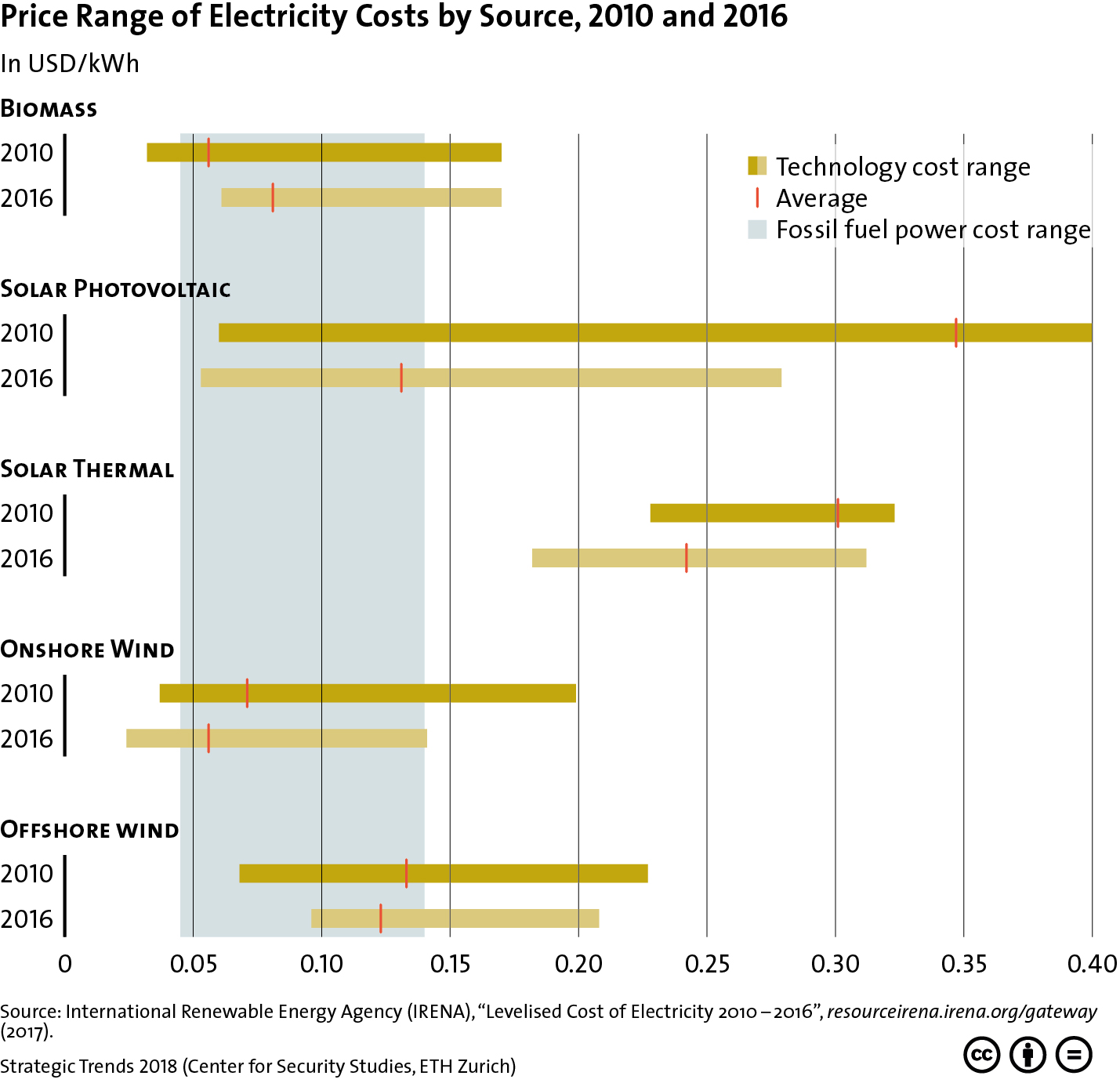
Price Range of Electricity Costs by Source, 2010 and 2016

EmailFacebookTwitter

This graphic contrasts the price range of electricity costs stemming from renewable sources with that of fossil fuels for the years 2010 and 2016. For more on the interplay between technological innovation and the geopolitics of energy, see Severin Fischer’s chapter for Strategic Trends 2018 here. For more CSS charts, maps and graphics on economics, click here.

Categories
CSS Blog

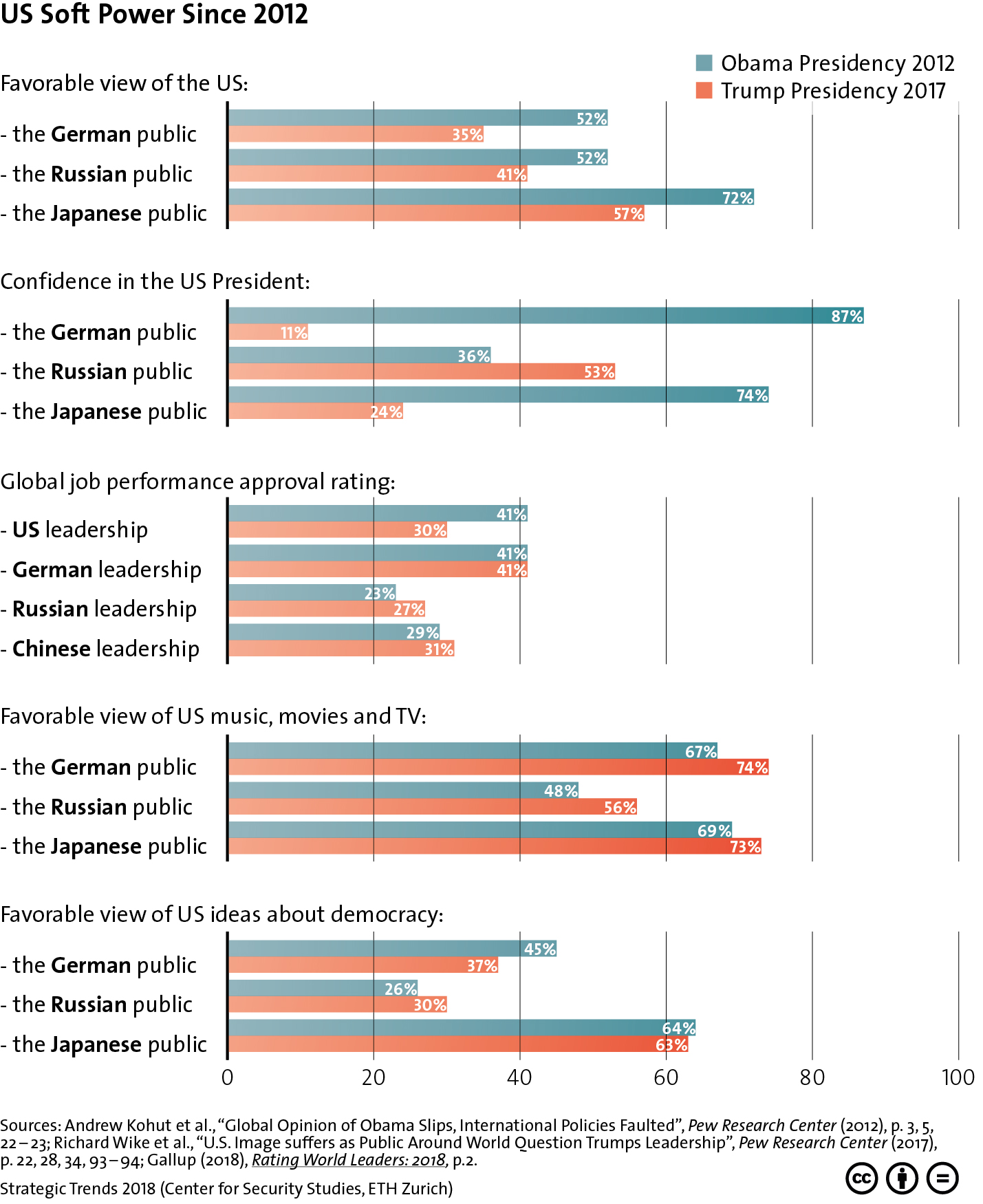
US Soft Power Since 2012

EmailFacebookTwitter

This graphic looks German, Russian and Japanese public opinion of the US under the Obama and Trump administrations.For more on the US’ global leadership role, see Jack Thompson’s chapter for Strategic Trends 2018 here. For more CSS charts, maps and graphics, click here.