If you’re not a space geek, you probably didn’t notice the total failure of the Russian satellite navigation system early this month. And if you’re not an electronic warfare geek, you probably didn’t notice those Russian satellite navigation jammers driving around Crimea either. Both, though, should be a reminder of just how much industry and the armed forces depend on navigation and timing from space, and what should be done about it.
The emerging subfield of “security demographics” is interested in how demographic trends, such as youth bulges, high or low fertility rates, and sex ratios affect the security and stability of nation-states and regions. In our research, Andrea Den Boer and I have attempted to show that abnormally high sex ratios – situations where there are significantly more men than women – have been a security concern in the past and may affect security and stability in the future.
At least that’s how it seems to many. The signs are troubling: Egypt and Ethiopia have recently increased their aggressive posture and rhetoric over the construction of the Great Ethiopian Renaissance Dam in the headwaters of the Blue Nile, Egypt’s major artery since antiquity. India continues to build new dams that are seen by its rival Pakistan as a threat to its “water interests” and thus its national security. Turkey, from its dominant position upstream, has been diverting the Tigris and Euphrates rivers and increasing water stress in the already-volatile states of Iraq and Syria.
It has been claimed for decades that a confluence of factors, including water scarcity, societal unrest, and strategic maneuvering, will inevitably push states and other actors to act aggressively, perhaps even violently, to secure precious water resources. So are we finally witnessing the first flashes of the coming age of water wars?
A partial answer to this question may be found in the shortcomings of certain approaches to promoting women’s rights. In particular, the effectiveness of some strands of academic and policy literature on women, peace and security (WPS), and related advocacy campaigns that push for greater representation and participation of women at the peace table, can be questioned.
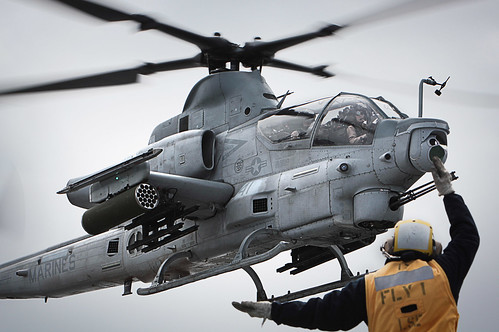
In January the Army Aviation Center of Excellence announced its plan to divest the army inventory of the OH-58D Kiowa Warrior in favor of an attack and reconnaissance aviation force consisting of the AH-64 Apache and unmanned aircraft systems. The announcement drew both criticism and praise from various blogs and media sources. Most of this commentary centered on questions of the ability of the Apache helicopter and UAS to fulfill the aerial scout role,
and whether or not the Kiowa Warrior is truly obsolete. It is arguable however that the decision was driven as much by fiscal austerity as battlefield requirements.