Secret Diplomacy and the “Dirty Hand” Problem

US President Nixon gives a speech on Cambodia, courtesy of Jack E Knightlinger/wikimedia commons

This article was originally published May 2 2014 by E-International Relations (E-IR)

The classical “dirty hand” problem in political theory, which involves the choice between two morally challenging “evils”, sums up well the ethical puzzle of secret diplomacy: the lesser evil choice (the practice of deception) remains morally disagreeable even if it is judged to be politically necessary for avoiding a greater evil (e.g., potential military conflict). Arguably, “dirty hand” decisions are much easier to make when the distinction between the two “evils” is clear-cut. However, such clarity of purpose is rarely available in practice. On the one hand, secret diplomacy, which I refer here as the method of conducting international negotiations without public scrutiny, may generate unwarranted suspicion and distrust between nations, or it can undermine domestic orders by undercutting public confidence in political leaders. It can also make negotiators overestimate what they can implement amid domestic opposition once the agreement enters the public domain. This argument has been often mentioned as an explanation for the failure of the 1993 Oslo agreement between Israelis and Palestinians. At the same time, secret diplomacy can create a conducive environment for constructive talks by insulating foreign policy makers against grandstanding and by granting them a minimum level of security, informality and autonomy. It also offers parties a much needed space for “saving face” in front of domestic constituencies or international partners. Protracted relations of enmity such as that between the US and Iran or Israel and its Arab neighbors require, for instance, significant political capital to break on both sides, which political leaders might not be willing to entertain unless the benefits are clear and tangible.
Oil in South Sudan: Turning Crisis Into Opportunity

This article was originally published May 5 2014, by New Security Beat, the blog of the Environmental Change and Security Program (ECSP) at the Wilson Center.

Outside of donor and humanitarian aid, South Sudan’s economy is almost entirely dependent on the oil sector – and that sector is in crisis.

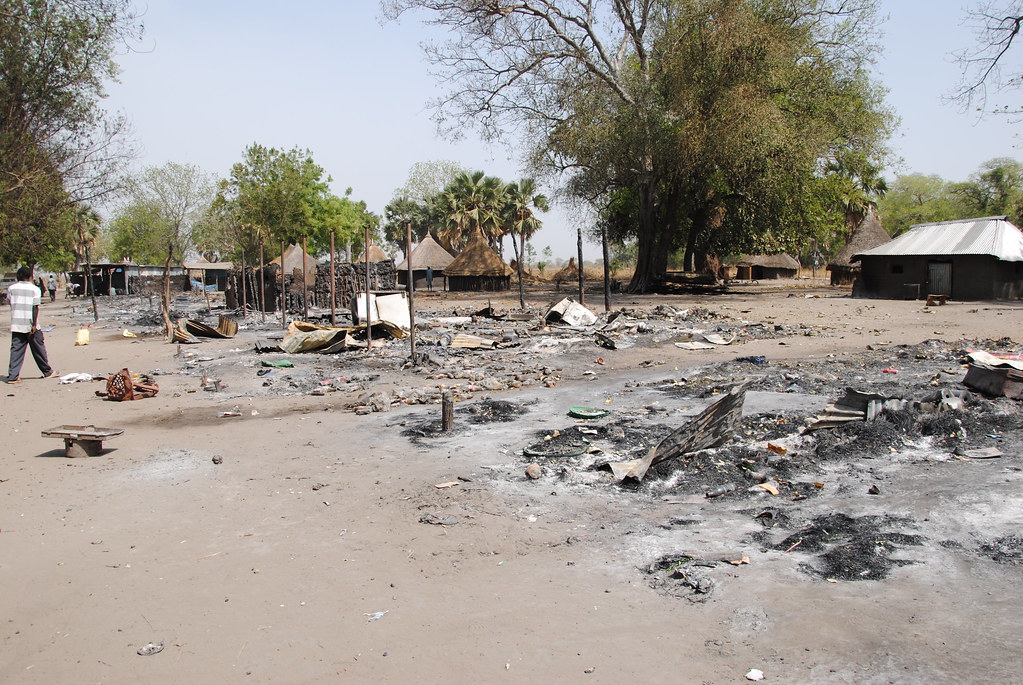
After a unilateral shutdown of the industry by the government in January 2012 that lasted 15 months, and ongoing partial shutdowns due to internal conflict, not only are current oil revenues drying up, but the prospects for new investment have been nearly destroyed.

As a result, demands on the donor community will grow rather than tail off in coming years. However, looking further afield, and if geology allows, a reformed South Sudan has the potential to turn what has until now been a developmentally detrimental oil industry – generating the finance and providing incentives for violent conflict – into one that generates positive change for its war-torn people.

China SSBN Fleet Getting Ready – But For What?

Photo: wikimedia commons.

This article and the associated images originally appeared on the FAS Strategic Security Blog.

China’s emerging fleet of 3-4 new Jin-class nuclear-powered ballistic missile submarines is getting ready to deploy on deterrent patrols, “probably before the end of 2014,” according to U.S. Pacific Command.

A new satellite image taken in October 2013 (above) shows a Jin SSBN in dry dock at the Bohai shipyard in Huludao. Two of the submarine’s 12 missile tubes are open. It is unclear if the submarine in the picture is the fourth boat or one of the first three Jin SSBNs that has returned to dry dock for repairs or maintenance.

Addressing the Foreign-Fighter Risk: a Role for Financial Intelligence?

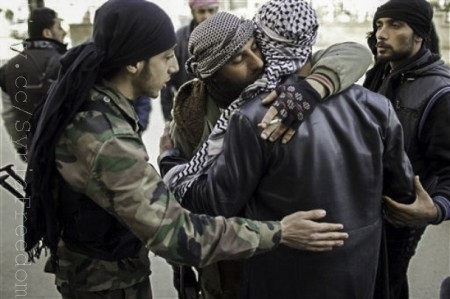
Free Syrian Army fighters in Idlib, courtesy of Freedom House/flickr

The participation of foreign fighters in the Syrian conflict is a growing concern, particularly among Western governments that are not only struggling to track the movement of their citizens, but are also fearful that those travelling to the conflict may become radicalised and return home with their extremist ideology. Recently, a UK Parliament Home Affairs Committee enquiry into counterterrorism heard from a range of experts how returning fighters pose a statistically significant risk to the security of their home countries. Research published by Thomas Hegghammer also suggests that perhaps one-in-nine foreign fighters from the West might perpetrate attacks on their home countries once they return.

In addition, several studies have been undertaken that seek to estimate the number and nationality of these foreign fighters. Consensus suggests that there are over 10,000 such fighters in Syria, with as many as 2000 (and rising) coming from Western Europe. A number of these have already died in battle or, as in the case of Briton Abdul Waheed Majeed, acted as suicide bombers. Yet, while there is certainly no suggestion that all those returning from the conflict will be radicalised, the West’s limited knowledge as to who travels and returns from Syria is alarming.

Burundi: Ignoring the Problem Won’t Make It Go Away

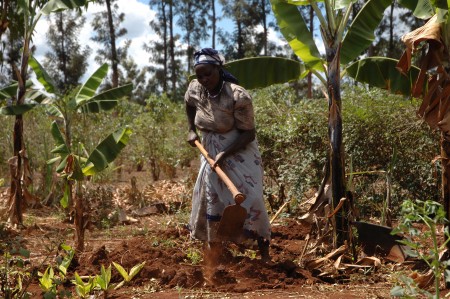
Smallholder farmer prepares maize plot for planting, courtesy of International Maize and Wheat Improvement Center/flickr

This article was originally published by the Institute for Security Studies (ISS) on 23 April 2014.

In what looks like a classic case for the African Union’s (AU’s) early-warning mechanisms, alarm bells are growing louder over the political tensions in Burundi. Detentions, human rights violations and political strife are increasing in the country in the run-up to presidential elections in 2015.