1914 and 2014: Is Asia on the Verge of Repeating Europe’s Slide towards War?

Illustration of The Siberian War, courtesy of The Library of Congress /Wikimedia Commons

Martin Zapfe, what themes and subjects will be covered in this ‘series’ of publications and events?

We will cover a variety of issues on security in Asia – some that are at the center of public attention – like the re-militarization of Japan under Prime Minister Shinzo Abe – and some that often evade public scrutiny, like China’s maritime strategy in the Indian Ocean. Michael Haas and Prem Mahadevan will look at those two themes in-depth in two “CSS Analyses”. In addition, the Center for Security Studies’ (CSS) “Global Security Team” will look at war risks in Asia and determine whether often-applied analogies to “1914”are applicable to present-day Asia. If that really is the case, what does it tell us about possible policy responses? An additional CSS Policy Perspectives to be published later this month will explore this question in greater depth. Finally, we will host a CSS Evening Talk in early July, when the International Institute for Strategic Studies’ (IISS) Christian LeMière will discuss how Switzerland could be affected from security risks emanating from Asia.


Aircraft Stories: The F-35 Joint Strike Fighter (Part II)

An F-35B Lightning II makes the first vertical landing on a flight deck at sea, courtesy of U.S. Navy/wikimedia commons

This article was originally published on the blog The Disorder of Things, on 17 May 2014.

This is the second part of a single post about the F-35 as actor-network. The first part is here.

Strike

This word is meant to convey the F-35’s identity as a proper multirole fighter, a machine rigged to conduct both air superiority and strike missions, the latter defined as tactical attacks on a ground or naval target with a particular focus on “initial blow” or “first day of attack” operations. All three variants of the F-35 fighter family hold this capability: the conventional A version designed for use by the U.S. Air Force and allied air forces; the Short Take-Off, Vertical Landing (STOVL) or B variant for the U.S. Marines Corps as well as the UK’s Royal Navy, as well as the conventional carrier-based edition for the U.S. Navy, the F-35C.

Airstrike, or strike for short, shapes, and is shaped by, the evolving structure of international politics in important ways. Pax Americana, defined in terms of successive hegemonic or hierarchical international and regional orders centered on Washington, D.C., can be regarded as an assemblage made possible by the so-called global strike, among other smaller assemblages. Since the middle years of the twentieth century warplanes have transformed themselves into multirole, fighter-bomber machines capable of ever-greater lethality and survivability. What makes U.S. strike aircraft especially formidable is the surrounding stuff—assets like ballistic and cruise missiles plus countless “force enablers” such as ground bases, aircraft carrier groups, logistics depots, a large tanker force and aerial refueling know-how, interlinked information and communication systems, the ability to generate and sustain the use-of-airspace deals on relatively short notice and so on.

The Central African Republic – Politics or Religion?

Photo: flickr/mwfearnley

The ongoing conflict in the Central African Republic (CAR) is not a ‘religious’ war. As in other cases, it is a politically-motivated conflict between people that happen to be members of different religions. And behind this all-too-familiar, opportunistic and now uncontrolled misuse of religion stands Michel Djotoda, a key leader of the Seleca rebellion, which lasted from December 2012 through March 2013, and the CAR’s beleaguered president from 24 March 2013 until 10 January 2014.

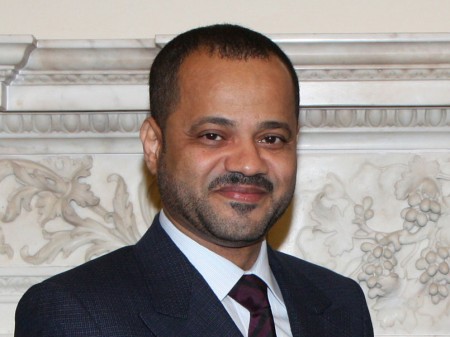
Oman: Wasta Par Excellence


This article was originally published by FPRI on 19 May 2014.

Oman has recently opened the doors of a new school in downtown Muscat to teach Persian language classes to its residents, both national and expatriate. It is being run by the Omani Ministry of Education, but students who complete the 12-week courses will receive a certificate from the Ferdowsi University of Mashhad in Iran. The Iranian Ambassador to Oman, Ali Akbar Sibeveih, hopes that Oman will open an equivalent Arabic language institute in Tehran in the near future.[1] Undoubtedly, some of the first to register will be some of the 100-person delegation of Omani businessmen who have made plans to visit Iran in the upcoming months to develop cross-country business ties.[2] Or perhaps those interested in furthering plans for a proposed natural gas pipeline that will run between Oman, Iran, and India.[3]

Since the final vestiges of Persian rule were finally cleared out of Oman in the 18th century, Oman and Iran have maintained fairly consistent friendly ties, even when such ties appeared to be inconsistent with Oman’s joining the GCC with its Saudi-led antipathy toward Iran.

Aircraft Stories: The F-35 Joint Strike Fighter (Part I)

Joint strike fighter of the US Navy, courtesy of Mark Schierbecker/wikimedia

This article was originally published May 16 2014 by The Disorder of Things.

How big is the F-35 Joint Strike Fighter? By one set of measures, it is three times bigger than the Eisenhower Interstate Highway System, ten times bigger than either the Apollo Project or the International Space Station or Hurricane Katrina, or one hundred times bigger than the Panama Canal. These comparisons are only moderately outlandish. US$1.45 trillion is the Pentagon’s own December 2010 estimate of lifetime operating and supporting costs for the 2,443 copies of the F-35 currently on order by the United States government, which we can then compare to the known price tags, in 2007 dollars, of these five projects.[1] Costs—also variously prefaced as procurement, actual, sunk, fly-away, upgrade, true and so on—and their contestations are central to a discourse of accountancy that surrounds all projects that require large-scale mobilization of public power. But enormous as they are, these numbers still cannot capture the size of this particular weapons program. To understand just how big the F-35 is, I wish to suggest in this two-part post, we ought to conceive it as a proper assemblage—a heterogeneous association of human and nonhuman elements that is at once split, processual, emergent, and, most importantly, constitutive of the modern international.