In our latest Special Report we explored the past, present and future of French ties to its former colonies in Africa. Where does your knowledge on the topic stand?
[QUIZZIN 28]
 CSS Blog Network
In our latest Special Report we explored the past, present and future of French ties to its former colonies in Africa. Where does your knowledge on the topic stand?
[QUIZZIN 28]
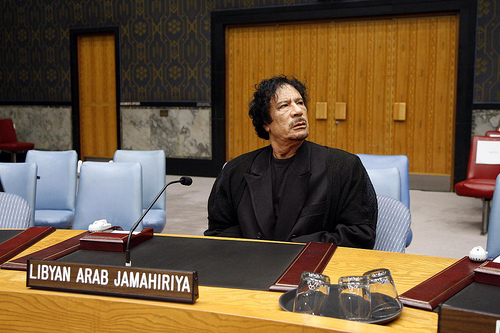
In a recent article on Foreign Policy, Jeffrey Herbst pointed out that the United Nations is not living up to its basic values: freedom of speech, freedom of religion, freedom from want and freedom from fear. He also criticized the lack of democracy in the organization and particularly among its member states. He also mentioned that the UN provides international legitimacy to dictators that have no legitimacy at home.
But Jeffrey Herbst also forgets to point out the following: The UN cannot function on its own. It needs its member states to act. Even though the UN publicized and tried to address the atrocities in Darfur, its member states failed to act.
The real question is: Why do member states not act? And the answer is simple: Democracy.
Democracy does not only mean having a democratic political system, it also means accepting that the international system is democratic, for better or worse, following the “one country one vote” principle.
Some western countries wish they still had the same power as they had when the UN was created after of the Second World War, at a time when their former colonies followed their lead on almost every issue. Now this time is over and the ‘neo-colonialist’ approach no longer works.
As an example of democracy in action at the international level, African countries are now able to elect a country like Libya to the Human Rights Council, because the continent has a comfortable amount of votes in almost every body of the UN.
Now that the organization applies the “democratic” rules so praised by the founders of the United Nations, it is normal that every member state gets the same power and can have more or less the same impact on the UN, regardless of whether it is governed by a dictator like Mugabe or by a social democrat like Tarja Halonen.
Indeed the presence of Libya in the Human Rights Council is representative of the willingness of a part of the world to have its word on Human Rights and some western leaders need to accept that not everyone is pursuing the same objectives or the same values as Europe and North America. They will certainly not simply acquiesce to those values or related demands without a fight.
The time when the UN was a mere tool of US foreign policy, as its former UN Ambassador John Bolton saw it, is now well and truly over.
Welcome to the new era of multilateralism.

You’re ranked the 14th worst dictator in the world; you preside over a country with a per capita GDP that is higher than that of Italy, but your people’s living standards are among the lowest in the world; your son is widely accused of spending his daddy’s (read: country’s) money on a USD 33 million private jet, a USD 35 million Malibu mansion, speedboats and a fleet of fast cars; and you win 96.7 percent of the vote in a presidential election, and then international observers publicly doubt the election’s credibility.
Well, if all that applies to you, you really have an image problem.
Luckily, there are professionals who can amend such glitches. We recently learned that former Clinton aide and DC lobbyist Lanny J Davis took on the noble task of recasting the image of Equatorial Guinea’s President Teodoro Obiang Nguema Mbasogo (described above). And all that for the modest sum of USD 1 million.
Davis says that he only agreed to the contract because of Mr. Obiang’s promise to introduce a series of reforms. These include a more effective use of the country’s vast oil resources for the benefit of the people, social sector development, institutional reform, improved relations with human rights organizations and environmental conservation initiatives.
For years, the US government has been accused of soft-pedaling the record of this unusually corrupt and unscrupulous dictator, whom Condoleeza Rice in 2006 called “a good friend.” Also the Obama administration has been accused of looking the other way when it comes to corruption and human rights abuses in Equatorial Guinea so as not to alienate this oil-rich African state. A significant amount of the country’s substantial oil resources is exported to the US, and the bulk of investment in the country’s oil industry comes from US-based oil companies.
True, you can hire DC lobbyists for almost anything these days. But the fact that Mr. Obiang hired Lanny Davis makes the story particularly controversial.
Davis is an old friend of both Hillary and Bill Clinton (they went to law school at Yale together), and he had worked on Hillary’s campaign. This naturally raises suspicions that the US State Department, and hence the Obama administration, doesn’t mind too much that Obiang’s image is getting a professional overhaul. After all, people may ask, couldn’t Hilary ask an old friend to perhaps find himself another client instead?
More disturbingly, Davis had been criticized in the past for touting himself as an ‘independent news analyst’ and devout Liberal; for speaking regularly on US television networks and writing op-eds in influential newspapers while his audience is often left in the dark about his clients.
Truly, Lanny Davis himself has an image problem. But unlike Obiang, he doesn’t seem to care.
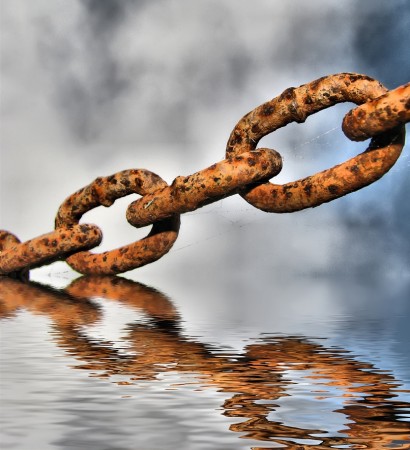
The Franco-African relationship is alive – but is it well? This week the ISN takes a closer look at France’s postcolonial ties with its former African colonies 50 years after independence.
This ISN Special Report contains the following content:

Last week marked the 60th anniversary of the beginning of the Korean War; a war that gave rise to one of the most intractable conflicts in modern history. Technically still at war, North and South Korea were torn apart in the shadows of the early phase of the Cold War and in some ways represent one of the last remnants of it.
Yet the war itself, as well its veterans, are often overlooked; a mere footnote in the long, epic and tragic saga of the 20th century.
But to understand the current conflict, to see how deep the antipathy and fear go, it is important to look back at the war and to remember that the seeds of Kim Jong-Il’s madness, the source of China’s intransigence and the root of South Korea’s fear were sown in the conflict that a war-weary and exhausted world fought in 1950-53.
Here are some interesting resources on the topic: