Categories
Uncategorized

جورجيا ‘الصغيرة’ تفاجئ روسيا ‘الكبيرة’ بقدرتها في مجال الإعلام الجديد

حدودية مع الجارة الكبرى روسيا. في أغسطس / آب 2008، اعتدت روسيا على الدولة الصغيرة في حرب قصيرة، ولم يدهش أحد لعدم قدرة جورجيا على الرد على الاعتداء.

بديهياً لا يتوافر للدول الصغيرة القوة العسكرية أو الاقتصادية التي تمكنها من مواجهة هذا النوع من التهديدات الأمنية. ولأن خيار القوة الخشنة غير متوافر، فإن الدول الصغيرة عادة ما تلجأ إلى القوة الناعمة، كخيار وحيد للتأثير على خصومهم. تأتي القوة الناعمة في صور عديدة، منها الدبلوماسية الشعبية بالإضافة إلى البروبجندا والدعاية، وهي وسائل مكلفة تقليدياً. لحسن الحظ بالنسبة لجورجيا، فإن من السهل عليها استخدام القوة الناعمة في عصر الاتصالات الدولية الذي نعيش فيه. [معظم الروابط بالإنجليزية والروسية]

بالنسبة لدولة معادية سياسية (جورجيا تريد الانضمام إلى حلف الناتو وعارضت لوقت طويل انضمام روسيا إلى منظمة التجارة العالمية)، فإن جورجيا تتمتع بشعبية مدهشة عند الرأي العام الروسي. تساهم في ذلك العلاقات التاريخية بين روسيا وجورحيا، والولع الروسي بالطعام والشراب الجورجي، بالإضافة إلى سبب مهم، وهو استخدام جورجيا للمجتمعات الإلكترونية على الإنترنت لتوجيه القوة الناعمة لصالحها.

بالرغم من استخدام معظم المدونين في جورجيا اللغة الجورجية، فإن هناك نسبة لا بأس بها تدون بالروسية على المنصة التدوينية الأكثر شعبية في روسيا LiveJournal (لايف جورنال أو اليوميات الحية) توجد قائمة لمئتي مدون منهم هنا، أكثرهم شهرة cyxymu، وهو مدون من أبخازيا، يترك يوميا 40 تعليق تقريبا، مما يجعله وجهاً مألوفاً للإنترنت الروسي.
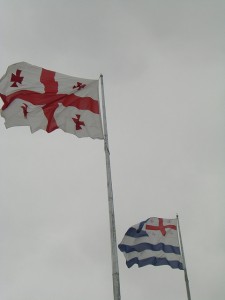
تصوير Summersso على فليكر، مستخدمة تحت رخصة المشاع الإبداعي

عادة ما يشارك cyxymu في مجادلة المدونين الروس حول العلاقات الروسية الجورجية. على سبيل المثال، قام بتغطية حرب 2008 بكثافة مما أدى به إلى لفت الأنظار. ففي عام 2009 عانى حسابه على تويتر بالإضافة إلى مدونته من هجمات الحرمان من الخدمات DDoS بطريقة مشابهة لما تعرض له أعضاء في المعارضة الروسية.

وتشاء الصدف أن يكون أحد من أعضاء المعارضة الروسية في جورجيا، بالإضافة إلى كونه مدوناً، Oleg Panfilov. سرق مدونته الأصلية المخترق الشهير Hell. يكتب أوليج الآن سبع تدوينات يوميا، ينتقد فيها الكرملين بعنف، أو يمدح فيها البرلمان الجورجي.

عموماً، فإن هؤلاء المدونين، بالإضافة إلى آخرين، يكشفون عن طريقة الحياة اليومية في جورجيا إلى العيون الروسية بالصور عادة. وبالرغم من كون البغض منهم منتقدين لحكومة ساكاشفيلي، فإنهم يمدحون سياساته الإصلاحية التي يتبعها. يعرف الكثير من المدونين الجورجيين أن لهم قراء روس، بل والكثير منهم يكتب بالروسية تحديداً لجذب انتباههم كما ذكر في مؤتمر 14 يونيو / حزيران الذي يقام في تبليسي عاصمة جورجيا.

وفي غضون ذلك، فإن حكومة جورجيا تسلك مسلكاً آخر. فقد أرسلت وزارة الاقتصاد إلى المدون والمصور الروسي البارز رستم أداجاموف، دعوة لزيارة روسيا. وكانت التدوينات التي نشرها بعد عودتها من الزيارة مزيجاً من أدب الرحلات بالإضافة إلى نسخة إعلانية لوزارة العدل وقوة الشرطة بعد تجديدهما.

يعتبر هذا المدون آخر مدون حتى الآن في سلسلة من المدونين الروس الذين دعتهم جورجيا للكتابة عن مختلف الجهات الحكومة فيها. وتعتبر الشرطة الجورجية، المعروفة بخلوها ظاهرياً من الفساد، موضوعاً شعبياً. أثارت تدوينة للمدون المصور زيالت في العام الماضي، والتي كانت تجميعة من تدوينات من كتاب آخرين، انتقادات واتهامات بالتدوين المدعوم بالمال.

بالرغم من اتباع الحكومة الجورجية لسياسة واعية تهدف إلى اجتذاب الرأي العام الروسي عبر الاستخدام الذكي للإعلام الجديد، فمن غير الواضح إذا كان هذا سيؤدي إلى نتيجة قريبة، وعموماً فإن الدبلوماسية الشعبية تأتي أكلها على أقصى مدى في الدول القائمة على أسس ثابتة من الديمقراطية.


For further information on the topic, please view the following publications from our partners:

Georgia at the Crossroadsfrom Chatham House, London, United Kingdom.

Georgia in the West: A Policy Road Map to Georgia’s Euro-Atlantic Futurefrom the Atlantic Council of the United States, Washington, DC , United States.

Post-Revolutionary Georgia on the Edgefrom Chatham House, London, United Kingdom.


For more information on issues and events that shape our world please visit the ISN’s Security Watch and Editorial Plan Dossiers.

Categories
Global Voices

A Bizarre Power Triangle: Sina, the Government and Chinese Netizens

“Sometimes a penguin’s scarf is not a fashion accessory”[zh] (The figure on the left depicts Sina Weibo, and the penguin represents another microblogging siteTencent.) Image my Flickr user Inmediahk, used under CC BY-NC 2.0

“Sometimes a penguin’s scarf is not a fashion accessory”[zh] (The figure on the left depicts Sina Weibo, and the penguin represents another microblogging site Tencent.) Image uploaded by Flickr user Inmediahk, used under CC BY-NC 2.0.

Before considering the rather bizarre power triangle that has come to define Internet communications and technology in China, it is important to introduce the three characters in this story:

Sina: China’s leading Internet company which is traded on NASDAQ, owns Sino Weibo, the Chinese social network often described as a Twitter-like microblogging site, though it is more like a hybrid. Sina Weibo claims to have more than 300 million registered users.

Chinese government: since the advent of the Internet in China more than a decade ago, the Communist Party (CCP) has both embraced the new technology and issued a number of policies that show its fear of it. With the CCP’s leadership transition [pdf] scheduled for next October, the government has launched special measures to tighten control over social media that highlight this contradiction.

Chinese netizens: love Chinese social networks. Contrary to Western perception, China’s netizens do not appear to miss Facebook, Twitter or YouTube (all three are blocked in China). However, Sina Weibo users get angry when their online activities are disrupted.

Categories
Global Voices

‘Small’ Georgia Takes on ‘Big’ Russia with New Media

Image uploaded by Flicker user Summersso CC BY-ND 2.0

Image uploaded by Flicker user Summersso CC BY-ND 2.0

Georgia is your typical small state: it has a tiny population, a developing economy, and territorial disputes with its largest neighbor Russia. In August 2008 when, Russia briefly invaded the tiny country, no one was particularly surprised that Georgia was unable to counter this show of force.

A small state by definition cannot project sufficient military or economic power to meet a security threat. Since such “hard power” options are unavailable to them, small states are often left with “soft power” as an only means of influencing their adversaries. Soft power comes in many flavors, including public diplomacy and propaganda, traditionally costly endeavors. Fortunately for Georgia, soft power is easier to exercise in an age of global communications.

Occupying the Patriarchy: Women Seek to Remake Occupy in their Image

Women say no to war
Women at Occupy Wall Street, New York, 30 September 2011. Photo: Cedrus.k/flickr.

Since its inception, feminism has sparked controversy, and eventually developed an image of militancy and extremism. As a result, women who may otherwise agree with feminism’s goals shy away from adopting the label, leading some to argue that feminism was no longer a relevant school of thought for young women. And yet, issues important to the lives of these young women only grew in importance during the recession: gender disparities in wages continue, while women’s unemployment rate stays stubbornly higher than men’s; controversy over the Affordable Care Act targeted women’s basic health care. Suddenly, something changed. Feminism was no longer about burning bras and unshaved legs; young women began rallying—against victims of rape being called sluts, against the scorn of the political right and the savior complex of the political left, and for a complete systemic re-analysis.

The Logic of China’s North Korea Policy

DPRK: train from Pyongyang to Dandong
Train from Pyongyang to Dandong. Photo: kwramm/flickr.

US and South Korean analysts are annoyed and frustrated by China’s policy toward North Korea. In their eyes, Beijing’s policy not only jeopardizes the security of the US and the ROK and undermines international norms, but is detrimental to China’s own national interests as well. But judgments about whether China’s North Korea policy is illogical or self-defeating depend very much on what people see as China’s goals. Most Chinese analysts would argue that China’s policy has its own internal logic; whether the US and South Korea see that logic is a different matter.

The widely accepted assumption is that China has three goals when it comes to North Korea: stability (no implosion and no war), peace (diplomatic normalization between the US and North Korea), and denuclearization/nonproliferation. Among these three, China prioritizes stability over peace and denuclearization. The secondary status of denuclearization is a sore spot for Washington and Seoul, which see it as the most important goal (or should be). And while different priorities lead to different approaches, North Korean actions have been destabilizing. Therefore, China’s strategy is counterproductive in terms of its own priority, hence illogical.