Categories
Regional Stability

India: Jostling for Geopolitical Control in Afghanistan

Image: Flickr.

Editor’s note: This article was originally published by openSecurity on 27 March 2014.

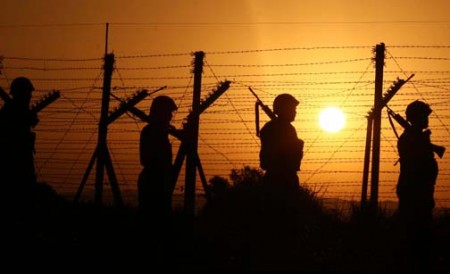
There is increasing anxiety among stakeholders as US forces prepare for a drawdown in Afghanistan by the end of 2014. The international community, including the United States, is still groping in the dark when it comes to Afghanistan’s future. As such, they have somewhat ignored India, which, in fact, will be pivotal in solving the Afghan dilemma. Instead, the west and regional stakeholders have focussed on Pakistan as the major player in post-2014 Afghanistan.

Pakistan has been accused of supporting the Afghan Taliban and of providing sanctuary to them inside Pakistan in order to maintain strategic depth and influence within Afghanistan. Furthermore, Pakistan has been charged with supporting the Afghan Taliban and their affiliate, the Haqqani network, in order to counter India in Afghanistan, as well as of sending militant groups such as Laskhar-e-Taiba into Indian-administered Kashmir. Pakistan has denied these accusations.


Disarmament: Learning to Challenge Our Assumptions

Photo: Truthout.org/flickr.

On 12th June 1982, an estimated one million people converged in Central Park, Manhattan, to rally in support of nuclear disarmament.  It marked the peak of a wave of public engagement that began over nuclear power, but had morphed into a push against the nuclear arms race that had come to epitomize the Cold War era.  In Europe, a number of similar protests in 1983 drew an estimated total of 3 million people.

Categories
Regional Stability

Why 2014 in Asia Will Not be a Repeat of 1914 in Europe

Photo: Jectre/flickr.

The Jeremiah prophets are coming out of the woodwork to predict that there will be an outbreak of war between the major powers in Asia, just like in Europe 100 years ago. The idea is that a rising China will inevitably go to war with the United States, either directly or through conflict with Japan.

Some commentators are even suggesting that the Sarajevo incident that provoked World War I will be replicated between China and Japan over the Senkaku/Diaoyu islands in the East China Sea. Former Australian Prime Minister Kevin Rudd has likened this situation to what he calls ‘a 21st-century maritime redux of the Balkans a century ago — a tinderbox on water’. My colleague Hugh White recently proclaimed that the risk of war between China and Japan is now very real.

Indian Ocean Regionalism – Picking up the Pattern of Connectivity

Photo: Lucentbyte/Wikimedia commons.

This is a cross-post from the Australian Strategic Policy Institute‘s blog The Strategist.

It’s fair to say that, despite the existence of initiatives and organisations such as the Indian Ocean Naval Symposium (IONS) and the Indian Ocean Rim Association (IORA), Indian Ocean regional architecture is under-developed. This reflects a lack of shared interests relative to some other regions, including limited economic and strategic integration, great socio-economic disparities, and modest people-to-people links. Yet there’s benefit in seeking to address Indian Ocean transnational issues by regional means.

Categories
CSS Blog

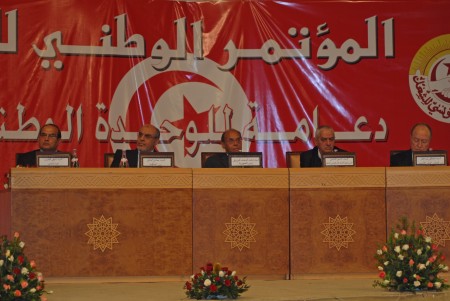
Mediation Perspectives: The Tunisian National Dialogue

Photo: Magharebia/Wikimedia commons.

The adoption of a new Tunisian constitution at the end of January has been hailed as a major milestone in the country’s democratic transition and a welcome piece of good news amid concerns about the direction of transition processes in other countries in the region.

From a mediation perspective, the national dialogue process that brought Tunisia to this point is noteworthy for at least two reasons. First, the mediators in this case were insiders with a stake in the outcome. Second, changes in context, beyond the control of either party, significantly altered the strategic calculations of the negotiators and opened the window to an agreement.