What do you know about the concept of jihad, the topic of our latest Special Report: Debating Jihad? Find out in this week’s quiz.
[QUIZZIN 18]
 CSS Blog Network
What do you know about the concept of jihad, the topic of our latest Special Report: Debating Jihad? Find out in this week’s quiz.
[QUIZZIN 18]

Although high up on the list of security policy priorities, the scope of Islamic terrorism and its ideological underpinnings remain contested. With fundamental implications for counterterrorism efforts, a clear understanding of the roots and implications of jihadism are crucial to the formulation of effective responses.
This week’s Special Report sheds light on this complex phenomenon and contains the following content, navigated along the tab structure above:
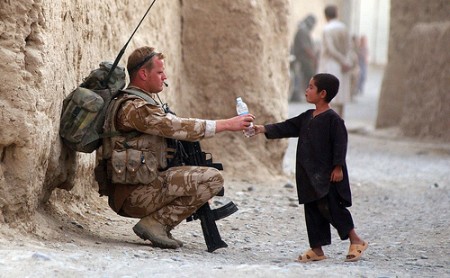
I stumbled upon a very interesting article by Noora Kotilainen, research assistant at the Finnish Institute of International Affairs (FIIA) in the latest issue of the Finnish Journal of Foreign Affairs. Since her excellent piece has not been translated into English to my knowledge, I thought I would give you a brief summary of her argument on the importance and changing nature of imagery and photography in today’s conflicts.
She starts with the premise that war photography, or the visualization of suffering in conflict has always been a powerful means of mobilizing public opinion and action against violence. It is most successfully used in humanitarian crises or conflicts, where images of suffering people prompt us to take action, either in the form of donations or political pressure to intervene.
Despite the ubiquity of violence in entertainment and through other fictitious channels, however, war photography and the visual representation of western-led wars in particular has changed dramatically. She notes that in Afghanistan, Iraq and the ‘war on terror’ the imagery has become remarkably sterile, particularly when representing the suffering of US soldiers.
Are you resilient enough to handle a few questions? Find out what you know about societal resilience, our focus this week, in the ISN Quiz.
[QUIZZIN 16]

In a new millennium that must face complex, transnational challenges ranging from climate disruption to cyberwar, averting disaster is not always an option. How then can society quickly rebound from unavoidable disruptions to its social fabric? Social resilience helps guide us toward a sustainable answer.
This ISN Special Report contains the following content: