Categories
Uncategorized

A Dead End? The Northern Limit Line and the Future of Inter-Korean Relations

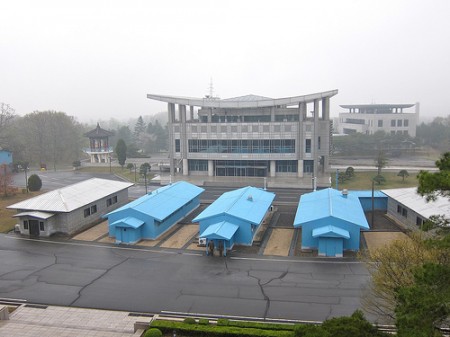
Image by Jon Pavelka/Flickr.

Following her election as South Korea’s first female president on December 19, 2012, Park Geun-hye identified North Korea as one of the main challenges facing her administration. Her approach to relations with the North will likely be different from her predecessors as she seeks a middle ground between Lee Myung-bak’s principled engagement and the unconditional engagement of the Sunshine Policy era. In particular, Park has spoken extensively about the need to establish a trust-based relationship with North Korea. Her success in establishing a trust-based approach will, in part, depend upon the effective management of issues relating to the Northern Limit Line (NLL), the maritime boundary between the two Koreas in the West Sea. However, Park’s diplomatic efforts are likely to be compromised by Pyongyang’s continued refusal to recognize the NLL. And while this dispute requires an urgent solution, reaching a mutually acceptable agreement over how to define the sea boundary between North and South Korea is likely to remain a challenge for the foreseeable future.

But why has this issue been so difficult to resolve? One of the main difficulties has been in how to best approach management of the NLL. Toward the end of his term in office, President Roh Moo-hyun sought to address the NLL issue when he visited North Korea as part of the second inter-Korean Summit. President Roh proposed a “West Sea Peace and Cooperation Special Zone” that would allow free access for fishing vessels from both Koreas and the development of a special economic zone in the North Korean port of Haeju. But while the proposal was identified in the Joint Agreement at the end of the summit, no concrete procedures were established and follow-up discussions failed. One of the major sticking points was Pyongyang’s insistence that waters south of the NLL fell under North Korean territory.

Categories
Uncategorized

India’s Policy Towards Central and Eastern Europe

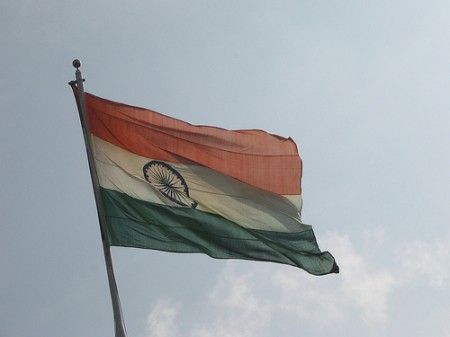
Indian Flag at Sriperambdur. Image courtesy of rednivaram/Flickr.

Central and Eastern Europe has not occupied an important place on India’s external policy agenda so far. However, since many CEE countries have joined the European Union and India is now a major emerging power, the time is ripe to open a new era in the relationship. The history of close ties and untapped potential for economic cooperation bodes well for India’s re-engagement in the region. Holding a regional economic summit could be the right step to examine the existing opportunities for trade and investment and push for closer cooperation. Poland may use the momentum to play a leading role in this regional dialogue.

Categories
Uncategorized

The UN Arms Trade Treaty: an Inadequate Solution for Illicit Weapons Trafficking?

Image by kcdsTM/Flickr.

While the political mayhem befalling Libya, Mali, and Syria, has been victim to some media sensationalism, the uproar has also shed light on a growing concern over escalating illicit arms trafficking, a generally accepted cause in the senseless killing of thousands. The long-lasting issue has again become a focal point of an international community relentlessly attempting to find new ways to contain it. Discussions have opened another “Pandora’s Box.” The challenge is drowned in the magnitude and complexity of the problem. Licit and illicit arms trade is lucrative, reaching far over $60 billion. A bewildering array of weapons change hands each year. The small arms trade market alone is estimated at $8.5 billion, with illegal sales raising the total by a staggering $2 billion. Direct consequences are alarming. According to UNDP Assistant Administrator Joseph Ryan “more than half a million people die every year as a result of armed violence” and as many as 2,000 people die each day in conflicts fueled by illegally traded arms.

Categories
Uncategorized

Catalogne: L’indépendance, pour quoi faire ?

Pro-independence rally on Via Laietana on September 11, 2012. Photo: Lohen11/Wikimedia Commons

Le 25 novembre 2012, les Catalans [en anglais] étaient aux urnes pour des élections régionales anticipées. Les sondages ont été organisés deux mois après un grand rassemblement indépendantiste à Barcelone. Le taux de participation a atteint un record de près de 70%, le plus élevé en 30 ans, et les quatre partis politiques décidés à tenir un référendum sur l’indépendance de la région (CiU-ERC-ICV-CUP) ont obtenu deux fois plus de sièges que ceux qui défendaient le statu quo (CFP-PP-C). Fondamentalement, les deux principaux partis de la Catalogne – le parti de centre-droite CiU actuellement au pouvoir et PSC socialiste – ont subi de graves revers.

Categories
Uncategorized

Cataluña: ¿Independencia de España para hacer qué?

Pro-independence rally on Via Laietana on September 11, 2012. Photo: Lohen11/Wikimedia Commons

El 25 de noviembre del 2012 los catalanes se dirigieron a las urnas para una anticipada elección regional. Las encuestas se realizaron sólo dos meses después de una masiva manifestación pro independentista que tuvo lugar en Barcelona. La participación electoral alcanzó un máximo de casi el 70%, el más alto en 30 años, y los cuatro partidos políticos que se comprometieron a celebrar un referéndum sobre la libre determinación (CiU-ERC-ICV-CUP) tiene más del doble de asientos que aquellos que defienden el status quo (PSC-PP-C). Fundamentalmente, los dos partidos más importantes de Cataluña – el gobierno del centro-derechista CiU y el socialista PSC – sufrió graves retrocesos.