
Pre-crime Identification – the FAST Program

Sweaty palms and an elevated heart rate: are you having bad thoughts? Photo: barrowboy/flickr

The Department of Homeland Security seems to be developing technologies reminiscent of the pre-crime unit depicted in Phillip K. Dick’s “Minority Report”.

The department’s so-called “FAST” project — which stands for Future Attribute Screening Technology — aims at nothing less than screening people for malign intent: for crimes they have not yet committed.

As the homepage for the FAST project describes, non-invasive sensors will be used to scan people for indications of bad thoughts. Currently, these indicators factor in posture, gait, thermal imaging of the face and changes in vocal tension while speaking, but might be extended to include other things, such as pheromones.
Ethnic Minorities: Tipping the Scales in Syria?

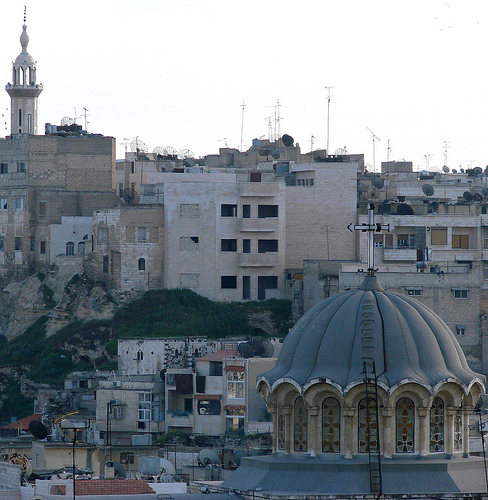
Church next to a mosque in Hama, Syria. Photo: fchmksfkcb/flickr

Last month’s assassination of Kurdish activist Mashaal Tammo has put the spotlight on Syria’s almost forgotten Kurdish minority. Their involvement in the uprisings had been considerably low up to this point, propelled by fears that the regime of President Bashar al-Assad would ruthlessly put down Kurdish participation in the protests. But after the death of Tammo, a prominent opposition figure and founding member of the Syrian National Council, a wave of outrage has swept across the Kurdish population. This brought about the most intense protests and demonstrations of this ethnic minority since the beginning of the uprisings in March and might just mark a tipping point for the highly fragmented Syrian opposition.

While opposition movements of the Arab Spring have been characterized as heterogeneous and unstructured, Syria’s opposition seems particularly patchy. Approximately 40 percent of the population do not belong to the Sunni majority. Shia Muslims, Christians, Alawites, Druze, Jews and Ismaelites all have their own political agendas. One of the main reasons why Assad has managed to remain in power for so long is because he was backed by the country’s minorities. In exchange, he implemented laws and policies to secure the minorities from the Sunni majority.

Conference: Transformation of the Arab World: Where Is It Heading To?

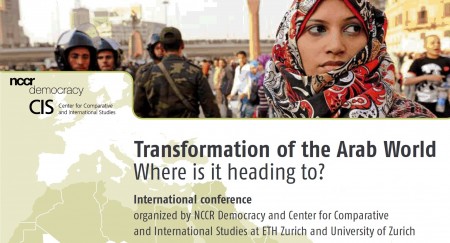
Transformation of the Arab World: Where are We Heading to?
A conference hosted by the NCCR Democracy and the CIS at ETH Zurich

On 27 and 28 October, the NCCR Democracy project managed by the University of Zurich, together with the Center for Comparative and International Studies at ETH, hosted a conference on the topic: “Transformation of the Arab World: Where is it heading to?” Adam Dempsey, Eveline Hoepli, Chantal Chastonay and I covered the event for the ISN.

The conference kicked off on Thursday morning with Roland Popp’s unscheduled presentation, “The Past as Prologue? Regional Dynamics and Revolutionary Trajectories in the Middle East.”  Popp, a senior researcher at the Center for Security Studies (CSS) at ETH and an expert in the international history of the Middle East, stressed the importance of looking beyond the unit-level to understand transformation.  Citing the example of Egypt’s 1952 revolution, the fear of Arab nationalism it provoked in the other monarchies of the region, and Nasser’s subsequent isolation (which, as we know, ended up driving him closer politically to the United States), he argued that regional dynamics are essential to understanding many developments whose logic at first appears confined to individual countries.  Wise counsel, no doubt, and of obvious significance for the remarks that would follow.

Categories
Terrorism

LNOTA – Media Self-Censorship to Fight Terrorism?

Could limited media coverage help fighting terrorism?

9/11 and media

What Al-Qaeda achieved on 9/11 was arguably not only the most extreme and effective terrorist attack ever carried out, but also a highly effective media spectacle with unprecedented return on investment. The loss of human life aside, Al-Qaeda was known all over the world within hours, at the cost of eleven airline tickets and some box-cutters. Indeed, Al-Qaeda, like other terrorist organizations, could count on the readiness of the world media to broadcast their acts to the world live on television and the internet, as well as in print.

Keyword in Focus: Geopolitics & Afghanistan

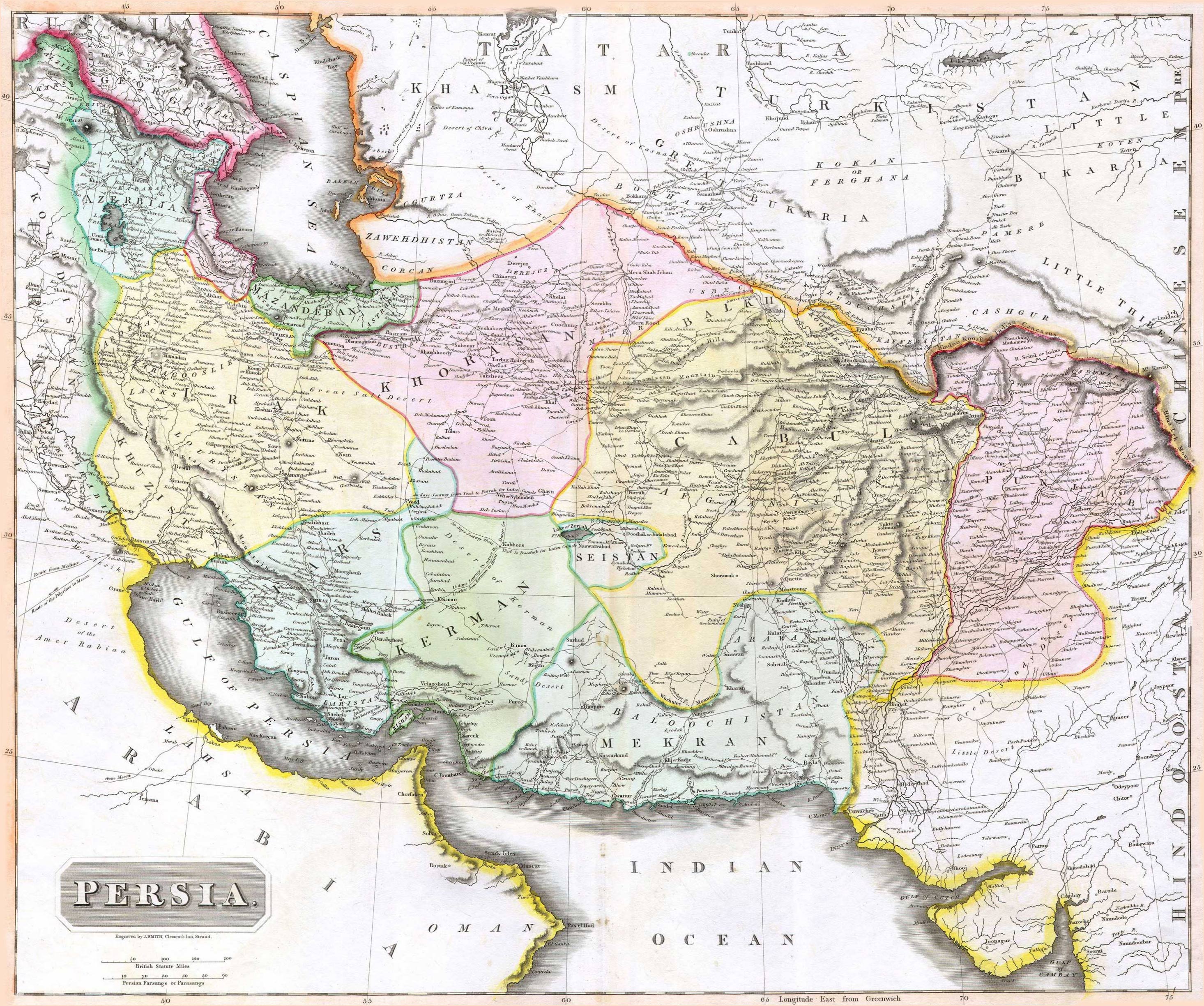
Greater Persia and Afghanistan at the beginning of the original 'Great Game'
Greater Persia and Afghanistan at the beginning of the original ‘Great Game,’ in 1814 Image: Wikimedia Commons

With the death of Muammar Gaddafi last Thursday and President Barack Obama’s announcement the following day that all troops would be leaving Iraq by the end of the year, Americans might have been forgiven for waking up this week with withdrawal symptoms.  By the end of the year, America’s ‘three wars’ will be down to just one (unless you count Uganda).  According to the latest schedules, the last war standing — the ongoing conflict that began with the invasion of Afghanistan in October, 2001 — will not be over until 2014.

As Americans were told from the beginning, Afghanistan had long been an important battleground of great powers and civilizations.